


Amazon’s holiday season, especially the Amazon Prime Christmas sale, accounts for a disproportionate share of annual sales for both third-party sellers and established brands, with some categories seeing up to 40 percent of their yearly revenue compressed into six weeks.
The psychological shift of the consumer is what makes this period so effective. Unlike regular shopping cycles, the Amazon Prime Christmas sale season triggers high-intent purchasing behavior that’s emotionally charged.
Customers already have a gift-buying attitude when they visit Amazon, and they are looking for the ideal solution that brings happiness, ease, and promptness rather than comparing prices for commonplace items.
This change has a significant impact on conversion likelihood, pricing elasticity, and keyword patterns. Words like “last-minute stocking fillers” or “presents for dad under $50” generate organic and sponsored visibility on a scale not seen in any other quarter.
. For sellers who’ve mastered the art of seasonal listing optimization, this mindset translates into high sales velocity, algorithmic ranking boosts, and new-to-brand customer acquisition that compounds long after the holidays end.
It’s not the same this year. As the holiday season approaches, sellers must navigate a new regulatory and logistical framework. The margin for error is smaller than ever, thanks to capacity constraints and stricter inbound shipping deadlines implemented by Amazon’s fulfillment network.
Missing an inbound date for FBA or AWD goods affects the entire supply chain in addition to delaying availability. During Cyber Week, it might deny products access to high-visibility placements, remove their Prime badge, and demote them in search results. In response, the majority of sellers are front-loading shipments, combining AWD and FBA, and creating predictive lead-time buffers to cover unforeseen carrier delays.
Sellers who wish to go to a more strategic layer of execution but already grasp the fundamentals are the target audience for this guide. You’ll learn how to take advantage of the 2026 Amazon Prime Christmas Sale with this article.
You’ll discover how to utilize data to predict demand, optimize listings for the new keyword economy, strike a balance between cost-effectiveness and delivery timeliness, and maintain compliance while enhancing visibility.
Quick Guide:
For sellers, the Amazon Prime Christmas sale is the time of year when seller behavior, buyer behavior, and Amazon’s internal systems all move out of their usual equilibrium at the same time. That interaction is what makes the season strategically important.
Experienced sellers know that during the Amazon Prime Christmas sale, capital allocation becomes unavoidable. As a seller, you either commit to inventory early or accept lost visibility later. You either support an SKU with ads through volatility or let it disappear under competitors who are willing to spend.
From a marketplace pattern perspective, Christmas compresses competition. Categories don’t expand evenly. Even a small number of ASINs absorb a disproportionate share of demand while long-tail listings go quiet.
This creates a winner-takes-more environment. Sellers who identify which SKUs are structurally capable of handling surge traffic, price resilience, review depth, and fulfillment reliability focus their spending on these listings and intentionally starve weaker ones. This kind of aggressive prioritization rarely feels justified during slower months.
Algorithmically, this is the only period when Amazon’s ranking systems show their most severe behavior. Sales velocity is weighted more heavily, but only when supported by fulfillment consistency and low defect rates. Sellers often notice that rankings gained during late November or early December tend to persist longer than those gained during other periods.
This is not accidental. Amazon is recalibrating its catalog to determine which products can handle peak demand without compromising the customer experience. Christmas acts as a live stress test, and the algorithm remembers the results.
Additionally, there is a significant shift in the way advertising effectiveness is evaluated. For the majority of the year, sellers aim for stability in ACoS (Average Cost of Sale) or ROAS (Return on Ad Spend). Advanced merchants often switch platforms briefly during the Christmas season. Rather than focusing on whether ad expenditure is instantly lucrative, the question now becomes whether it is purchasing ranking momentum, review velocity, and future organic demand.
Decision-making frameworks also change in relation to inventory risk. In normal periods, sellers optimize for stock efficiency and carrying costs. The risk of being understocked frequently exceeds the expense of being somewhat overstocked during the Christmas season.
An additional consideration is the indirect evaluation of seller operations. Customer behavior becomes less forgiving as feedback loops tighten around the Christmas season. Delivery accuracy, listing clarity, packing quality, and response timeliness are more important.
The sellers who maintain clean metrics under this pressure signal reliability to Amazon’s systems in a way that is hard to replicate during low-stress months.
Strategically, the Amazon Prime Christmas sale is when long-term positioning decisions are made almost accidentally. Sellers identify which products warrant permanent focus, which categories can support scale, and which operational bottlenecks must be addressed before growth is possible. These insights don’t come from planning sessions; they emerge from how the business performs when demand is unforgiving.
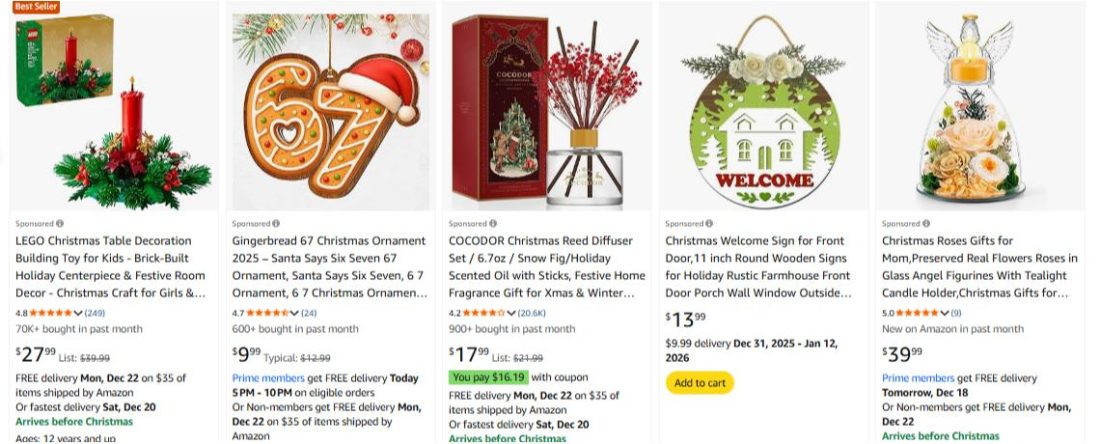
Every successful Amazon seller knows the Christmas rush doesn’t magically start on Black Friday; it begins long before that. Specifically, sellers begin researching and collecting data in July, immediately after Prime Day, and start preparing logistics for the entire fourth quarter.
The sellers who prep before Q4 are the ones who start shaping momentum and demand. What appears to be an overnight explosion in sales is often the result of a carefully timed sequence that begins as early as August or September. Serious prep happens at the end of September and peaks in those frantic, last-minute shopping days before Christmas Eve.
The holiday cycle breaks down into distinct patterns.
When it comes to strategies, each year will be slightly different. So, Black Friday is where they start experimenting. They refine listings, update keywords with seasonal intent phrases like “Christmas gifts for her,” and begin optimizing their ad algorithms.
By the time Cyber Monday and Thanksgiving arrive, their campaigns are battle-tested, not experimental. These two shopping super-days are the core of the traffic wave, a period when consumers buy faster, spend more, and compare less.
But once this chaos settles, early December brings in a more strategic stretch. At this point, shoppers are gift-focused, not driven towards deals, so listings that evoke trust, delivery speed, and emotional resonance outperform those offering heavy discounts.
Then, as mid-December hits, the urgency takes over. It’s the age of “last-minute gifts” and “arrives before Christmas,” where inventory precision and fulfillment speed matter more than clever copy or coupon codes.
Mapping the calendar with precision is where elite sellers separate themselves from the crowd. Around ten to twelve weeks before Christmas, everything should already be in motion. Listings finalized, inventory en route, and ad frameworks tested.
Your price plan, discount promotions, and package offers should launch eight to ten weeks from now, providing early search data for your ad optimization. You’re in full execution mode after four to six weeks. As competition heats up, FBA stock needs to be active, PPC budgets need to be increased, and keyword bids need to be rising.
Your entire business revolves around fast shipping, dynamic pricing, and maintaining buy box authority under heavy traffic.
Every successful Amazon Christmas campaign starts long before shoppers hit “Buy Now.” The best sellers treat this period as a high-stakes chess game where data, demand forecasting, and logistics all move in sync.
If you want to win the season, your planning has to go beyond intuition and discounts. It’s about positioning the right products, predicting behavior with precision, and ensuring your inventory flows flawlessly when orders flood in.
Although it’s contrary to popular belief, it’s important to note that you won’t be able to push your entire catalog during the holidays, and you shouldn’t try to.
The smartest move for a seller will be to focus on SKUs that align with the gift-giving mindset. Think practical but emotionally resonant products: items that are easy to ship, photograph well, and feel like a thoughtful purchase.
Even your evergreen SKUs can become seasonal winners if you reposition them correctly; a kitchen gadget can turn into a “holiday cooking essential,” and a skincare set can become a “self-care gift.”
Of course, the best thing would be to ensure it has Christmas branding. That’s if it makes sense for your product and brand. For example, it would really make sense to have a Christmas-specific lawn mower. But you could have a Christmas-specific gravy bowl.
However, your selection of products should not be a Secret Santa gift.
It’s best to study last year’s Q4 performance data. Which products saw an increase in organic traffic? Which listings converted best? Is it Friday or Cyber Monday? Crowded search results, impatient customers, and constant competition put pressure on the listings that sold the best during those days. Experienced sellers submit more stuff, maintain active advertisements, and safeguard existing listings rather than attempting to compel new ones, leaning deeper into whatever moved during BF/CM.
When a product demonstrates that it can convert while consumers are rushed, exhausted, and comparing prices, it typically does even better during the Christmas season, when consumers are less hesitant and more urgent. Add that to the growing subcategories and search trends of this year. Examine how your rivals sell “limited edition” products or package bundles.
Your goal is to build a short list of SKUs that check three boxes:
Honestly, that short list will drive 80% of your seasonal sales.
Forecasting for the holidays is one of the most overlooked but decisive parts of Amazon’s success.
If you underestimate what your sales would look like, then you’ll sell out early, lose ranking momentum, and hand conversions to competitors.
Overestimate, and you’ll incur expensive storage costs and face post-holiday dead stock. The answer lies in modeling demand accurately using both historical velocity and current signals.
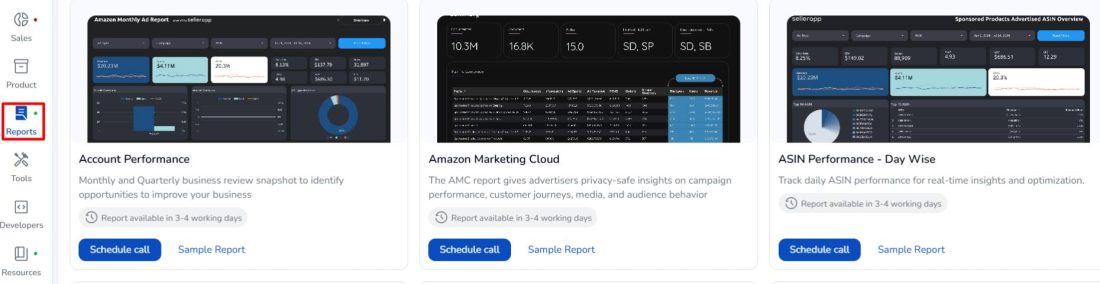
This is where SellerApp’s Reports really earn their place in a seller’s routine. Instead of relying on gut feeling or half-connected spreadsheets, you can actually see how your business behaves, what sold last Q4, which keywords are trending now, how fast each SKU is moving, and where your category demand is heading.
That clarity changes how you make decisions. You stop treating every product the same and start knowing which SKUs are worth investing heavily in and which ones require a cautious approach.
Forecasting will never be perfect, especially during the holidays, but when your data is clean and connected, you’re no longer guessing in the dark. And in Q4, being “right enough” often makes the difference between scaling smoothly and scrambling to recover.
Start with your past Q4 sales graphs. Then overlay this year’s market variables, such as consumer sentiment, keyword volume spikes, and promotional schedules.
For instance, shoppers went ballistic earlier than usual during the 2025 Q4 season, purchasing in late October to avoid delivery deadlines. This implies that your inventory must reach FBA weeks ahead of schedule compared to the previous year.
Additionally, pay attention to lead times and operational friction. Amazon’s inbound receiving delays, carrier congestion, and holiday surcharges may all shorten your delivery time. Buffers are needed in weeks rather than days if you ship from abroad. Advanced sellers explore hypothetical situations.
What if one cargo is delayed by two weeks? What happens if the sales velocity of a crucial SKU abruptly triples? If your forecast is flexible, you can change course quickly without losing sales momentum.
Once your demand plan is ready, you have to decide how to fulfill it, and that’s not as simple as choosing between FBA and FBM. Each comes with strategic trade-offs.
FBA offers Prime eligibility and faster shipping, both huge conversion factors during the holidays, but space is limited, fees are higher, and inbound delays can cripple your timeline.
FBM provides greater flexibility and control, particularly for larger or slower-moving commodities; however, to satisfy customers, a robust shipping operation is required.
Both are used by many successful merchants. They store secondary stock at a 3PL or warehouse for FBM backup and send core holiday SKUs via FBA early, ideally before Amazon’s inbound cut-off. This combined design offers a safety net in the event that check-in times lengthen or Amazon restricts your refill capability.
Finally, don’t overlook what happens after Christmas. Returns spike dramatically in January, and if you’re not prepared, they can sink into your profits. It is better to have a clear process for refurbishing or reselling returned units, closely monitor your refund rate, and communicate transparently with customers to minimize disputes.
Few sellers even plan a “post-holiday clearance phase” to liquidate excess inventory without damaging brand value.
Holiday listings are built from behavioral signals, keyword intent shifts, and visual psychology designed for urgency-driven buyers.
During Christmas, your listings should not just describe the generic information; they must translate emotion into action while keeping the algorithm sharp.
The first mistake most sellers make is adding “Christmas” or “gift” to their titles and thinking they’re optimized. The reality is that holiday keyword demand splits into four distinct intent groups:
You can use Amazon Brand Analytics or tools like SellerApp’s Keyword Trends to map these intent curves across weeks. For instance, the keyword “Secret Santa gift for coworkers” usually peaks between Dec 1 and 10, while “last-minute Christmas gifts” explodes only after Dec 17.
The sellers who swap keyword focus dynamically, updating their backend terms and Sponsored Product targets weekly, consistently outrank those who leave listings static all month
Let’s assume a candle brand that added “self-care Christmas gift set” and “relaxation gifts for her” into its title and backend keywords during November saw a 37% increase in organic sessions compared to its evergreen title version from October.
A holiday listing must feel real. It should echo the buyer’s mood. Specifically, rushed, sentimental, and comparison-driven.
Your title should integrate primary seasonal intent while retaining clarity. Instead of “Scented Candle Set – Vanilla & Lavender,” rewrite it as “Scented Candle Gift Set for Her – Vanilla & Lavender – Relaxing Christmas Gift Idea.” It’s emotional, specific, and algorithm-friendly.
Holiday visuals work because they reduce mental effort. Shoppers don’t imagine themselves as givers.
Use one or two seasonal lifestyle photos: for example, your main image remains clean and features a white background, but a secondary shot can show the product beside a tree or wrapped in a box. Remember to avoid over-decorated images; subtle signals, such as pine cones, candles, or cozy lighting, outperform those with clutter.
A strong visual strategy this year is “contextual bundles,” which showcase multiple complementary products in a single frame (e.g., a mug set with cocoa mix).
Amazon’s A/B testing tools show that listings with context-rich images convert 9–14% higher during Q4.
Treat your brand store like your seasonal flagship. Instead of just a “Holiday Deals” banner, build themed sub-pages:
The top 1% of brands also sync Storefront analytics with Sponsored Brands Ads. They track click-throughs by collection, then reallocate ad budget toward the store sections that yield the highest AOV.
Your listing’s conversion rate on Dec 20 is directly tied to how strong your review profile looked on Nov 20. Don’t wait for organic reviews; manufacture momentum ethically.
Use post-purchase email flows (via Amazon’s “Request a Review” automation or compliant third-party connectors) to drive authentic feedback. Target your repeat buyers first; they’re 2–3x more likely to leave five-star reviews.
One advanced strategy is to launch a micro-promotion for your returning customers in October (like a loyalty coupon).
By the time primary holiday traffic arrives, your listing’s trust signals have increased thanks to those early orders, which boost review velocity.
Before the end of November, politely and publicly address any unfavorable evaluations you’ve received. These interactions are visible to the Q4 shopper, and a clear brand response can recoup more conversions than a hundred new ratings.
When the holiday season arrives, pricing becomes less about markdowns and more about strategic usage.
Let’s walk through how advanced sellers work with that.
It’s tempting to slash prices across the board during the holidays. However, if you are a savvy seller, carefully select which SKUs will carry the discount, determine the depth of the discount, and consider the role the discount plays within the ecosystem.
For example, a top-tier gift item, such as a premium Bluetooth speaker, might carry a modest 5-10% discount but be packaged with a gift-ready bundle (e.g., speaker + accessory + branded gift box), thereby increasing the perceived value. Meanwhile, a mid-tier SKU may become your volume driver with a 20-30% off deal or a “Buy One Get One” (BOGO) offer, aimed at gift-givers shopping for multiples.
Another example would be a stationery brand that could create a “Holiday Writing Gift Set” by bundling its best-selling notebook + premium pen + gift box, pricing it at 15% below the sum of the individual items, yet still maintaining a healthy margin because the cost of the extra items is low.
This approach achieves three things:
Another example would be a toy brand facing heavy competition might program a “BOGO free” on a lower-margin accessory to promote the main item (the higher-margin toy). Essentially, you subsidize one component to lift the whole bundle.
You want your product to be visible and to create a sense of urgency. That’s where time-bound deals come in. A “Lightning Deal” or “Best Deal” on Amazon isn’t just another discount; it’s a spotlight.
Here’s how you might apply it:
Pick a hero SKU you’ve prepped with strong reviews, gift-ready packaging, and a high conversion rate, and schedule a Lightning Deal for the first week of December.
Coupons are mostly useful for new-to-brand buyers. For example, trigger a “$5 off” coupon for first-time buyers, display it prominently in search results (Amazon flags it), and pair it with a gift set. The coupon makes the listing stand out, and the gift set captures the holiday spirit.
Best deal slots can also be used strategically. If you secure a Best Deal for the weekend after Cyber Monday, you can target the “early December gift shopper” and build momentum before the last-minute rush.
Dynamic pricing is more than thinking “lower when everyone else is lower.” During the holiday period, you need to consider pricing as a tool that responds to supply, demand, competition, and the timing of events.
The holiday surge compresses timing: competitors clear stock, shoppers accelerate, and Amazon’s algorithm rewards speed. According to Feedvisor, advanced sellers categorize SKUs into distinct buckets (e.g., Buy Box contested, Buy Box secured, low-demand) and apply tailored pricing strategies.
Think if you monitor an SKU that is already in the Buy Box and has strong conversion, you might hold the price firm or even raise it slightly when you see competitors running out of stock (you have a margin cushion for that).
Conversely, for an SKU with stiff competition and little differentiation, you might proactively drop the price to capture volume, knowing the algorithm will reward sales velocity.
Moreover, Amazon’s holiday peak fulfillment costs and storage surcharges increase; you must make those into your dynamic pricing. If your transportation costs spike or your storage fees increase due to holiday surcharges, factor that into your minimum price floor. You might decide that for some SKUs, you’ll only discount if volume thresholds are hit and inventory is already at fulfillment centers.
Finally, don’t forget psychological pricing changes; offer a “Gift Set + Free Shipping” vs. a discount alone, experiment with “bundle only” price vs. “single unit” price, and monitor how those affect click-through and conversion.
Run quick repricing tests. For example, raise the price by 10% on an SKU during early December and monitor the conversion rate in relation to revenue. If the conversion rate drops less than the margin gain, you’ve found room to adjust.
Capturing gift-buying shoppers isn’t just about the initial sale; it’s about increasing cart size. One technique can be when a shopper lands on a listing, have a custom product insert or Amazon ‘Frequently Bought Together’ bundle that encourages adding a complementary item, e.g., if they buy a wireless mouse (gift), show them a companion “mouse pad gift pack” or “computer accessories bundle” priced attractively.
Another example is offering a “premium gift wrap upgrade” at checkout or a virtual bundle, such as “Add a personalized card for $2,” a simple upsell that is meaningful in the gift context.
During the holidays, shoppers spend more freely because they’re buying for others, which is why running ads on complementary products and related keywords often outperforms core-only targeting and naturally lifts cart value
For cross-selling, you can send a follow-up email (if within Amazon policy) a few days later: “Want to complete the set? Consider X accessory.” And set a limited-time coupon for that accessory, incentivizing a secondary purchase that locks in your brand and boosts lifetime value.
Few sellers saw an AOV increase of 18% by offering a “combo pack” at checkout: a core item plus a small gift item at 40% off the value of the small item. The small item adds perceived value, moves extra inventory, and increases revenue without heavy discounting of the main product.
Gift-friendly packaging and customer experience are where Amazon sellers truly win the emotional side of holiday shopping. Every listing, photo, and package should make the shoppers feel confident that what they’re ordering will delight someone else.
Packaging may not be the first thing that comes to mind, but it is definitely the last impression your brand makes. A thoughtfully designed box, a clean unboxing experience, or even a small thank-you insert can transform a routine delivery into something memorable.
Avoid the mistake of sending plain brown boxes when your competitors are investing in festive unboxing touches, such as colored tissue paper, custom stickers, or minimal branded wrapping, which can make a huge difference.
For sellers using FBA, take advantage of Amazon’s “Gift Options” (gift wrap and message inclusion) and ensure your product qualifies for “Ships in Amazon Packaging” to avoid overexposed branded boxes that can ruin the surprise for gift recipients.
Customization is another underrated factor. Offering simple add-ons, such as engraved initials, name tags, or a “custom note inside” option, instantly elevates your perceived value. Consumers are willing to pay 10–20% more for items that feel individualized. Even digital personalization, such as sending an email with “your gift has shipped” updates and optional thank-you cards, can foster emotional resonance and encourage repeat purchase behavior.
Your customer service structure should feel like a front desk during the holiday season. Response times must be under 12 hours (ideally under 6 hours) because buyers are anxious, impatient, and often receive multiple order notifications.
For holiday-specific queries like “Can this be gift-wrapped?” or “Will it arrive before Christmas?” create a pre-written FAQ. In addition to lowering refunds, prompt and sympathetic responses turn prospective cancellations into devoted clients.
In Q4, returns are unavoidable, so prepare your reverse logistics just as well as your forward shipping. Take advantage of the opportunity to strengthen brand loyalty by making the process simple and offering a modest message of apology or a discount on the next order. If they are given consideration and convenience, many of those “returners” develop into devoted post-holiday patrons.
Regarding what is actually selling this Christmas, the most popular holiday gift trends show where traffic and intent are already trending. Gifts that are practical, sustainable, and emotionally impactful are becoming increasingly popular among customers across all categories.
While personalized jewelry, name necklaces, and simple bracelets lead the fashion gift market, smart home devices (such as Echo Dots, smart lights, and digital frames) continue to dominate the tech market.
Anything “cozy” is a standout for home and lifestyle; weighted blankets, ambient lighting, and little espresso makers are selling out on digital shelves. The popularity of family board games, STEM kits, and sensory play sets has skyrocketed, indicating a shift away from solitary devices and toward shared experiences.
In the beauty and wellness niche, facial rollers, scented candle sets, and compact skincare bundles remain evergreen.
For men, all-in-one grooming kits and functional EDC gear (like multitools or leather organizers) perform exceptionally well.
Pet gifts have also experienced a significant increase in volume; items such as matching pet-and-owner outfits, custom name tags, and interactive toys are seeing double-digit growth this year.
When shoppers are in gift-buying mode, they aren’t comparing feature lists; they’re searching by emotion and urgency.
Amazon’s ad engine rewards data maturity. Sellers who launch campaigns six to eight weeks before the Christmas surge give the algorithm time to learn, stabilize, and reward their listings with better placements when CPCs skyrocket. Don’t wait for December to turn on your ads; by then, you’ll be paying peak prices for cold campaigns.
In early November, activate Sponsored Products and Sponsored Brands targeting both evergreen and holiday-intent keywords. Instead of just bidding on “Christmas gift,” get specific: “eco-friendly stocking stuffers,” “gifts under $50 for mom,” or “luxury Secret Santa set.” These niche, emotionally driven keywords attract buyers ready to purchase, not just browsers.
Make your storefront, your Brand Store, feel like Christmas. Instead of using cartoon reindeer, replace your normal banner with something elegant and festive (think warm tones, gentle snowflakes, and soft gradients). Make unique subpages such as “Top Holiday Picks,” “Gifts for Him,” “For Her,” and “Last-Minute Prime Gifts.”
This is an artistic approach. The average session length and basket size increase considerably when customers browse within themed collections. Stores that use carefully chosen holiday pages convert 20–30% more than those that use generic catalog layouts, according to data from top Q4 performers.
Don’t just increase your spending; allocate it properly. Use this simple but effective split:
In the final 10–12 days before Christmas, shift your focus to urgency-based terms, such as “arrives before Christmas” and “your order is out for delivery.” Oh! You didn’t check out?” or “Prime next-day delivery.” These keywords are essential. Use Amazon’s dynamic bidding (“up and down”) so your bids automatically scale when conversion probability spikes.
Smart sellers are aware that the Christmas shopping season begins before Amazon. Start small-scale video campaigns, such as YouTube Shorts, Instagram Reels, or TikTok, that feature actual customers opening your products or giving them as gifts. The most successful ones are succinct, organic, and emotionally charged: “I found this amazing gift for my dad on Amazon…” outperforms any well-written commercial copy.
Collaborate with niche micro-influencers. When a creator with 20,000 active followers shares genuine “Amazon gift ideas,” it frequently generates more conversions than when a big influencer yells at an uninterested audience.
For instance, collaborate with independent artists to perform “holiday living room makeovers” if you sell home décor. They are already ready to make a purchase.
Don’t overlook your existing audience. Use segmented email campaigns to reach loyal customers and warm leads. Send “Early Access Gift Sales” or “Your Holiday Discount Ends in 48 Hours” campaigns with countdown timers.
Link them to your brand store via Amazon Attribution; this not only brings external traffic but also strengthens your organic rank thanks to improved engagement signals.
When mid-December arrives, data moves quickly. By December 20th, the keywords that were so successful on December 1st can start to lose money. We can assist you in that. Use SellerApp to monitor daily results and identify new patterns.
Your CTR may increase if a rival runs out of stock; therefore, you should promptly increase those phrases. On the other hand, if CPCs rise too high, think about switching to nearby long-tail or defensive branded advertising to keep visibility without going over budget.
After the rush, buyers who viewed but didn’t purchase are still warm leads. Use Sponsored Display or DSP remarketing in the final week of December and early January. Frame it as a “New Year Deal” or “Post-Holiday Restock” campaign to clear leftover inventory without heavy discounts.
The Amazon Prime Christmas sale season is the defining moment that can make or break your Q4. Every seller knows holiday traffic surges, but only a few truly capitalize on it through timing, precision, and emotional connection. Winning the Amazon Prime Christmas sale is crucial because only the smart sellers benefit from it.
By the time other sellers are panicking over last-minute stockouts or rising CPCs, top sellers are already reaping the rewards of campaigns that have been warming up since October. They’ve forecasted demand, crafted gift-ready listings, built trust through branding, and designed an experience that feels joyful, not transactional.
The holiday mindset is that emotional buyers are looking to feel good about their purchases. When your Amazon store prioritizes prompt delivery, considerate packaging, and engaging storytelling, you can increase sales and cultivate devoted customers who stick around even after the decorations have been taken down.
SellerApp’s Amazon PPC tool helps manage bids, budgets, and keyword volatility during the Amazon Prime Christmas Sale, which isn’t something most sellers can do effectively while also handling inventory, listings, and customer service.
SellerApp provides you with real-time visibility into search term performance, competitive bid landscapes, and campaign profitability, enabling you to make informed decisions based on predictive signals.
Instead of reacting to cost spikes or wasted spending, you know exactly when to push, pull, or pivot your budget to capture peak intent and maximize holiday returns.
As you prepare for the Amazon Prime Christmas sale, remember to plan ahead, market effectively, and deliver joy at Prime speed. Because on Amazon, the sellers who plan ahead don’t just have a merry Q4, they “sleigh” it.
Read more:
Everything You Need to Know About Amazon For Business
How to Sell Digital Products on Amazon
How to Start Selling with Amazon FBA?
Amazon Supply Chain Explained: The Process, and Technology Behind It






Zara Pembury
December 17, 2025Overall, this guide makes the whole Amazon Christmas sale seem less overwhelming. Tons of practical tips I can start using right away.
Sebastian Norwood
December 18, 2025Overall, this article provides a comprehensive roadmap for sellers preparing for the Christmas shopping season. It’s packed with actionable strategies that both new and experienced sellers can benefit from.
Julian Ravenscroft
December 18, 2025I found the recommendation to launch ad campaigns early particularly valuable. Giving campaigns time to optimize before the peak days can significantly improve performance.
Elara Montague
December 18, 2025The insights on demand forecasting and avoiding stockouts were extremely helpful. Maintaining inventory balance during peak season is clearly essential for sustaining rankings.
Imogen Carlisle
December 18, 2025The upselling and cross-selling strategies mentioned in the article are very practical for increasing average order value. It’s great to see a holistic approach to maximizing profits during the Christmas rush.
Dashiell Crowe
December 19, 2025I appreciated the focus on gift-friendly packaging and enhancing customer experience during the festive season. These small details can make a big difference in repeat purchases and reviews.
Lachlan Sterling
December 19, 2025The advice on starting preparations months in advance really stands out as a game-changer for sellers. Proper planning during Q4 can truly make or break overall annual performance.
Tobias Langford
December 19, 2025Your explanation of holiday buyer behavior and how sellers should adapt their strategies was very engaging. I particularly liked the emphasis on emotional appeal in product listings.
Asher Whitman
December 19, 2025The section on balancing advertising budgets and keyword strategy was especially insightful. It reinforces the idea that early preparation always beats last-minute campaign adjustments.
Adrian Voss
December 20, 2025Your explanation of different sources like B‑Stock, Direct Liquidation, and 888Lots is super clear and gives readers a real sense of where to start. It’s nice to see an honest look at the pros and cons of each sourcing channel.
Juliet Sterling
December 20, 2025This guide does a great job explaining why the Amazon Prime Christmas sale is such a crucial period for sellers, especially with the surge in high-intent holiday shoppers. The tips on planning inventory and forecasting demand are practical and actionable.
Silas Monroe
December 20, 2025I love how the article highlights the importance of optimizing listings with seasonal keywords instead of just adding generic holiday terms. It clearly shows how strategic SEO can boost visibility during Q4.
Quentin Stockwell
December 20, 2025Overall, this guide gives sellers a clear roadmap to maximize visibility and sales during Amazon’s Prime Christmas Sale.
Paloma Ridge
December 20, 2025The article clearly shows why early preparation matters more for Christmas sales than other Prime events.
Gideon Westmere
December 20, 2025I appreciate the tips on bundling and gift packs — they align perfectly with holiday shopping intent.
Maribel Ashford
December 21, 2025The focus on fast shipping expectations during Christmas is crucial, especially for maintaining conversion rates.
Julian Heathcote
December 21, 2025Your explanation of ad strategy during the Prime Christmas Sale makes it easier to plan budgets effectively.
Oona Fairleigh
December 21, 2025The reminder to optimize listings for gift-oriented searches is very relevant for the Christmas season.
Aveline Marrow
December 21, 2025Your advice on optimizing listings with holiday-focused keywords makes a lot of sense for boosting seasonal discoverability.
Carlisle Dunham
December 22, 2025Great point about balancing FBA and FBM fulfillment — having backup plans during peak season is crucial.
Noemi Standish
December 22, 2025The section on forecasting inventory is incredibly practical; accurate planning can save sellers from costly stockouts or excess storage fees.
Thatcher Coldwell
December 22, 2025I appreciate how you break down the importance of understanding holiday buyer intent — gift shoppers behave very differently from regular buyers.
Rosalind Ashby
December 22, 2025This guide really highlights why preparing early for the Prime Christmas Sale can make a huge difference in both visibility and conversions.