

We turn down business on purpose. Every strategist we hire could carry thirty or forty accounts, the way most agencies staff them. We cap them at a fraction of that, which means we say no to brands we’d like to work with and leave money on the table doing it.
That sounds like a bad way to run an agency. It might be. But it’s the only way we’ve found to run DSP that actually works, and the 9.38% click-through our retargeting segments hit against a 0.47% platform average is the entire argument for it.
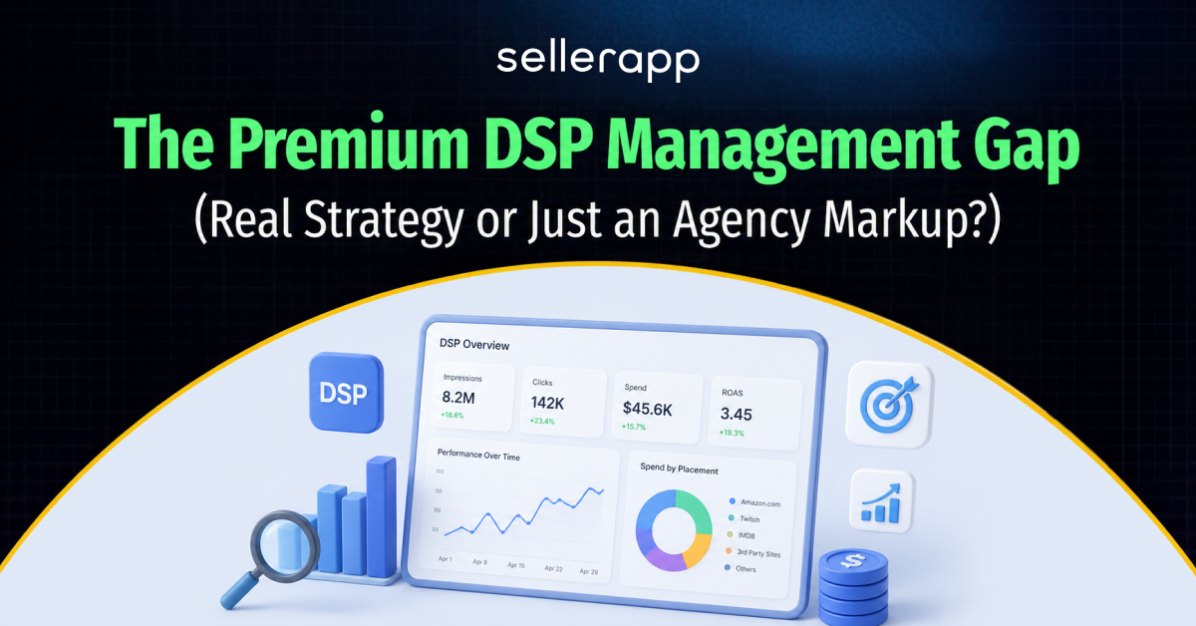
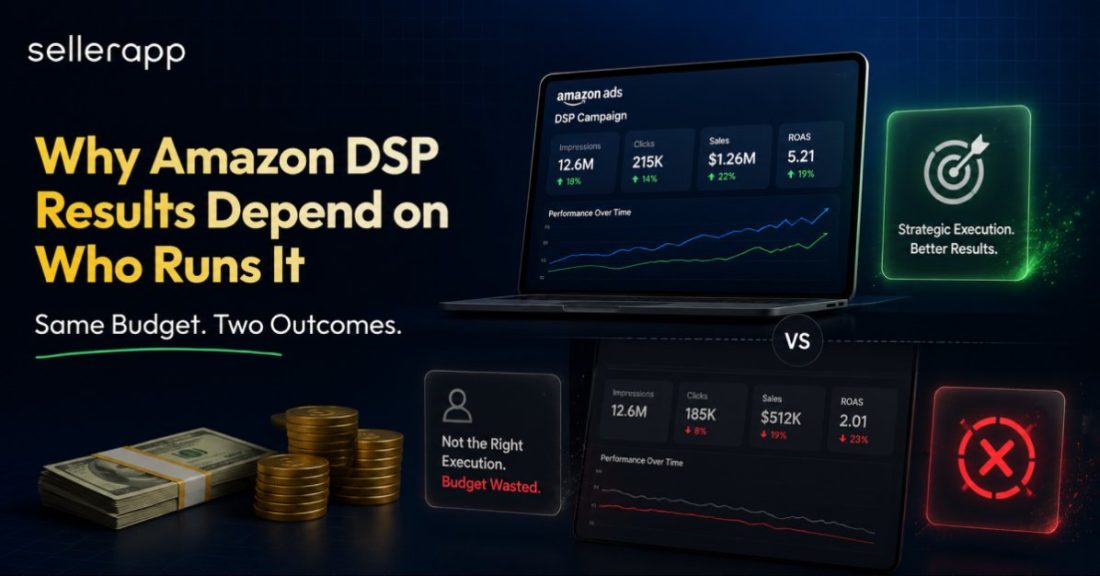
Here’s what nobody tells you about Amazon DSP. Two brands can run the identical budget, in the same category, on the same platform, and one triples its business while the other loses money the whole way. The difference usually isn’t strategy. It’s who is actually watching the account.
This is a question about DSP account management, and about whether managed DSP earns its keep, so let’s get concrete.
Quick Guide
- Same budget, two outcomes
- Forty accounts per strategist works out to thirty minutes a week for yours
- Thin attention shows up directly in your click-through rate
- The half most agencies skip is proving the spend was incremental
- TubShroom is the Brand B, in full
- Category math is where a thin-attention agency breaks completely
- Four questions that tell you which brand you are
- What we’d tell you either way
- Frequently asked questions
Same budget, two outcomes
Picture two versions of the same brand. Call them Brand A and Brand B. Same catalog, same $100k monthly DSP budget, same starting point, TACoS stuck at 33% with search tapped out.
| Brand A (thin attention) | Brand B (daily senior attention) | |
| Who runs it | One strategist across 40 accounts | Dedicated senior strategist |
| Time on the account | ~30 minutes a week | Every day |
| Audiences | Off-the-shelf demographic segments | Built from real purchase behavior |
| Pacing | Checked at month-end | Watched and corrected daily |
| Attribution | Blended monthly report | AMC-split, incrementality proven |
| Six-month outcome | Spend flat, TACoS climbs | DSP scales to 35% of revenue, TACoS holds |
Brand B is TubShroom. We’ll come back to them. Brand A is most DSP campaigns running right now, and the brands inside them usually have no idea that’s what they are.
The budget didn’t decide the outcome. The attention did.
Forty accounts per strategist works out to thirty minutes a week for yours
Most Amazon DSP agencies run 30 to 50 accounts through a single strategist. Do the arithmetic and that’s about half an hour of senior attention per account, per week.
Half an hour is enough to pull a report. It is nowhere near enough to run the channel. DSP isn’t a set-and-forget line item where you pick an audience and let it ride. It needs daily calls, which audiences to scale, which to cut, where pacing is slipping, when a placement stops earning its keep. A weekly report can’t make those calls, and a strategist with 39 other accounts won’t.
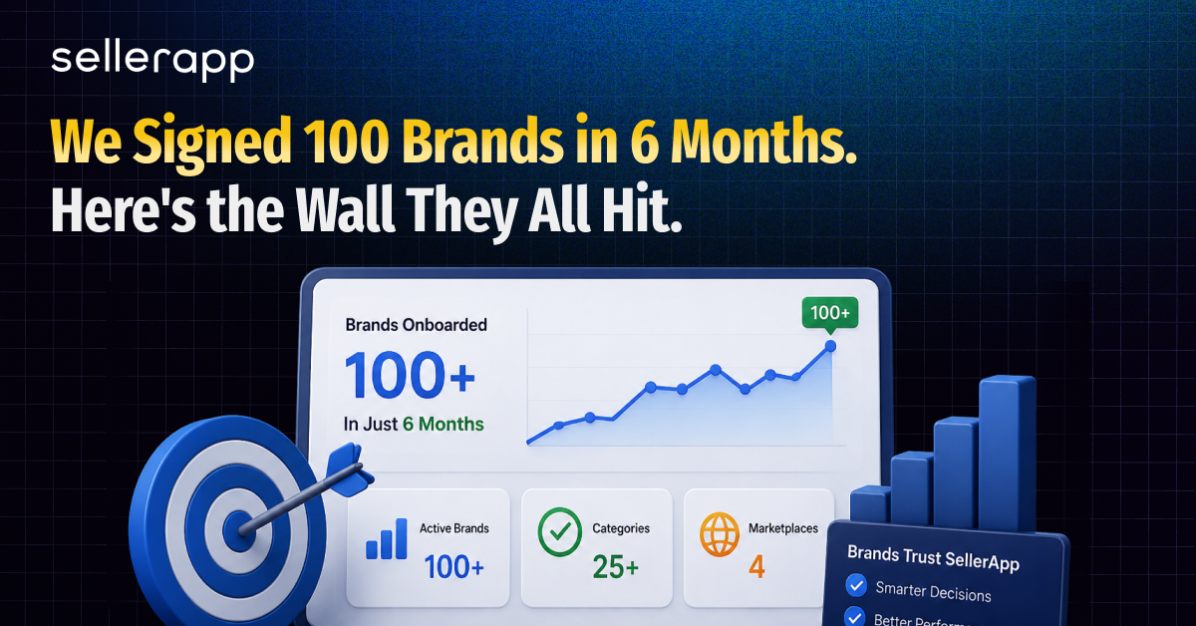
This is the part that surprised even us at scale. Across our first hundred enterprise accounts, the single biggest predictor of whether DSP worked wasn’t the brand’s budget, the category, or the creative. It was whether someone senior was in the account every day. Strategy is where agencies compete on the pitch. Staffing is where the results are actually won or lost.
Thin attention shows up directly in your click-through rate
Attention isn’t a soft quality you can’t measure. It turns into performance, and you can follow the line from one to the other.
A strategist who actually has time builds custom audiences from purchase behavior across hundreds of millions of shoppers, instead of grabbing the off-the-shelf demographic segments a rushed one reaches for. Better audiences get clicked. Our retargeting segments run at 9.38% click-through against a 0.47% platform norm, and that gap isn’t a trick. It’s what happens when someone builds the audience properly.
Then it compounds. Higher click-through lowers your effective CPM, which buys more impressions on the same budget, which feeds the algorithm more signal to optimize against.
Thin attention runs that same flywheel in reverse. Weaker audiences, lower click-through, higher CPMs, less reach for every dollar. Same budget, worse math, and nobody watching closely enough to catch it.
As Nithin Mentreddy, who runs our customer success, puts it, the next customer isn’t searching yet, so reaching them before a competitor does and then showing the brand it happened is the entire job. Most agencies stop at the first half, because the second half is hard to staff for.
The half most agencies skip is proving the spend was incremental
Reaching new buyers is the visible half. Proving the spend was incremental is the half that separates a real DSP operation from an expensive one, and it’s the half thin attention never reaches.
Through direct Amazon Marketing Cloud access, we separate DSP-assisted, DSP-only, and DSP-to-search purchases, and across the hundred accounts 42% of conversions came back DSP-assisted.
That number matters because it answers the only question your CFO actually asks, did this spend add sales, or just take credit for ones search would have closed anyway.
A blended monthly report can’t answer that. It’s built not to. And an agency running 40 accounts per head doesn’t have the hours to build proper attribution for each one, so it doesn’t, and the brand never learns whether its DSP budget was incremental or just expensive.
TubShroom is the Brand B, in full
Here’s the case the whole article stands on.
TubShroom is a household-goods brand that came to us with margins under pressure and TACoS stuck at 33%, search fully tapped out. We made DSP the primary growth engine and scaled it from zero to 35% of total revenue over six months. The number that proves the model isn’t the growth, it’s what stayed still underneath it. TACoS held flat in a 15 to 17% band the whole time.
That flat line is everything. If DSP had been reshuffling sales away from Sponsored Ads, efficiency would have dropped and TACoS would have climbed. It didn’t move, which means the revenue was genuinely new. That result doesn’t come from a bigger budget. It comes from someone senior watching the account closely enough to grow it without letting cost of sales drift up.
The mirror image is a premium gaming-chair brand that had exhausted search and grew revenue six times in five months by reaching Twitch viewers mid-stream, buyers who were weeks from ever typing the category into a search bar. Different category, same principle, someone in the account who knew where the next customer actually was.
Category math is where a thin-attention agency breaks completely
Even a well-meaning generalist gets buried by one thing. DSP economics swing hard by category, and running one playbook across all of them wastes budget you’ll never see leave.
| Category | Converts at | On a click of | What a good strategist does |
| Grocery | 15.57% | $0.58 | Leans in, reach is cheap and the flywheel spins |
| Electronics | 4.60% | Higher | Protects margin, only works on a ~$104 basket |
A strategist running fifty accounts can’t see these differences, let alone act on them. As our co-founder Dilip Vamanan puts it, the brands that win treat DSP as a discipline, not a switch you flip, and building the team around that gap is the whole reason the numbers land where they do.
These figures come straight from our own State of Amazon Advertising 2026 benchmark report, which we built from $3 billion in managed ad spend and measured against 28 independent sources to keep ourselves honest.
(Source: SellerApp State of Amazon Advertising 2026, published June 2026. Built on $3B in managed spend across 33,000+ brands, cross-referenced against 28 independent sources including Amazon Ads, Statista, and Skai.)
Four questions that tell you which brand you are
You don’t need us to run this diagnostic. Ask your current setup four questions and the answer comes fast.
- How many accounts does the person on mine also manage? If it’s 30-plus, you’re getting minutes a week.
- Are my audiences built from purchase behavior, or picked off a demographic menu?
- Does anyone check pacing before month-end, or do the problems surface after the budget’s gone?
- Can they show me, through AMC, that DSP added sales rather than reshuffled them?
If those answers make you wince, you’re Brand A, and the budget was never your problem.
What we’d tell you either way
The lesson from a hundred accounts is simple. The budget doesn’t decide the outcome, the attention on it does.
A dedicated senior strategist who knows your catalog, watches your pacing daily, builds real audiences, and proves incrementality beats a bigger budget run thin every single time.
That’s why we cap our strategists’ load and turn down the accounts we can’t run right. It’s a worse business in a spreadsheet. It’s a better campaign in the account, and TubShroom’s flat TACoS is the receipt.
If you’re spending six figures a month on Amazon and you suspect you’re Brand A, tell us where you are. We’ll pull your campaign data, run it against what a properly staffed account should look like, and show you the gap before you spend another dollar into it.
Frequently Asked Questions
Because who manages the account matters more than the budget. Most agencies run 30 to 50 accounts per strategist, roughly 30 minutes of attention per account each week. DSP needs daily decisions on audiences, pacing, and placements that thin coverage can’t deliver.
Far fewer than the 30 to 50 typical at volume agencies. DSP is a daily-decision channel, so a dedicated senior strategist per account consistently beats one spread thin.
Through Amazon Marketing Cloud, which separates DSP-assisted, DSP-only, and DSP-to-search purchases. In our accounts, 42% of conversions were DSP-assisted, the proof a CFO needs that spend added sales rather than reshuffling them.
Significantly. Our research shows Grocery converting at 15.57% on a $0.58 click while Electronics converts at 4.60% and only works on a larger basket. One playbook across all categories wastes budget.