


Amazon dynamic pricing is not about slashing your prices every time a competitor moves. If that’s been your strategy so far, you’re not competing. You’re just slowly giving away your margins.
What most Amazon sellers miss is that prices on Amazon change constantly, sometimes multiple times a day. Not to make everything cheaper, but to align with demand, competition, and conversion behavior.
As Jeff Bezos, founder of Amazon, once said, “Your margin is my opportunity.” And if you’ve been blindly undercutting prices, you’ve probably felt that firsthand.
You drop your price to win the Buy Box. A competitor goes lower. You follow again. Sales might go up, but your profit quietly disappears. The real game is not about being the cheapest.
It is about knowing when to adjust, when to hold, and when to stop reacting altogether.
In this article, we are going to break down how Amazon dynamic pricing works, what drives it, and how you can build a strategy that protects your margins rather than eroding them.
Quick Guide
What is Amazon Dynamic Pricing and How It Works
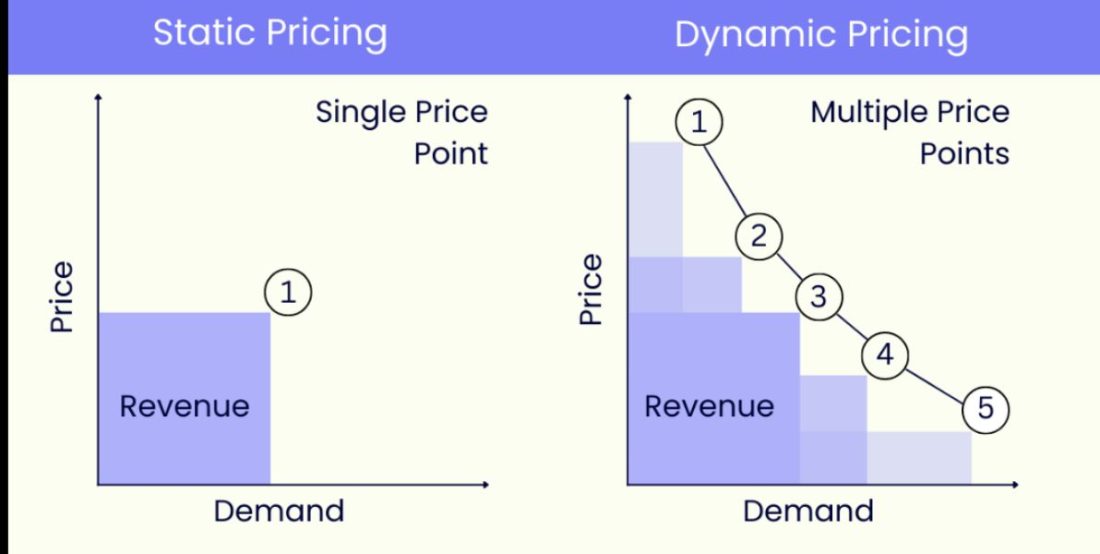
Amazon dynamic pricing is the process of adjusting product prices in real time based on demand, competition, inventory, and performance.
On Amazon, pricing is not fixed. It constantly shifts as the market changes. If your price does not move, you lose visibility and Buy Box share.
For example, a product at $30 can sell at $32 when demand increases or competitors go out of stock. But if new sellers enter at $28 and start undercutting, holding your price can reduce conversions.
This is how it works. Amazon continuously compares your offer with competing listings. As prices, demand, and performance signals change, your competitiveness is recalculated in real time.
Dynamic pricing is not about reacting to every change. It is about aligning your price with your offer and market conditions.
How pricing impacts the Buy Box
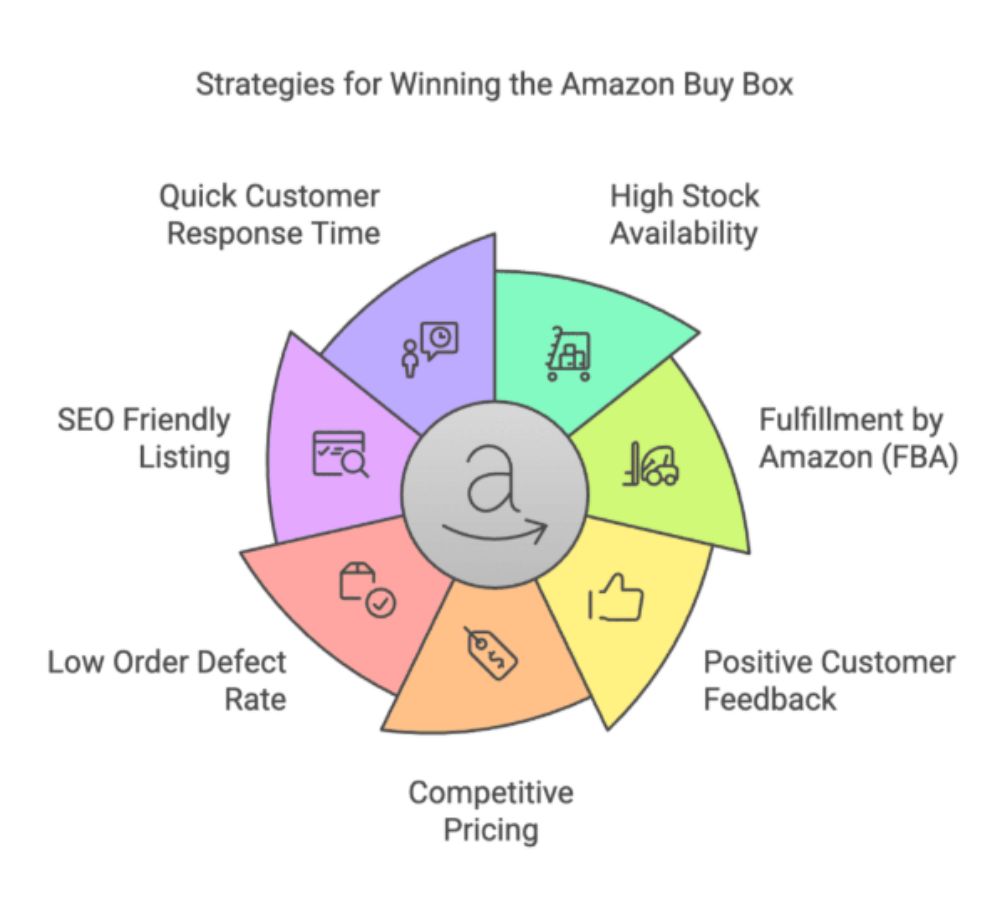
Amazon evaluates your entire offer, including price, fulfillment method, delivery speed, seller performance, and stock availability.
This means you can lose the Buy Box even with a lower price and win it at a slightly higher price if your overall offer is stronger.
Constant undercutting often reduces margins without improving visibility.
The goal is to stay within a competitive range while maintaining a strong offer. Sellers who align pricing with performance tend to win the Buy Box more consistently.
Amazon Dynamic Pricing Algorithm and Key Factors
The Amazon dynamic pricing algorithm adjusts prices by evaluating multiple signals at the same time to determine how competitive your offer is.
Most sellers react to one change, usually a competitor dropping price. Amazon does not. It looks at a combination of factors together.
Competitor pricing is the most visible signal, but it is only one part of the system. Inventory levels, demand shifts, conversion rates, and overall offer strength all influence how prices move.
The real challenge is not understanding these factors individually. It is seeing how they interact.
That is where better visibility helps. Tools like SellerApp give you access to performance, competition, and demand signals in one place, so pricing decisions are based on context, not guesswork.

Amazon Dynamic Pricing Strategies for Sellers
A strong amazon dynamic pricing strategy is built on three layers: control, automation, and intelligence.
Amazon dynamic pricing decision framework
Instead of reacting to every price change, use a simple set of checks.
- If a competitor drops price and you still hold the Buy Box, do nothing.
- If you lose the Buy Box, check the seller type. If they are FBM and you are FBA, holding your price can still work.
- If a competitor is FBA and priced lower, adjust only within your floor. Never go below it.
- If demand is increasing and competitors are going out of stock, raise prices gradually.
- If conversions drop without any pricing change, the issue is likely your listing, not your price.
These checks help you react in the moment. But to stay consistent and scalable, you need a structured pricing system.
Strategy 1: Set pricing guardrails before you react
Before adjusting prices, define clear boundaries based on contribution margin, not just cost.
For example, if your selling price is $30 and total cost including fees and ads is $21, your floor should not drop below $25 to $26 to maintain a safe margin.
At the same time, define how far you are willing to compete. Matching every competitor leads to price wars. Instead, compete only within a 2 to 3 percent range of the lowest price.
Guardrails ensure that even in aggressive markets, your pricing never turns into a loss.
Strategy 2: Move from manual pricing to rule-based automation
Manual pricing breaks when competition moves faster than you. Instead of reacting, define rules that execute automatically.
For example:
Match competitors only if the price difference is within 3 percent
Increase price by 5 to 10 percent when top competitors go out of stock
Hold price when you already have Buy Box share above 60 percent
This keeps pricing consistent across SKUs and prevents overcorrection.
SellerApp supports this by helping you track competitor movement and performance signals in one place, so these rules are applied with context.
Strategy 3: Use performance data to decide when not to compete
Not every price drop needs a response. If your conversion rate is already high or your ads are performing efficiently, lowering the price often reduces profit without improving sales.
For example, if your conversion rate is above category average or your ACoS is stable, holding price can maintain performance while improving margins.
Most sellers lose money by reacting to price without checking these signals first.
SellerApp helps by bringing conversion, demand, and ad data together, so you can decide when to hold instead of react.
So, what does this look like in practice, A seller pricing a product at $28 noticed a competitor drop to $26. Instead of reacting immediately, they checked performance.
Their conversion rate was already strong, and Buy Box share was stable at around 65 percent. Ads were also performing efficiently.
Instead of matching the lower price, they held at $28.
Over the next 48 hours, the competitor ran out of stock. The seller increased price to $29.50 and maintained sales while improving margins by over 15 percent.
This is what performance-driven pricing looks like. Not reacting to every change, but responding when it actually matters.
Strategy 4: Use AI signals to identify profitable moments
AI-driven signals help you move beyond single triggers and look at patterns.
Instead of reacting to one competitor’s drop, you evaluate trends like the following:
- consistent increase in conversion rate
- improving ad performance
- rising demand over multiple hours or days
In these situations, lowering the price may not be necessary. Holding or slightly increasing the price can improve profit without hurting volume.
This is where pricing shifts from reactive to predictive.

Strategy 5: Use dayparting and demand signals for pricing
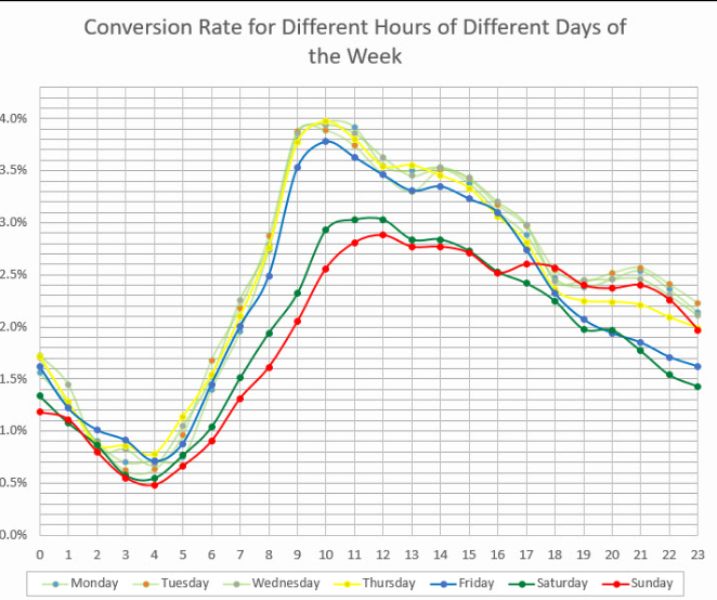
Most sellers price based on competitors. Smarter sellers price based on when buyers convert.
Conversion rates can vary by 20 to 40 percent during the day. Holding the same price throughout means either losing margin or missing sales.
Dayparting aligns pricing with intent. During high conversion periods, you can hold or slightly increase prices. During low intent windows, staying competitive helps maintain visibility.
Seasonal spikes like Prime Day or Q4 create similar opportunities. Strong demand and reduced competition often allow higher pricing without hurting conversions.
This becomes more effective when you use Amazon Marketing Stream and Amazon Marketing Cloud data to track real-time performance and demand patterns.
SellerApp helps you by monitoring these signals in one place, so pricing decisions are based on actual demand, not assumptions.
Inventory-aware pricing to protect margins
Pricing should not stay constant when your inventory changes.
If stock levels are high, staying competitive helps maintain sales velocity and avoid excess holding costs. But when inventory is limited, aggressive pricing can hurt more than help.
For example, if you have only 20–30 units left and strong demand, lowering your price to win more orders may lead to stockouts without maximizing profit.
In these cases, holding or slightly increasing price helps extend inventory while improving margins per unit.
On the other hand, if inventory is high and sales are slowing, controlled price adjustments can help maintain movement without triggering a price war.
This is where pricing shifts from being competition-driven to inventory-aware.
Pricing for Buy Box wins vs profit margins and when not to compete on price
This is where most Amazon dynamic pricing strategies break. Sellers treat the Buy Box like the only goal. But winning it at the wrong price can quietly destroy your margins.
A small price drop feels harmless. But the math says otherwise.
If you are selling at $25 with a $5 profit and drop to $23 to stay competitive, your profit may fall to around $3. That is a 40 percent hit for a minor price change. Scale that across hundreds of orders, and the impact adds up fast.
This is why advanced sellers do not chase the Buy Box blindly. They define when it is worth competing and when it is not.
For example, if your conversion rate is strong and your ads are performing well, dropping the price to win the Buy Box may not be necessary. Holding or even slightly increasing prices can improve profitability without losing momentum.
This is where pricing stops being reactive and becomes performance-driven. SellerApp supports this by connecting pricing decisions with real performance data, so you are not optimizing in isolation.
Common Mistakes Sellers Make With Dynamic Pricing
Even with the right strategy, small mistakes can quietly erode your margins.
Repricing at all hours equally, which cuts margins during low-intent periods where price changes have little impact.
Setting price floors based only on product cost, without factoring in fees and ad spend.
Reacting to every competitor move, even when it does not affect your Buy Box position.
Applying the same pricing strategy across all SKUs, instead of adjusting for demand and sales velocity.
How to Beat Amazon Dynamic Pricing Without Losing Margins
If you are trying to beat Amazon dynamic pricing by lowering your price, you are playing the wrong game.
You win by becoming harder to compare.
If your product looks identical to others, price becomes the only factor. Differentiation through better packaging, features, or quality gives you room to hold higher prices.
Bundles help break direct comparisons, while strong listings and reviews reduce price sensitivity.
At the same time, pricing discipline is critical.
Your floor should include product costs, fees, and ad spend. For example, if your break-even is $16, pricing below $18 to $19 starts eating into profit.
Anything below that is not competing. It is losing money.
The shift is simple. Stop reacting to price changes and build an offer that lets you price on your own terms.
What good dynamic pricing actually looks like day to day
A good Amazon dynamic pricing setup should feel predictable, not chaotic.
You are not checking prices every hour or reacting to every competitor move. Instead, your pricing follows a clear system.
When demand is strong, your prices hold or move up slightly without hurting conversions. When competition increases, your pricing adjusts within a defined range without cutting into your margins.
You are not guessing why sales dropped. You can see whether it is due to pricing, demand, or listing performance.
Your Buy Box wins are more stable because your pricing is aligned with your overall offer, not just the lowest number.
And most importantly, your margins stay consistent. You are not making sales at the cost of profitability.
This is the difference between reactive pricing and structured pricing. One feels like constant firefighting. The other feels controlled.
Final Takeaway: Winning Amazon Dynamic Pricing Is About Strategy, Not Just Price
Most sellers treat dynamic pricing like a problem to solve. The ones who actually win treat it like information. Every price shift in your category is telling you something about demand, competition, and where the real margin opportunities are.
The sellers who read those signals correctly and act with a plan do not just survive Amazon’s pricing environment. They use it to pull ahead while everyone else is busy racing to the bottom.
If you are still adjusting prices manually or reacting to competitors, you are leaving money on the table. Tools like SellerApp’s DIY platform help you bring structure to your pricing without added cost, so decisions are based on data, not guesswork.
And if you want to go beyond basic execution and actually connect pricing with advertising and demand signals at scale, working with an Amazon PPC agency like SellerApp can help you turn pricing into something that reliably grows your business instead of a constant risk.
FAQs:
Yes, Amazon uses dynamic pricing across most categories, and it happens far more frequently than most sellers expect. Prices can change multiple times a day based on factors like competitor pricing, demand shifts, inventory levels, and seller performance. This is not a manual process but part of Amazon’s automated system designed to optimize conversions.
It is a core part of how the marketplace functions, influencing visibility, Buy Box eligibility, and overall sales performance.
To understand how does Amazon use dynamic pricing, you need to look at how its system evaluates multiple signals at once. The Amazon dynamic pricing algorithm considers competitor prices, conversion rates, demand trends, and stock availability before adjusting prices.
It is not about simply lowering prices but about improving the chances of conversion and Buy Box wins. This means two sellers with similar prices can still perform differently. Amazon’s dynamic pricing focuses on optimizing the overall offer, which includes fulfillment speed and seller performance, not just price positioning.
An effective Amazon dynamic pricing strategy is built around control and consistency. Instead of reacting to every competitor price change, sellers define clear pricing rules, including minimum and maximum price limits. Strong amazon dynamic pricing strategies also factor in demand, conversion rates, and inventory levels before making adjustments.
Automation plays a key role here, helping sellers execute pricing decisions without delay. The goal is not to always be the lowest priced seller, but to remain competitive while protecting margins and maintaining long term profitability across different market conditions.
If you are trying to figure out how to beat Amazon dynamic pricing, the answer is not constant undercutting. Competing only on price leads to shrinking margins over time. Instead, sellers should focus on differentiation through better listings, bundles, and product quality. Strong branding and customer trust also reduce how much price actually influences their decision to buy.
Setting a clear pricing floor ensures you do not drop below a profitable range. When combined with data-driven decisions, these approaches help sellers compete effectively without falling into price wars or sacrificing long-term profitability.
Many sellers manage Amazon’s dynamic pricing using tools in the early stages, but as operations grow, complexity increases. Pricing decisions start connecting with ad performance, demand shifts, and customer behavior, making manual control difficult.
Based on common seller discussions, the challenge is not just adjusting prices but aligning them with overall performance. This is where solutions like SellerApp come in. Its DIY platform helps bring structure and visibility to pricing decisions, while its Amazon PPC agency supports advanced strategies by connecting pricing with advertising and demand signals for better results.