



Amazon PPC changed fundamentally when the Amazon COSMO algorithm stopped rewarding keyword matches alone and began evaluating products based on intent.
For a long time, running Amazon ads felt predictable. It was largely about selecting the right keywords, setting aggressive bids, cleaning up targets, and scaling what worked.
When performance dipped, optimization usually meant adjusting bids or negating underperforming targets and moving forward. That process still matters and continues to play an important role. But that is just not enough.
As of 2026, Amazon search acts more like a resolving system than a simple text-matching engine. Because of this change, PPC performance feels harder to control. Ads still appear, and budgets are still spent. At the same time, CPC rises, CTR weakens, and scaling becomes fragile even when keywords appear correct.
This change clearly explains why keyword-level optimizations no longer guarantee growth. Amazon’s COSMO system evaluates intent across listings, creatives, and engagement signals, not just search terms.
Wondering what is Amazon COSMO and how to make the best out of it?? Then Hi.
This guide explains what is Amazon COSMO and how COSMO interprets intent, and what sellers need to adjust across listings, creatives, and PPC to align with the system rather than work against it.
Amazon COSMO algorithm and Rufus: How Amazon’s Two AI Systems Are Rewriting Product Discovery
To begin, let’s understand what is Amazon COSMO? It is the system that determines which products are eligible to surface for a shopper’s refined intent. It does not rely on keyword matches alone. Instead, it learns from shopper behavior to understand which products actually solve specific problems.
COSMO analyzes what shoppers click, compare, purchase, and keep when they express similar needs. Over time, it builds confidence around which products consistently deliver the right outcome for a given intent.
This learning now sits upstream of both organic rankings and paid placements. Before ads scale or products rank, Amazon evaluates whether a product fits the job the shopper is trying to get done.
For example, when shoppers ask about oil-free egg cooking, COSMO does not simply surface pans that mention “non-stick.” Instead, it observes which pans shoppers consistently engage with, compare favorably, and keep after purchase. If products that clearly specify non-stick coating and ease of cleaning perform better for that intent, COSMO strengthens that association. As a result, products that fail to meet those expectations gradually lose visibility, even if they remain keyword-relevant.
This is where Rufus enters the picture.
Rufus is Amazon’s shopper-facing AI assistant. Its role is not to decide relevance or rank products. Rather, it helps shoppers clearly express and refine their intent. Rufus allows shoppers to ask questions in natural language instead of guessing keywords, making intent more explicit and easier for Amazon to interpret.
When a shopper asks a question through Rufus, the assistant helps structure that request and guides discovery by suggesting products to explore and compare. However, the pool of products Rufus draws from is shaped by COSMO’s understanding. Rufus does not override COSMO. Instead, it operates within the boundaries COSMO sets.
Together, these systems change how product discovery works. COSMO determines which products make sense for an intent based on historical performance. Rufus helps shoppers navigate and refine choices within that intent.
In addition, PPC operates inside this framework by amplifying products that Amazon already understands with confidence.
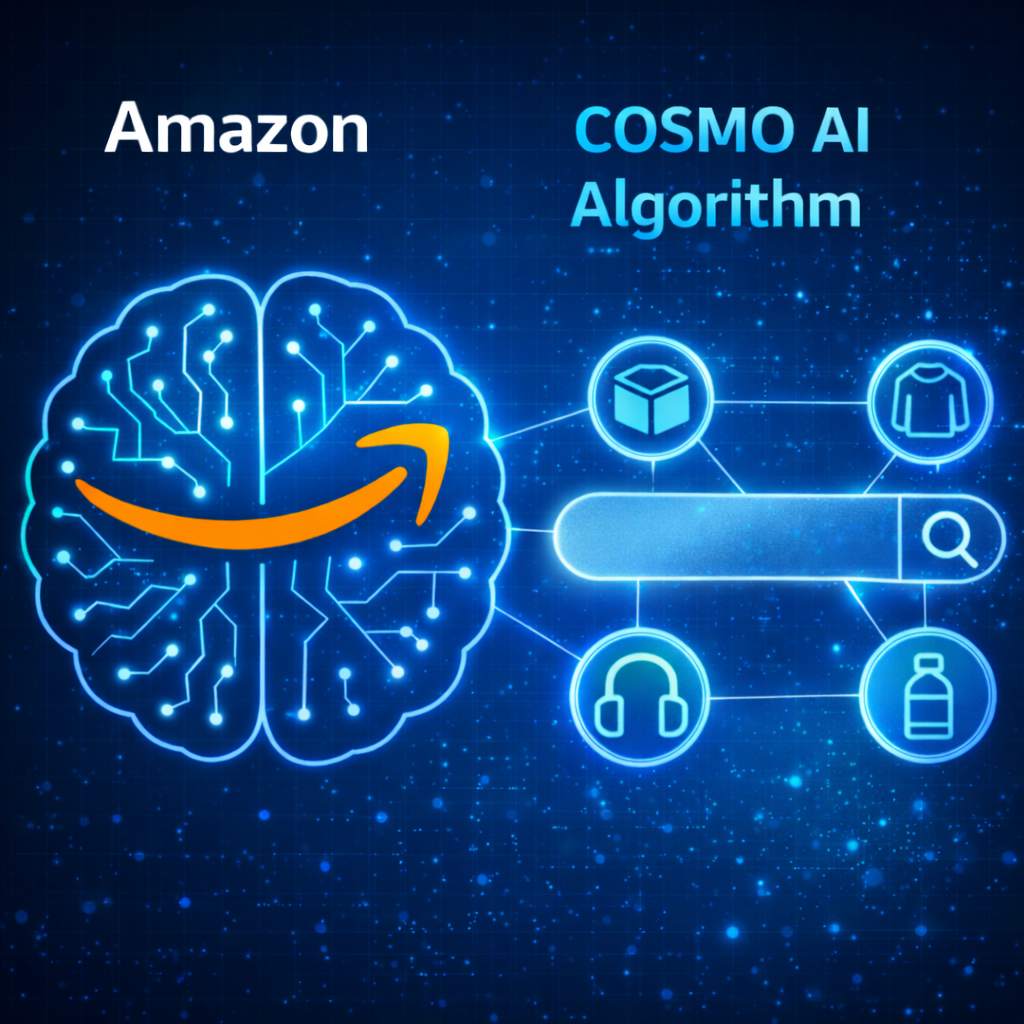
What’s the role of Rufus AI when it comes to product discovery?
Rufus plays a specific role in Amazon’s product discovery flow. It guides shoppers to clearly express their shopping intent, but it does not decide which products qualify to appear.
Rather than forcing the buyers to guess the right keywords, Rufus allows them to describe their needs in full sentences. Resulting in discovery shifts from keyword hunting to intent expression.
Once intent is expressed, Rufus helps structure it more clearly.
For example, when a customer shops with a broad idea like “non-stick pan” and then asks, “Which pan works best for cooking eggs without oil?” This question goes beyond a basic search concern. It communicates the searchers’ functional expectations such as easy food release, minimal oil usage, and simple cleanup.
At this stage, Rufus does not rank products. Instead, it interprets the shopper’s question and translates those expectations into a refined discovery context. That context defines the type of solution the shopper is looking for.
From there, the Amazon COSMO algorithm takes over.
COSMO evaluates which products have historically satisfied similar expectations. It analyzes past shopper behavior to identify listings that consistently deliver outcomes like easy food release, lower oil usage, and easier cleanup for comparable use cases.
Rufus then presents those COSMO-qualified products back to the shopper, helping them explore, compare, and narrow options based on the expressed need.
In simple terms, Rufus captures and clarifies intent. COSMO determines which products deserve consideration for that intent. Discovery happens when both systems work together.
How PPC fits between Rufus & Amazon COSMO algorithm
Amazon PPC does not operate between Rufus and COSMO as a system. Instead, it operates on top of COSMO’s relevance decisions.
COSMO determines whether a product is eligible to appear for a given shopper intent based on historical behavior and intent alignment. Once that eligibility is established, PPC enters the auction to compete for visibility within that qualified pool.
Rufus does not control ad delivery or ranking. Its role is to support shoppers in clarifying and refining intent before they actually see the products or ads. As a result, shoppers more often than not arrive at ad placements with clearer expectations.
This is why PPC performance is increasingly tied to intent alignment. Ads that match the intent Rufus helps surface tend to feel natural and convert more efficiently. Think of it this way winning an auction with the wrong intent is a waste of budget. You’ll see lower engagement from the start, and because the relevance isn’t there, your ad’s effectiveness will fade away much sooner than a well-aligned campaign
Why bidding more no longer fixes weak listings.
When a listing does not align with the Amazon COSMO algorithm’s intent graph, increasing bids only increases exposure to shoppers who are unlikely to convert. That leads to low CTR, a weaker conversion rate, and quick negative feedback into Amazon’s relevance models.
This is why some campaigns spend a lot but fail to scale profitably. The issue is not auction competitiveness. It is an intent mismatch. Amazon COSMO is effectively signaling that the product is not the best solution for the job the shopper is trying to complete.
Why Cramming Keywords into Your Listing Is Now a Losing Game (And a Bad Strategy)
Keyword stuffing was once a common tactic for improving visibility on Amazon. At worst, it made listings harder to read. At best, it helped products appear across a wider range of searches.
However, in an intent-driven system, that tradeoff no longer exists. Keyword stuffing now actively works against how Amazon evaluates relevance.
This is because COSMO does not over-read listings by counting how many times a term appears. Instead, it reads what a product is meant to do and if it consistently delivers on that purpose.
When a listing is overloaded with freely related keywords, it introduces confusion rather than clarity. As a result, COSMO struggles to form a strong understanding of the product’s role, which in turn weakens relevance instead of strengthening it.
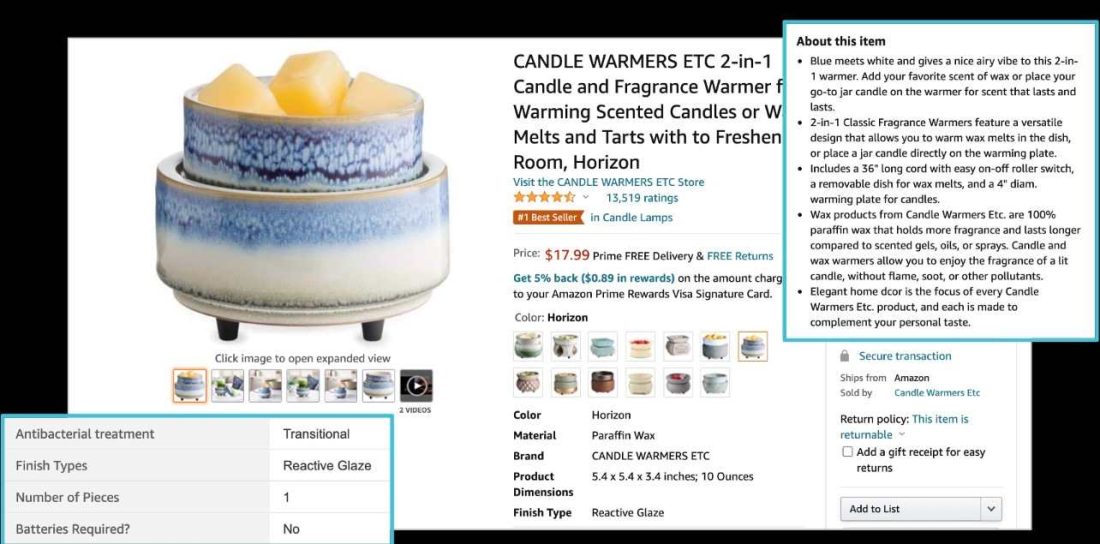
Consider a water bottle listing that tries to rank for everything.
The title includes forced, all-over-the-place generic keywords like gym, travel, kids, hiking, office, stainless steel, plastic, insulated, and leak-proof. Additionally, bullet points also keep repeating variations of the same phrases to maximize coverage.
To a human reader, the product feels unfocused. To COSMO, it is even worse. The system cannot vouch for the product into a specific intent cluster because the listing signals too many competing use cases.
The result is that the product gets tested across assorted contexts. Shoppers click less often because the listing does not feel like it is made for them. CTR drops, which affects relevance signals and increases CPC over time.
How does keyword stuffing dilute behavioral signals?
COSMO relies heavily on behavioral feedback to evaluate relevance. Once a product is shown in search results or ads, the algorithm observes the shoppers’ actions following the suggestion. If customers click, compare alternatives, make a purchase, or if there is a consistent return of products post-purchase.
These post-click actions help COSMO decide whether the product truly fits the intent behind the search.
Problems arise when a listing attracts traffic from multiple unrelated intents.
For example, a gym-focused shopper may click on a product expecting a fitness use case and leave immediately when the listing does not match that expectation. A parent shopping for kids may arrive from a different query and exit just as quickly. Each interaction happens for a different reason, but from COSMO’s perspective, they all register as weak engagement.
When this pattern repeats, COSMO struggles to draw a clear conclusion. None of these interactions reinforces a strong intent match. Instead of learning that the product solves a specific problem, the system learns that outcomes are inconsistent.
That inconsistency has consequences. COSMO responds by testing the product more cautiously across contexts. Ads receive fewer confident placements, CTR weakens, and CPC increases over time as Amazon compensates for uncertainty.
This is why keyword-stuffed listings often feel expensive to scale. The issue is not visibility. It is that the product never earns enough behavioral clarity for COSMO to confidently back it.
Stuffing breaks the alignment between the listing and the ads
Keyword-stuffed listings also undermine PPC efficiency. Broad and phrase targeting can expose ads to multiple shopper intents. When a listing does not clearly signal which intent it serves best, the ads tend to feel generic within those contexts.
For example, a Sponsored Products ad for “water bottle” may attract clicks from office shoppers, gym users, and travelers. Without clear positioning, conversion weakens across these scenarios. The ad remains technically eligible, but it lacks contextual strength.
Over time, COSMO interprets this mixed performance as uncertainty. As a result, the system becomes more cautious, either by limiting confident placements or by requiring a higher CPC to maintain visibility. The advertiser ultimately pays more to appear in searches that never had a strong chance of converting.
In this sense, inefficient PPC performance is not caused by keyword reach alone. It is caused by the absence of clear intent signals that COSMO can learn from and support..
Why clarity now outperforms coverage
Intent-driven systems reward focus. A listing that clearly declares that it is for gym workouts and travel hydration may appear less versatile. But it performs better in practice. Such a declaration isn’t vague. It signals clarity.
And that clarity signals COSMO to match the product confidently to specific intents.
Behavioral signals reinforce each other instead of canceling out. Ads receive cleaner traffic, higher CTR, and more stable conversion. Keyword stuffing does not increase reach in this environment. It increases confusion. On Amazon nowadays, the safest way to scale visibility is not by saying everything but by clearly saying the right thing to the right shopper.
Amazon COSMO Only Activates on Broad Queries: What That Means for Your Strategy
Amazon COSMO algorithm’s influence is the strongest on broad and ambiguous searches. That is where intent is unclear and Amazon has to interpret what the shopper is actually trying to do. On highly specific searches, the COSMO plays a smaller role because intent is already explicit.
This contrast counts because it explains why broad match campaigns feel unpredictable while exact match campaigns often remain stable.
Amazon COSMO Has the Strongest Impact on Broad Queries: What Does That Mean for Your Strategy?
Amazon COSMO’s influence is strongest on broad and ambiguous searches. These are situations where intent is unclear and Amazon needs to interpret what the shopper is actually trying to accomplish.
On highly specific searches, COSMO plays a more limited role because intent is already well defined. In these cases, keyword relevance and basic eligibility carry more weight.
This contrast matters because it explains why broad match campaigns often feel unpredictable, while exact match campaigns tend to remain more stable.
A broad query like “office chair” or “water bottle” does not represent a single intent. Instead, it can signal many possible goals.
For example, an “office chair” shopper may be looking for ergonomic support, a budget option, something suited for long workdays, or a visually minimal design. Similarly, a “water bottle” shopper might mean gym hydration, office use, travel, or outdoor activity.
In these situations, COSMO becomes more influential because Amazon needs help determining which products make sense for each shopper. It relies on historical behavioral data to infer intent and then filters which products are eligible to appear, both organically and through ads.
By contrast, a search like “ergonomic office chair for back pain” already communicates the job clearly. Amazon requires far less interpretation, allowing keyword relevance and baseline eligibility to do most of the work.
What does this mean for a broad match PPC?
Broad match is no longer just a reach tool. It is an intent discovery channel.
When a product performs well on broad queries, it is usually because the listing gives Cosmo enough clarity to place it confidently into one or more intent clusters. When it performs poorly, the issue is rarely bidding alone. It is usually unclear positioning.
This is why two advertisers can bid on the same broad keyword and see completely different results. One listing communicates who the product is for and why it exists. The other relies on generic coverage. Amazon COSMO favors the former.
Why do exact and phrase behave differently?
Exact and phrase match searches tend to carry clearer intent. Amazon’s COSMO algorithm still evaluates relevance in these cases, but its influence is lower because ambiguity is limited.
This explains why exact match campaigns often appear efficient even when listings are not particularly strong. They benefit from explicit intent already embedded in the query. However, this efficiency has a ceiling. Long-term growth depends on winning broader and more ambiguous searches, where intent is not pre-defined.
Strategic implications for advertisers
Broad queries are where listings get stress-tested. When a product struggles to perform in these environments, it usually signals an intent clarity issue rather than a bidding problem. This distinction changes how the PPC strategy should be approached.
Broad match campaigns should be used to learn which intents a product naturally fits. Search term reports from these campaigns reveal real use cases and expectations, not just keyword variations.
Exact and phrase match campaigns should then be built around the validated intents discovered through broad testing. Once alignment is proven, these campaigns tend to scale more profitably and predictably.
Negatives should also be added based on intent mismatch rather than performance alone. If a term reflects the wrong job, it should be excluded even when it appears relevant on the surface.
TLDR
Amazon COSMO does not punish broad queries. It evaluates them more carefully.
Broad searches are where Amazon decides whether a product deserves flexibility and reach. Listings that communicate a clear purpose tend to perform well here. Listings that attempt to cover everything tend to struggle.
When broad match feels expensive or unstable, the solution is rarely found in bids alone. More often, it requires making the product’s role clear enough that COSMO understands exactly when to show it and when not to. This is what COSMO’s stronger influence on broad queries ultimately means for strategy.
Generative Engine Optimization (GEO) for Amazon: How to Optimize Listings for COSMO
Generative Engine Optimization moves the aim of listing optimization from keyword coverage to intent clarity. Many brands now work with AI and GEO search optimisation experts to make products and content more understandable to AI systems rather than relying only on keyword repetition.”
The rule is to make it understandable in the same way a human would understand it after a short explanation.
Conventional keyword optimization informs Amazon what the product is called. GEO tells Amazon what the product is used for, who chooses it, and in what situations it solves a problem.
The Amazon COSMO algorithm relies on this type of understanding to decide which products belong in which intent clusters.
The difference becomes clear when comparing how two listings communicate meaning.
Keyword-focused listing example:
Title: “Stainless Steel Water Bottle 32oz Leak Proof BPA Free Insulated Bottle” Bullets:
- High-quality stainless steel
- Leak-proof lid
- Keeps drinks cold
- Durable design
This listing checks the keyword boxes, but that’s it. COSMO can classify the product as a water bottle and recognize basic features, but it struggles to determine when this product should be preferred over other similar products.
Is it for the gym or the office? Is it designed for long trips or short commutes? Is it meant for active use or casual hydration?
Because those questions are unanswered, the COSMO treats the product as widely generic. In PPC, that usually means exposure across mixed intents, lower click confidence, and inconsistent performance on broad or phrase keywords.
GEO-aligned listing example
Amazon SEO hasn’t disappeared. Let’s not make it sound like that. This isn’t a battle between keywords and COSMO. You still need keywords. You still need to think about indexing.
Your primary terms should absolutely sit in the title and bullets. That part is still foundational. But semantic optimization is a cherry on top for your sales.
Let’s look at this example.
Title: “32oz Insulated Stainless Steel Water Bottle for Gym, Travel, and Daily Hydration.”
That clearly hits the water bottle, gym, and travel. Solid SEO.
Now look at the bullet:
“Leak-proof lid designed for workouts, commuting, and long travel days.”
You could have just said leak-proof lid. Done. Keyword placed. Move on.
But when you add workouts, commuting, and long travel days, you’re doing more than inserting words. You’re defining context. You’re telling Amazon when this product belongs in the shopper’s life.
That’s where COSMO comes in. It connects those use cases to broader, multi-intent searches like “water bottle for gym,” “travel water bottle,” and even “hydration bottle.”
So no, there is no question of either or at all. You add keywords. But you also add meaning. And that combination is what makes the listing stronger.
How GEO improves PPC performance
Broad and phrase keywords often represent multiple overlapping intents. A search like “water bottle” can include shoppers looking for gym gear, office accessories, kids’ products, or travel items.
Amazon COSMO’s job is to filter which products feel appropriate for each case.
GEO-aligned listings benefit because they reduce ambiguity. When an ad appears, shoppers immediately recognize relevance. That improves CTR because the product feels intentionally placed, not randomly inserted.
Higher CTR circles back into Amazon’s relevance models. Gradually, CPC stabilizes because the system gains trust in the product’s fit for that intent. Impression share improves because the ad is no longer treated as a risky placement.
Listings optimized for GEO also perform better in Sponsored Brands and Sponsored Display placements. Creative elements such as headlines and images align naturally with intent-based browsing, which makes ads feel consistent across touchpoints.
The result is not just better conversion. It is a healthy signal flow between listing, ad, and shopper intent. That alignment is what allows PPC to scale without constantly fighting rising costs.
Amazon COSMO is Multimodal (Your Images Are Now Part of Your SEO)
Cosmo does not learn from text alone. It is multimodal, meaning it processes and connects signals from text, images, and behavior together to understand what a product is and how it should be positioned.
Simply, this means product images are no longer just for your conversion. They are relevant assets. The images you upload decide how Amazon’s AI interprets use cases, audience, and context, and that interpretation feeds directly into discoverability and ad performance.
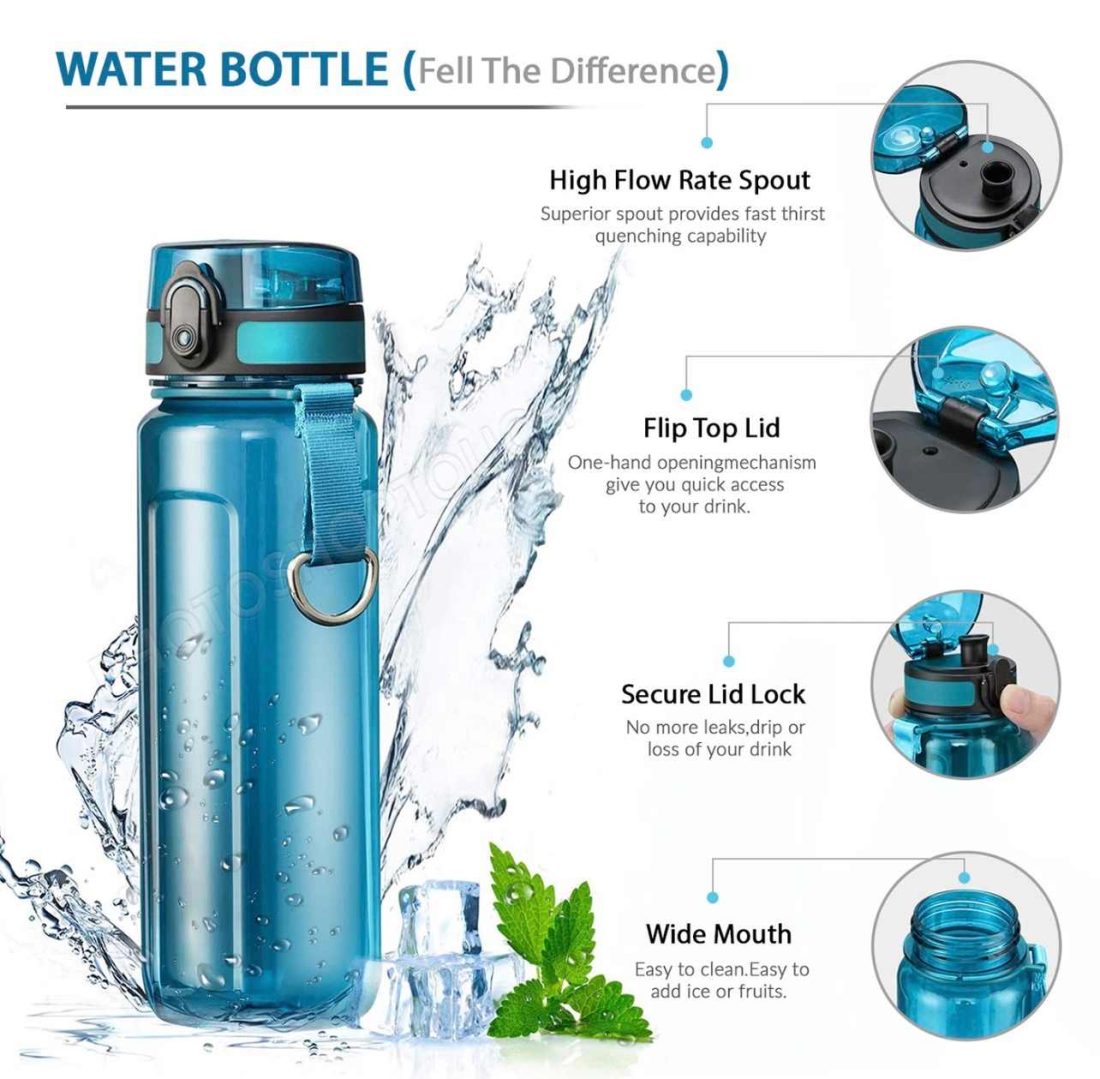
How COSMO reads images alongside text
COSMO evaluates consistency across signals. It looks at what the listing says and what the images show, then checks whether shopper behavior reinforces that story.
For example, a listing may claim a water bottle is designed for gym workouts. If the images only show studio shots on a white background or desk-style lifestyle images, COSMO receives mixed signals. The text suggests one use case. The visuals suggest another.
Now consider the opposite case. A bottle described as gym-focused is shown in workout environments, gym bags, and active settings. Shoppers who search gym-related queries are more likely to click and convert. COSMO reinforces that association and becomes more confident in placing the product in fitness-related intent clusters.
Why image clarity affects SEO and PPC
When COSMO is confident about a product’s context, it becomes easier to place that product correctly across broad searches. That improves organic eligibility and reduces the relevance tax paid in PPC.
If images are generic or misaligned, COSMO has to test the product across multiple contexts. Those tests often fail quietly. CTR drops. Conversion weakens. CPC rises to compensate for uncertainty.
This is why two listings with similar copy can perform very differently. One tells a clear visual story. The other forces COSMO Amazon to guess.
Lifestyle images as intent anchors
Lifestyle images act as intent anchors. They answer unspoken questions like where this product is used, who uses it, and what problem it solves.
A protein shaker shown in a gym locker room sends a different signal than one shown on a kitchen counter. A pan shown cooking eggs communicates a different use case than one shown empty on a stovetop. These cues help COSMO map products to real-world scenarios.
The stronger and more consistent these signals are, the easier it is for Amazon to match products to shopper intent without excessive testing.
What this means for optimization
Optimizing images now requires the same intent discipline as optimizing copy. Each image should reinforce a specific use case or audience rather than simply adding visual variety.
Hero images establish category and quality. Secondary images establish context and usage. Together with copy, they form a unified message COSMO can interpret confidently.
In a multimodal system, relevance is not written in one place. It is communicated across every surface. Listings that align text, images, and behavior create cleaner signals. Cleaner signals lead to better placement, lower CPC, and more stable scale.
Backend Product Attributes (The Hidden Optimization Layer Amazon COSMO Reads First)
Not every relevance signal is visible to shoppers. Some of the strongest signals the COSMO algorithm uses that never appear on the product detail page at all. They live in the structure of the catalog and in how consistently information is provided across fields.
COSMO relies on structured data because it is easier to classify, compare, and trust. When that structure is clean, ads are treated as more relevant by default.
When it is messy or incomplete, COSMO compensates by testing more aggressively, which usually means higher CPC and unstable performance.
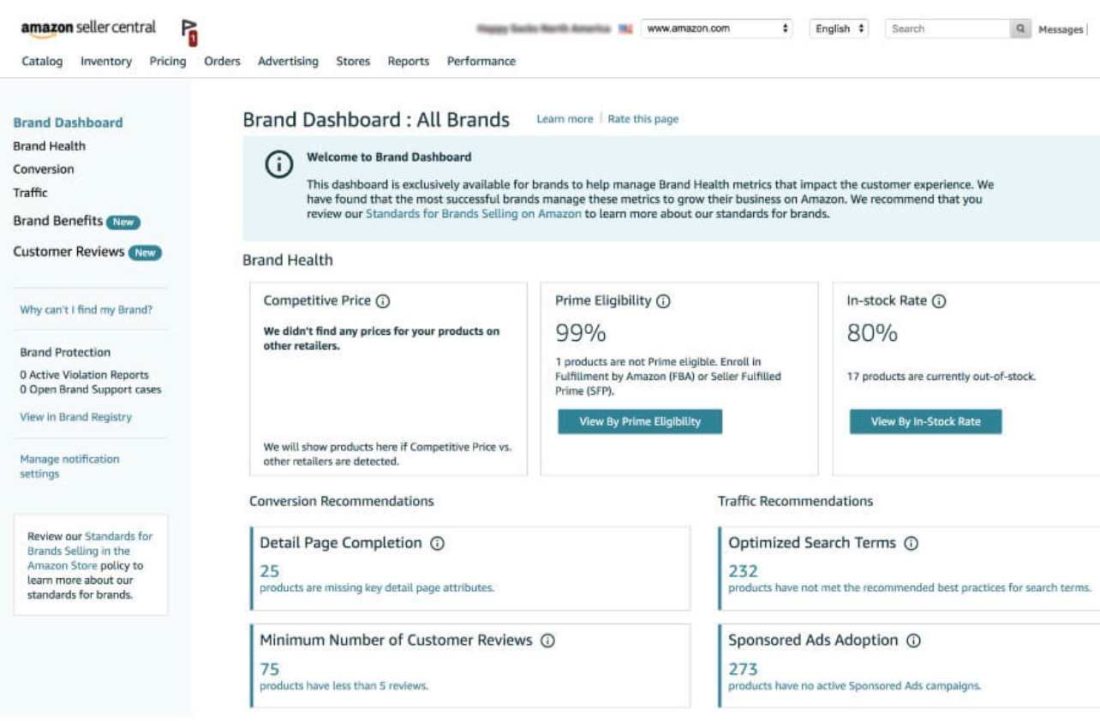
Backend attributes as intent data
Backend attributes act as intent markers. Fields like capacity, compatibility, material, age range, and usage context tell COSMO Amazon what situations a product belongs in. Consider a laptop sleeve.
One listing includes precise compatibility attributes such as “13-inch MacBook Pro” and “13-inch MacBook Air.” Another listing mentions “fits most laptops” in the bullets, but leaves backend fields generic or empty.
When a shopper searches for “13-inch laptop bag for MacBook,” Amazon’s COSMO algorithm does not rely on bullet copy alone. It prioritizes products with explicit compatibility data because those products have historically reduced mismatches and returns. Ads tied to those listings earn relevance more easily, which stabilizes CPC.
When attributes are missing or inaccurate, COSMO relies on weaker signals like keyword overlap and early click behavior. That increases the risk of showing ads to the wrong audience. As engagement drops, CPC rises to compensate for lower relevance confidence.
COSMO does not evaluate products entirely in isolation. Instead, it learns from how products relate to one another within a catalog. When a seller offers multiple SKUs that are logically connected, COSMO gains more data to understand intent patterns, preference shifts, and shopper decision behavior.
This additional context improves how confidently Amazon can surface those products when shoppers search.
That does not mean more products automatically lead to better performance. Rather, it signals a stronger catalog structure. Related SKUs give COSMO Amazon a broader learning surface. When that structure is present, relevance becomes easier to establish, and PPC performance tends to stabilize over time.
How catalog depth improves intent understanding
A single SKU gives COSMO limited feedback. Shoppers either click it or they do not. They buy it, or they leave. There is very little insight into why. A deeper catalog changes that. When multiple SKUs exist within a category or variation family, COSMO can observe how shoppers move between options.
For example, a seller offering one office chair provides a single outcome. A seller offering chairs with different seat heights, lumbar designs, price tiers, and materials allows COSMO to see preference refinement. Shoppers may start broad, compare variants, downgrade on price, or upgrade for comfort. That movement teaches COSMO how intent evolves.
The system becomes more confident in recommending products from that catalog because it understands the tradeoffs shoppers are making.
Why variations outperform standalone ASINs
Variation families are especially valuable because they expose decision-making behavior.
When shoppers consistently switch from a medium to a large size before purchasing, COSMO Amazon learns sizing expectations. When they move from a basic version to a premium one, COSMO learns which features matter at higher intent stages.
That learning does not stay isolated to one ASIN. It strengthens the entire family. This is why variation-heavy catalogs often see stronger performance on broad queries and Sponsored Brands placements. COSMO has more evidence that the seller understands the category and serves it well.
Standalone SKUs lack this reinforcement. They rely on limited signals and require more testing, which often shows up as higher CPC and slower scaling.
How SKU depth affects PPC efficiency
Catalog depth improves PPC indirectly by reducing uncertainty.
When COSMO Robot Amazon has more data points, it is more willing to place ads broadly. It does not need to be tested as cautiously because historical outcomes support relevance. That confidence shows up as more consistent impressions and lower relevance penalties.
This is also why brands with deeper catalogs often win broad match auctions more efficiently, even when bidding similarly. They are not necessarily better advertisers. They are easier for COSMO to classify and trust.
Why random SKU expansion does not help
Adding unrelated products does not improve catalog strength. In some cases, it weakens it.
COSMO looks for coherence, not volume. A catalog filled with loosely related SKUs creates fragmented signals. Shoppers behave inconsistently across categories, and COSMO Amazon struggles to build reliable intent models.
Depth works when products are connected by use case, audience, or category logic. Accessories that support a core product, bundles that reflect common purchase behavior, and variations that map to real preferences all strengthen the catalog. The real advantage of catalog depth is that COSMO rewards sellers who help it learn faster.
More SKUs, when structured correctly, allow Amazon to understand not just what shoppers buy, but how they decide. That understanding makes product discovery easier, reduces the cost of testing, and improves PPC efficiency slowly.
How Does COSMO with Amazon DSP Extend Intent Beyond Search?
COSMO Amazon doesn’t stop learning once a shopper leaves the search results page. The intent it identifies during search and browsing continues to influence how Amazon recognizes and re-engages that shopper later. This is where Amazon DSP fits naturally into a COSMO-driven strategy.
The alliance with COSMO with Amazon DSP goes more like this. When a shopper searches for something broad or problem-oriented, Amazon COSMO interprets intent based on behavior. What they clicked, what they compared, and how long they spent evaluating options. Even if the shopper does not convert immediately, that intent signal does not disappear. It becomes part of how Amazon understands the shopper’s interests.
Amazon DSP allows sellers to act on that understanding outside the search moment. Instead of relying only on keywords, DSP uses Amazon’s intent signals to re-engage shoppers across Amazon-owned properties and the wider display network. The message follows the intent, not the keyword.
For example, a shopper searches for “ergonomic office chair for back pain,” browses a few listings, and leaves without purchasing. COSMO has already learned what problem the shopper is trying to solve. DSP allows sellers to reinforce that same use case later, showing ads that speak directly to comfort, posture support, or long work hours rather than generic chair messaging.
The COSMO with Amazon DSP duo works when the foundation is strong. If listings, images, and sponsored ads clearly communicate intent, COSMO Amazon builds clean signals. DSP then amplifies those signals across the funnel. If the foundation is weak, DSP simply spreads confusion on a larger scale.
For sellers, the takeaway is simple. Sponsored ads capture intent in the moment. Amazon DSP extends that intent beyond search. When both Amazon COSMO with Amazon DSP feels aligned, understanding, and advertising stops feeling fragmented and starts working as one connected system.
Is There a Universal GEO Schema? What Amazon COSMO Shares With Other AI Search Systems
There is no universal GEO template that can be copied across platforms. However, modern AI-driven discovery systems share a common underlying logic. Amazon COSMO, Google’s AI-powered search, and retail media algorithms are all designed to understand one core thing first. What problem does this product solve, and in which situations does it make sense?
Because of this, these systems rely less on keyword frequency and more on meaning. When a listing clearly explains what the product is for, who uses it, and when it is relevant, it becomes easier for any AI system to classify and surface it appropriately.
This is why GEO principles extend beyond Amazon. The approach is not about optimizing for COSMO alone. It is about communicating intent clearly enough that machine learning systems can interpret and reuse that understanding across different environments.
Advanced Listing Fine-Tuning Tactics for the COSMO Amazon Era
Once a listing’s core structure is clear, optimization becomes an exercise in alignment rather than expansion. Adding more keywords or additional use cases often weakens clarity instead of improving reach.
Strong listings in the COSMO era are focused. Titles anchor a primary intent. Bullets progress logically from function to benefit to context. A+ content reinforces the same narrative rather than introducing new ones.
When different sections of a listing describe different products or purposes, COSMO hesitates. When every element reinforces a shared understanding, relevance becomes easier to establish and less expensive to maintain.
Final Thoughts: Future-Proof Your Listing to Win the Algorithm Apocalypse
If COSMO Amazon and Rufus have made one thing clear, it’s that performance increasingly depends on how well Amazon understands your product before ads are scaled.
This is why strengthening the foundation matters. Intent-aligned listings, clear visuals, structured attributes, and reinforcing review signals create the clarity Amazon needs to place products confidently. When these elements are in place, advertising works as an amplifier rather than a crutch.
SellerApp helps brands build this foundation by aligning listings, creatives, and PPC strategy around real shopper intent. This makes it easier to reduce wasted spend, stabilize performance, and unlock sustainable growth.
For teams looking to fine-tune specific campaigns, SellerApp’s Amazon PPC services can help you move faster with clearer signals and smarter execution. And if you need end-to-end support across listings, ads, and optimization, SellerApp’s Amazon Full Service Management is built to handle the entire journey.
FAQ
1. What is Amazon COSMO, and why do sellers say Amazon ads suddenly stopped working?
Amazon COSMO is the system Amazon uses to judge whether a product actually fits what a shopper is trying to do, not just whether the keywords match. Many sellers notice COSMO Amazon when ads that used to convert suddenly get more expensive or unstable without obvious changes. What’s usually happening is that Amazon’s AI is no longer confident that the product is the best solution for certain searches, so it starts testing more cautiously. Sellers experience this as higher CPC, lower CTR, or inconsistent scaling, even though nothing looks broken inside the campaign.
2. How does COSMO work on Amazon differently from the old keyword system?
Cosmo does not just look at what keywords a listing contains. It looks at how shoppers behave after seeing the product. Advanced sellers often notice that two listings with the same keywords perform very differently. That’s because COSMO learns from clicks, comparisons, purchases, and returns. If shoppers repeatedly choose certain products when searching similar phrases, COSMO strengthens that association. Products that attract clicks but fail to convert slowly lose trust, even if the keywords are technically correct.
3. Is the COSMO robot on Amazon why broad matches feel so unpredictable now?
Yes, for many sellers, the COSMO robot on Amazon is the reason the broad match feels chaotic. Broad keywords now represent multiple intents, not just a wider reach. When a listing is clear about its use case, COSMO can confidently place it into the right intent cluster, and broad match performs well. When a listing is generic or overloaded with keywords, COSMO has to guess. That guessing leads to mixed traffic, poor engagement, and higher costs. This is why some sellers scale profitably on a broad scale while others burn budget on the same terms.
4. Why do advanced sellers say listings matter more than bids now?
Advanced sellers often say bids no longer fix bad performance because COSMO evaluates relevance before bids fully take effect. Amazon PPC still runs on auctions, but COSMO Amazon decides how confidently a product should be shown after the bid is placed. If intent alignment is weak, increasing bids just pushes the product in front of shoppers who are unlikely to convert. That leads to low CTR and fast performance decay. Sellers who focus on clarifying listings, images, and use cases usually see better results than those who only adjust bids.
5. How does COSMO with Amazon DSP actually help sellers in practice?
COSMO with Amazon DSP helps sellers continue the same intent conversation after a shopper leaves search. Advanced sellers use DSP to re-engage shoppers who showed clear intent but did not buy immediately. For example, if someone searches for an ergonomic chair for back pain, COSMO understands the problem being solved. DSP allows sellers to reinforce that same use case later instead of showing generic ads. When listings are clear, DSP feels like a natural extension of search. When listings are vague, DSP just spreads the same confusion at scale.