

The top-selling items on eBay aren’t always the ones you’d expect. Some of the highest sell-through rates on the entire platform belong to categories most sellers walk straight past, and most buyers never think to search for.
You already know electronics and clothing sell well on eBay. But knowing that is a bit like telling someone who wants to learn cooking that heat makes food hot. It’s true, but completely useless. What actually matters is which electronics are moving, what kind of clothing buyers are searching for at 11 pm on a Tuesday, and whether there’s still room for a new seller or a curious buyer to get something genuinely valuable out of the generic category.
That’s exactly what this article is built to answer.
We looked at sell-through rate data and active listing counts to identify what is actually profitable, not just what sounds popular in a headline. Because those two things are not the same, and the difference between them is where most eBay sellers either make or lose money.
This list covers 15 categories. Whether you’re a seller asking what the top-selling items on eBay are before committing to a niche, a side hustler wondering if there’s still an opening worth pursuing, or a buyer trying to understand where eBay actually delivers value that retail can’t, this is the breakdown worth reading before you make your next move.
Let’s get into it.
Quick Guide
What are the top-selling items on eBay?
Whether you’re planning on buying or selling. It’s important to keep track of the top-selling products on eBay. After all, keeping track of the best-selling products on eBay can come in handy if you’re planning on gifting a product to your buddy or if you’re planning to make the big bucks as a seller.
So, here’s a list of 14 categories and the top items selling on eBay:
1. Cell Phones & Accessories
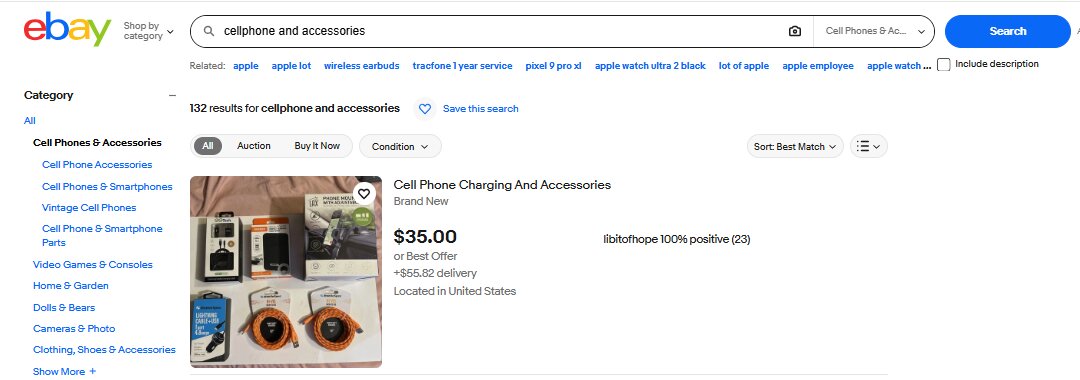
Cell phones and accessories are the highest-growing category on eBay. Over $654,000 in a single month with a sell-through rate that beats almost everything on the platform.
Here is a common pattern we notice with many sellers. Whenever Apple introduces a new model, every seller floods the accessory market overnight. What they don’t understand is that millions of people still use an iPhone 12 or 13. Their cases still crack, their cables still break, and they’re still on eBay looking for replacements. There are fewer sellers, but the same number of buyers, and that’s where the margin actually lives.
Phone Cases
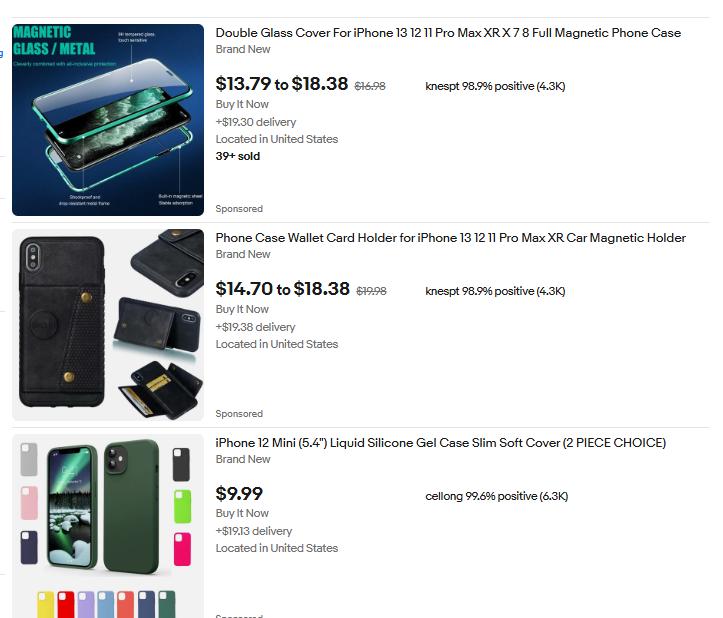
The iPhone 15 case market has over 2 million active listings; sellers are undercutting each other to the point that margins have nearly disappeared. The iPhone 12 case market has a fraction of that listing count, yet buyers still search daily because millions of those phones are in people’s hands.
For Sellers: Cases for iPhone 11, 12, and 13 and the Samsung Galaxy S21 series are your sweet spot. The competition thins out dramatically the moment you move back two generations, and your listing stands out without spending a dollar on promoted ads.
For Buyers: If you’re holding onto an older model, eBay is genuinely one of the few places still carrying cases that retailers quietly stopped stocking, usually at prices Amazon can’t match.
Charging Cables
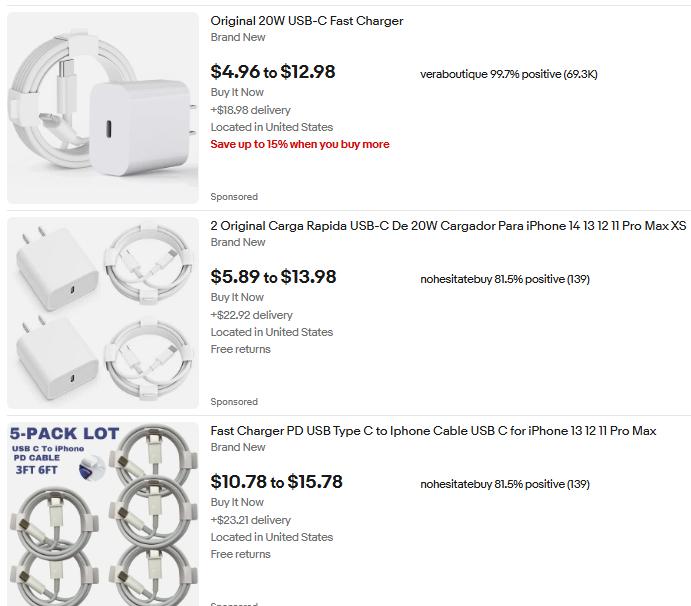
Charging cables don’t get written about in seller communities because they’re not exciting. That’s exactly why they’re worth paying attention to. Multi-pack fast-charge cables under $10 sell by the dozen daily, and unlike most eBay products, they’re a genuine repeat purchase. Buyers lose them, break them, and come back without a second thought.
Sellers: The single generic cable listing is the wrong move. List 3-packs or 5-packs, put the wattage and “fast charge” in your title, and you’re competing in a meaningfully smaller pool at a higher order value. The sourcing cost difference between a single cable and a 5-pack is minimal. The price difference to the buyer is not significant.
Buyers: Multi-packs here consistently beat Amazon on price for identical specifications. Worth a quick search before you default to your usual cable-buying spot.
Screen Protectors
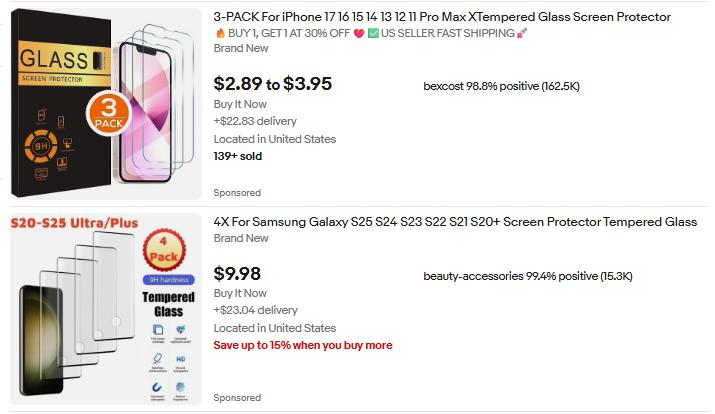
Samsung A-series and Motorola G-series phones are among the most widely used Android devices in the country. These are the phones real people actually buy, not the flagships that dominate tech coverage. Yet their screen protector listings are a fraction of what exists for iPhone or Galaxy S-series devices. The demand is there. The supply is not keeping up.
Sellers: A list with the exact model number “Samsung A54 tempered glass screen protector” competes in a completely different pool than “Android screen protector.” The buyer who finds you with that specific title is already halfway to purchasing, and they’ll be back the next time they crack one.
Buyers: If you’ve struggled to find a decent screen protector for a mid-range Android phone without overpaying, this is the category where eBay genuinely offers a better selection and pricing than most retail options.
Refurbished Handsets
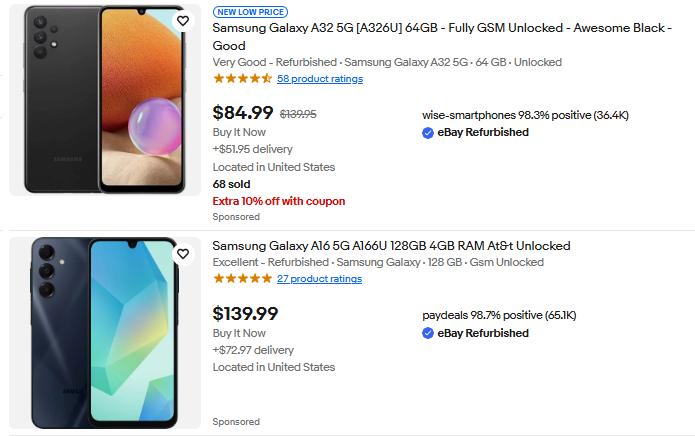
This is what eBay actually does better than almost any other channel. Buyers come here specifically because they cannot find these prices or these exact older models anywhere else. iPhone SE and budget Samsung Galaxy A-series handsets sell consistently to buyers who want a reliable daily phone without paying flagship prices, and the demand doesn’t slow down between new releases.
Sellers: Transparency is the entire game here. State “carrier unlocked” explicitly, include IMEI status, and photograph the battery health screen rather than describing it in text. Buyers in this market have been burned by vague listings before the sellers who remove that anxiety upfront convert at a dramatically higher rate than those who don’t bother.
Buyers: eBay’s Money Back Guarantee applies to refurbished handsets. Prioritize sellers with 98%+ feedback who include actual condition photos and IMEI details in the listing. If those aren’t there, the next listing is worth more of your time than that one.
Wireless Charging Pads
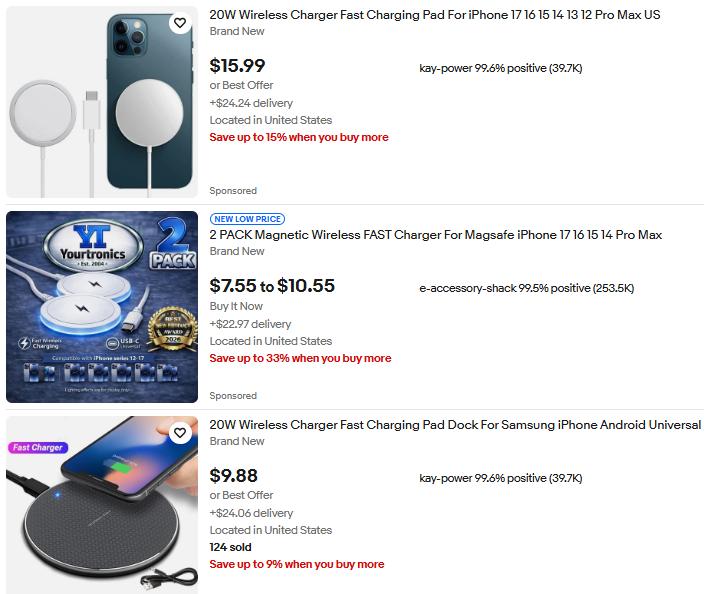
The generic “universal wireless charger” market is exactly what it sounds like: crowded, commoditized, and barely worth the effort at scale. But wireless charging pads listed with device-specific compatibility are a different product entirely in the eyes of both the algorithm and the buyer.
Sellers: “15W Fast Wireless Charger for Samsung Galaxy S21, S22, S23” competes against a fraction of what “wireless charger” does in search, and the buyer who finds that listing isn’t browsing; they’re buying. Specificity is what separates a listing that converts from one that collects views.
Buyers: Before purchasing, verify that the wattage matches your device’s fast-charge specification. For Samsung Galaxy users in particular, the real-world difference between a 5W pad and a 15W pad is something you’ll notice every single morning.
2. Clothing & Shoes
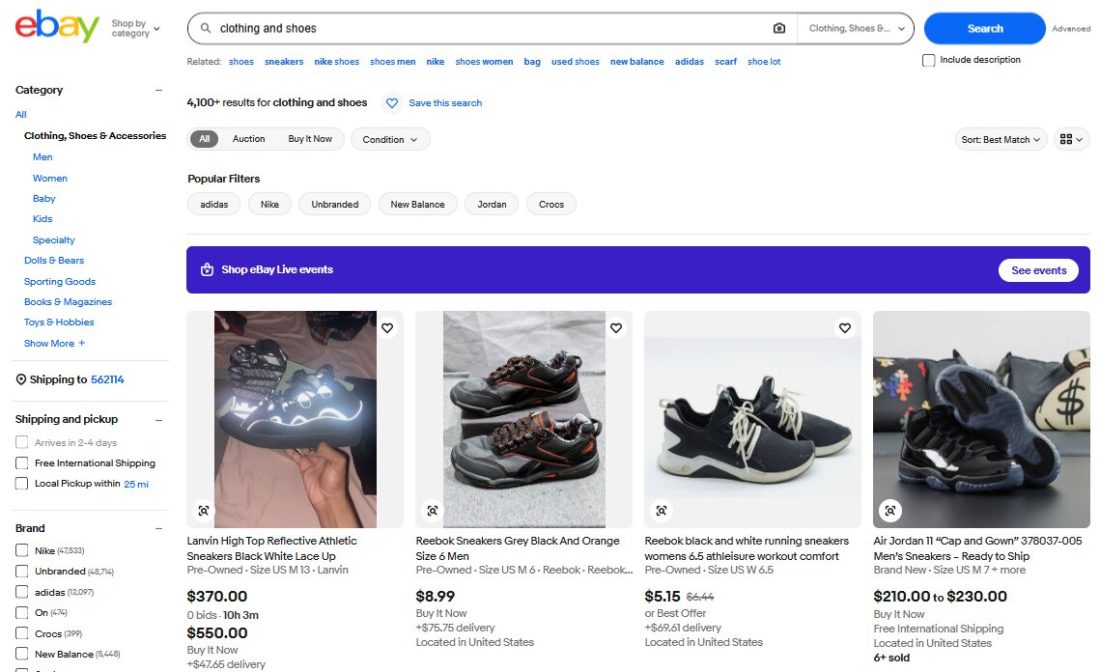
If you are willing to thrive in this category, don’t start without a strategy. Specifically, men’s clothing alone has 13 million active listings on eBay. That is not a category where you can go broad. However, this is not absolute.
If you want to win in this category, you have to niche down to a level that would seem almost absurdly specific until you see their sell-through numbers.
For example, one of the niches we recommend is vintage clothes. Don’t mistake it for used clothing. Thrifted clothing searches jumped by more than 400% in early 2024, and those buyers are not looking for cheap clothing.
Vintage Nike and Adidas (1980s–2000s)
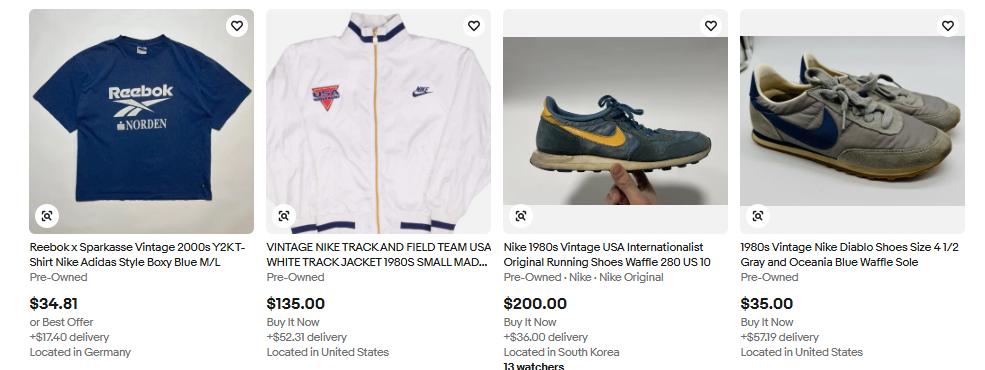
A faded 1994 Nike windbreaker sourced for $6 at a thrift store lists for $55–$90 when described with decade, colorway, and condition. The buyer searching for it isn’t browsing; they’ve been looking for that specific piece.
Sellers: Your title is everything. “Vintage 1994 Nike Windbreaker Teal Colorway Size XL” is a found listing. “Used Nike jacket” is a buried one. Decade, colorway, size, and country of manufacture all belong in your title.
Buyers: Vintage Nike and Adidas on eBay routinely undercut Depop and Grailed on price for identical items. If you know what you’re looking for, the search filters here give you far more control over era and condition than anywhere else.
Jordan and Limited-Edition Sneakers
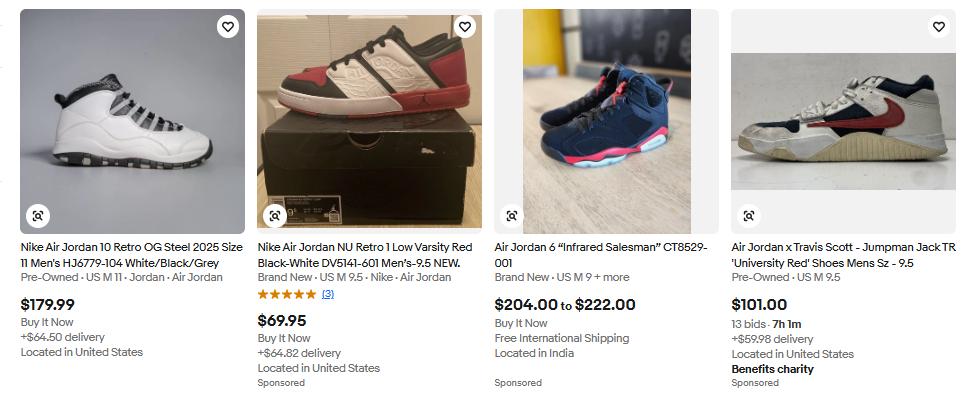
eBay’s authentication program has changed this sub-niche. Buyers who previously wouldn’t spend $300 on a pair they couldn’t physically inspect are now purchasing confidently because eBay verifies the pair independently before it ships.
Sellers: Deadstock condition and the original box are worth significantly more than the sneaker alone. Photograph the box label, sole, heel, and toe box. Mention the original retail price in your description; it anchors your listing price before the buyer questions it.
Buyers: Look for the “Authenticity Guaranteed” badge. In a category where fakes are common, that badge means the pair has been independently verified before it reaches you.
Vintage Band Tees and Sports Jerseys
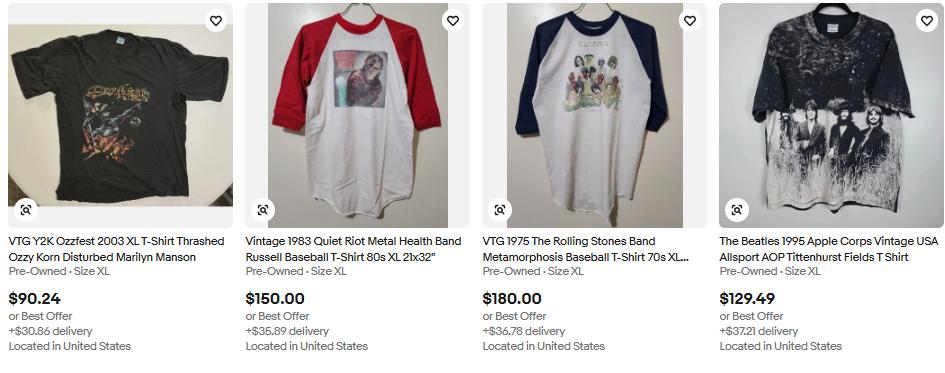
Authentic vintage band shirts from before 2000 sell for $30–$120. The Forever 21 repro sitting next to it on the thrift store rack sells for $8. The difference is authentication, and sellers who can prove an original are charging premiums most of their competition can’t touch.
Sellers: Learn the markers of screen print texture, tag style by decade, and single-stitch construction. Show the tag in your photos, always. A Metallica tee from 1991 with the right tag is a completely different product from a 2015 reprint, and the buyer paying $90 knows it.
Buyers: Ask for close-up photos of the tag and print before purchasing. Repros are common and not always disclosed. Sellers with verified history in this specific niche are a safer bet than general clothing sellers.
Levi’s Vintage Denim (Pre-2000 501s and Trucker Jackets)
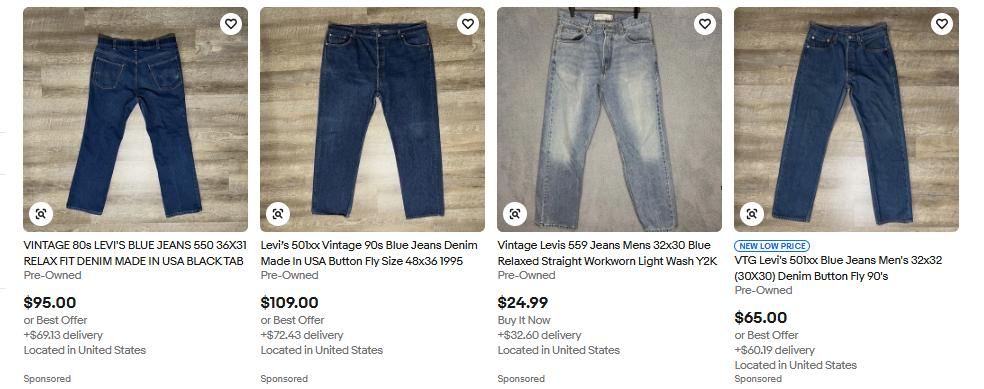
Pre-2000 Levi’s consistently outperform modern reproductions. These buyers check the care label, stitching, button hardware, and cut before purchasing, and they’ll pay $70 for the right pair without hesitation.
Sellers: Include the waistband stamp, care label photo, and measurements of waist, hip, inseam, and rise. Levi’s buyers are detail-oriented. The more you provide upfront, the fewer questions you’ll have to answer and the fewer returns you’ll have to process.
Buyers: Confirm the country of manufacture and production year from the care label before buying. Pre-2000 USA-made Levi’s have a cut and denim weight that modern reproductions simply don’t replicate.
Y2K and 90s Fashion
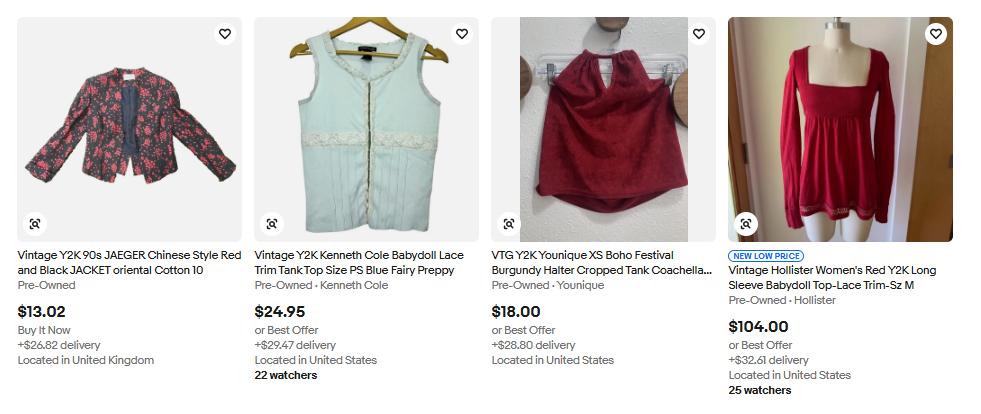
Gen Z nostalgia is driving genuine, sustained demand for early 2000s silhouettes, yet thrift stores still price these pieces as ordinary used clothing. That gap between what they charge ($4) and what eBay buyers are willing to pay ($45–$65) is your opportunity.
Sellers: Learn the brands and list with era accuracy. “Y2K JNCO Wide Leg Cargo Pants, Size 34 Late 90s Baggy” finds its buyer immediately. “Vintage cargo pants” does not.
Buyers: Sizing in Y2K clothing runs differently from modern cuts. Always look for flat measurements in the listing rather than relying on the label size. A “32 waist” from 1999 can fit like a 30 or a 34, depending on the brand.
3. Computers & Tablets
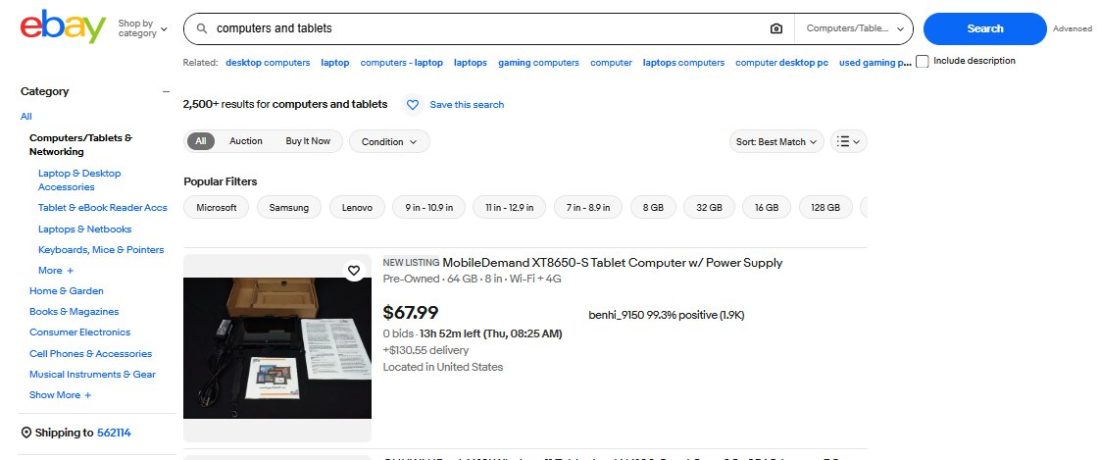
One of the highest-earning subcategories on the platform has a sell-through rate of 3,546%. The real opportunity here isn’t in competing with Best Buy or Amazon on new hardware. It is in the process of refurbishment, specifically in the gap between what buyers want and what big-box retailers are willing to sell them.
Refurbished MacBook Air M1
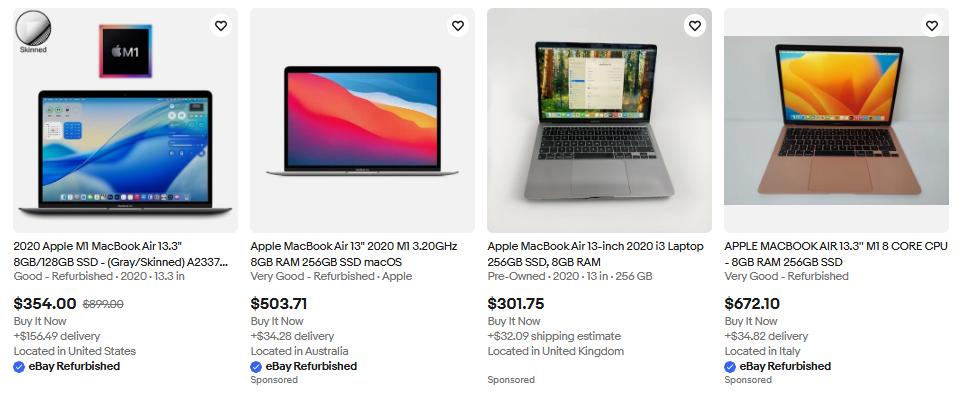
The most searched-for refurbished laptop on eBay is the clean unit with 80%+ battery health, which consistently sells in the $550–$750 range, and these buyers aren’t bargain hunters. They’re budget-conscious professionals who’ve already done their research and know exactly what they want.
Sellers: Source locally, wipe cleanly, and photograph the battery health screen, not just describe it. That one screenshot sets your listing apart from the dozens that say “good battery” with no proof.
Buyers: Make the battery health screenshot non-negotiable before purchasing. The difference between 79% and 91% battery health is something you’ll feel every single day.
ThinkPad T470, T480, X1 Carbon
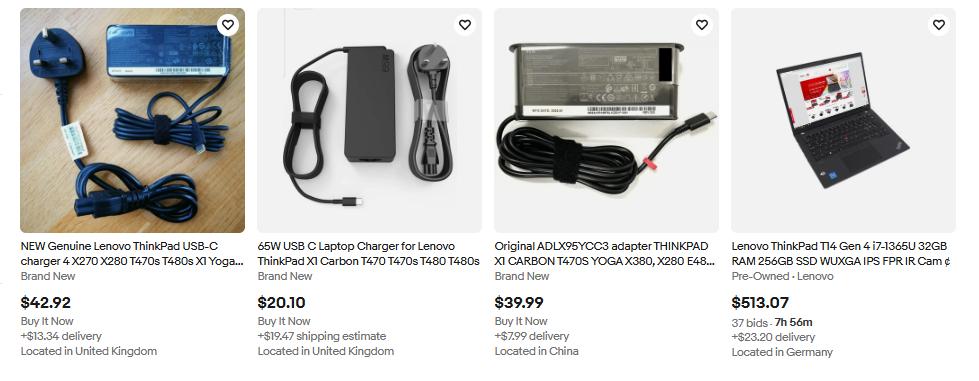
ThinkPads have one of the most loyal buyer communities of any laptop brand on eBay. IT professionals want them for repairability. Linux users love them for driver compatibility. Students buy them because they last and don’t cost a fortune.
Sellers: This buyer knows their product better than most sellers do. List the RAM, storage type, processor generation, and screen resolution explicitly. A vague listing gets skipped, while the seller who gave the full spec sheet gets the sale.
Buyers: The T480 is widely considered the last ThinkPad with a swappable battery, which matters if longevity is important to you. Don’t assume specs from the model number alone; confirm the exact configuration from the listing.
Older Generation iPads (6th/7th Gen, iPad Mini 4/5)
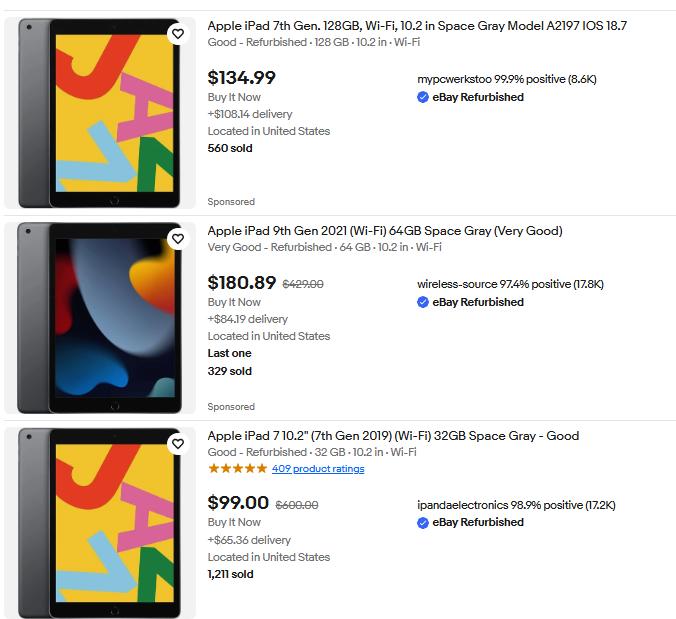
New iPad buyers shop at Apple. Refurbished iPad buyers shop eBay. Older generations that still run current iPadOS sell steadily to parents buying for kids, students who need something reliable for notes, and casual users who genuinely don’t need the latest model.
Sellers: The two questions that fill every seller’s inbox in this sub-niche are “What iPadOS version is it running?” and “Is it Wi-Fi only or cellular?” Answer both in your listing, and you’ll significantly reduce your message volume.
Buyers: Check whether the iPad you’re buying still receives iPadOS updates. A model that’s been dropped from Apple’s update cycle is still usable, but it’s worth knowing before you buy, not after.
Chromebooks
One of the most underrated quick flips on this list. A school-surplus Chromebook that costs $30 can list for $80–$120, cleaned up and described honestly. The refurbishment knowledge required is almost zero: wipe it, charge it, photograph it.
Sellers: Check the AUE date, the date Google stops providing updates for that specific model, and include it in your listing. Buyers who discover it after purchasing will return the item, and that conversation is never a good one.
Buyers: The AUE date is the single most important spec on a used Chromebook and the one most sellers forget to mention. Check it at google.com/intl/en/chromebook/auto-update before you buy a Chromebook. A purchase expiring in six months is very different from one expiring in three years.
Mini Wireless Keyboards
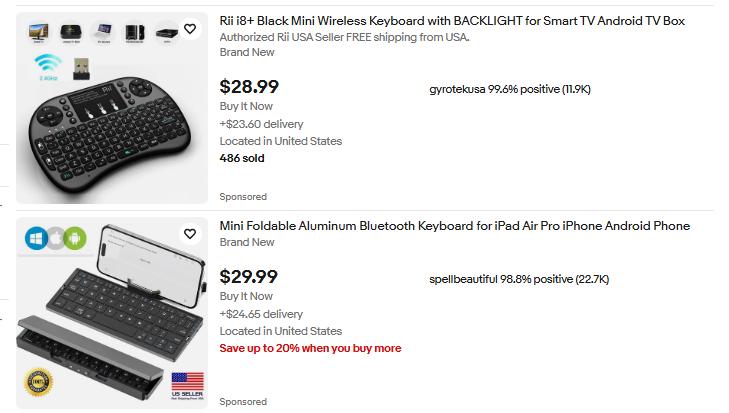
Compact wireless keyboards for smart TVs, Raspberry Pi builds, and media center setups have passionate niche buyers and almost no seller crowding in specific models. Not high-ticket, but consistent, and consistency compounds.
Sellers: List with device compatibility in your title. “Mini Wireless Keyboard for Raspberry Pi Smart TV” attracts buyers who already know what they need and are one click away from purchase.
Buyers: Check whether the keyboard connects via Bluetooth or RF dongle before buying — some media setups don’t support Bluetooth, and this is the most common reason for returns in this sub-niche.
4. Auto Parts & Accessories
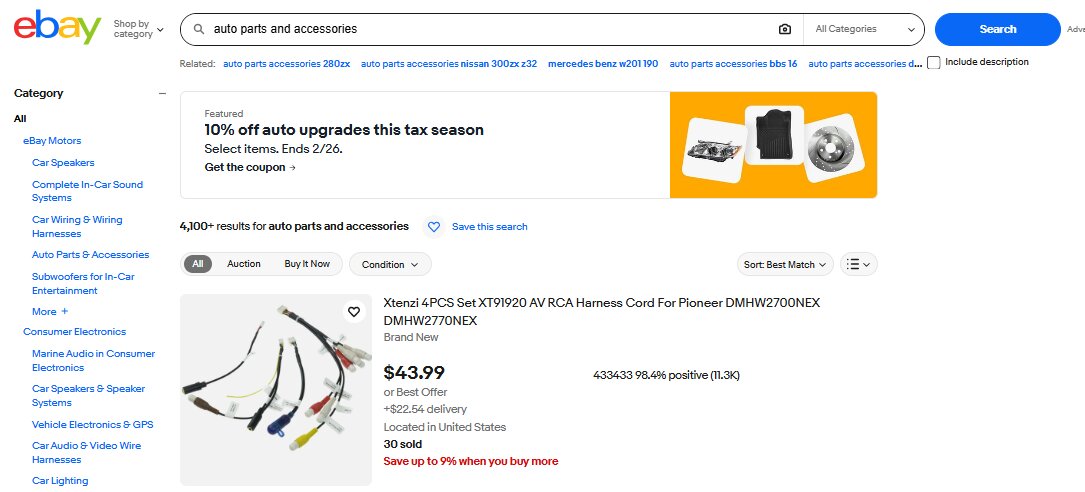
If you are a new seller, there is a chance that this category will not grab your attention at first. And it is not just you; many sellers avoid this category because it is not as eye-catching as the others. That’s precisely why the competition is thinner than a category this size has any right to be.
You do not have to sell the latest model cars in this category. You need to strategize by selling the parts from 2005–2015 vehicle windows, old enough that parts are getting scarce at local retailers and new enough that millions of those cars are still being driven daily.
OEM Sensors (O₂ Sensors, MAF Sensors, Crankshaft Sensors)
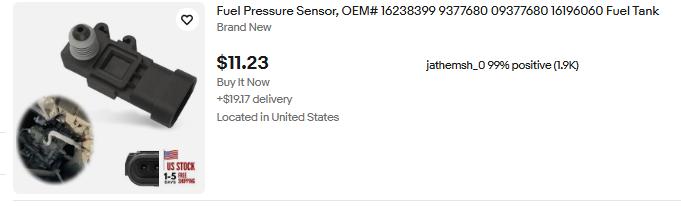
These parts fail on a predictable schedule, and buyers need an exact match, not close. That level of specificity naturally thins the competition because most casual sellers don’t fill out fitment data correctly, and listings without it simply don’t appear in filtered searches.
Sellers: The fitment table isn’t optional in this category; it’s how auto parts buyers shop. Fill it out completely, every listing, every time. A sensor listed without year/make/model compatibility is invisible to most of the people looking for it.
Buyers: Cross-reference the part number against your vehicle’s service manual or RockAuto before purchasing. An O₂ sensor that’s close but not exact for your specific engine won’t fix your problem; it’ll just create a new one.
LED Headlight Assemblies and Fog Lights
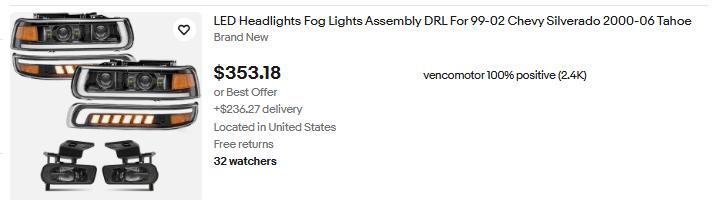
Headlights and body parts are consistently among the top-selling auto parts on eBay, and fitment-specific LED kits are where the real margin sits within that group. The same kit that competes against thousands of “universal fit” listings at $20 lists for $55–$80 with exact vehicle compatibility data and almost no direct competition.
Sellers: Stock photos are an immediate red flag to experienced auto parts buyers. Photograph your actual product, include the part number visibly, and list every compatible vehicle in the fitment table. Buyers who’ve received incompatible parts before are cautious; your listing needs to remove that doubt before they move on.
Buyers: Verify the assembly fits your specific trim level, not just the model. Headlight housings vary between trims on the same model year more often than most people expect.
Trim Pieces and Interior Components for Discontinued Models
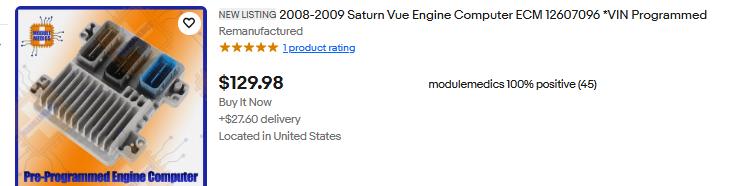
Buyers searching for interior trim on a 2009 Saturn Vue or a 2011 Ford Ranger have often been looking for weeks. When they find your listing, they don’t negotiate. They just buy. That urgency is what makes this sub-niche worth the sourcing patience it requires.
Sellers: Salvage yards, estate sales, and Facebook Marketplace listings from people parting out vehicles are your best sourcing channels. You don’t need mechanical knowledge; you need to know which discontinued models still have active owner communities hunting for parts.
Buyers: Look for sellers who photograph every angle and grade condition conservatively. Trim piece descriptions vary wildly between sellers; a single stock image and a vague condition note are worth scrolling past.
OEM Wheel Takeoffs
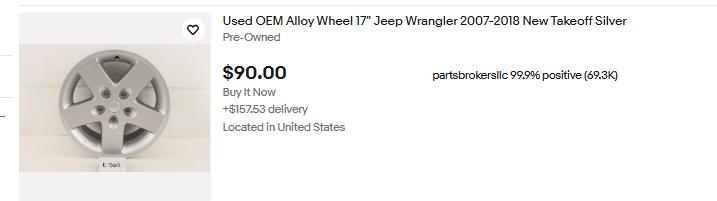
When someone upgrades their factory wheels, the stock set has to go somewhere. It usually ends up on eBay, where buyers with damaged originals are happy to pay for a clean OEM replacement at well below dealership prices.
Sellers: List with exact vehicle fitment and bolt pattern; these two details determine whether your wheels are useful to a buyer or completely useless to them. Without both, you’ll spend more time answering questions than processing sales.
Buyers: Confirm the bolt pattern, offset, and center bore before purchasing. A set that fits the right car but has the wrong offset will handle differently, and that’s not a problem you want to discover after installation.
Custom-Fit Seat Covers and Floor Mats
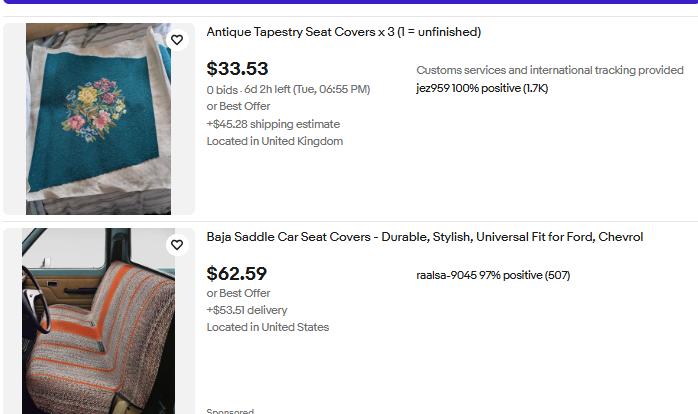
Universal seat covers and floor mats are a crowded, margin-thin market. Custom-fit, vehicle-specific versions are a different product entirely, and they convert at roughly double the rate because the buyer immediately knows it was made for their car, not just any car.
Sellers: “2016 Toyota Camry custom-fit all-weather floor mats” competes with a fraction of the listings that “car floor mats” does. The title alone changes your competitive landscape entirely.
Buyers: Custom-fit mats on eBay are often the same product sold at dealer accessory counters for significantly more. Check the fitment table against your exact year, make, and model before purchasing. “Custom fit” claims vary in accuracy between sellers.
5. Camera & Photography
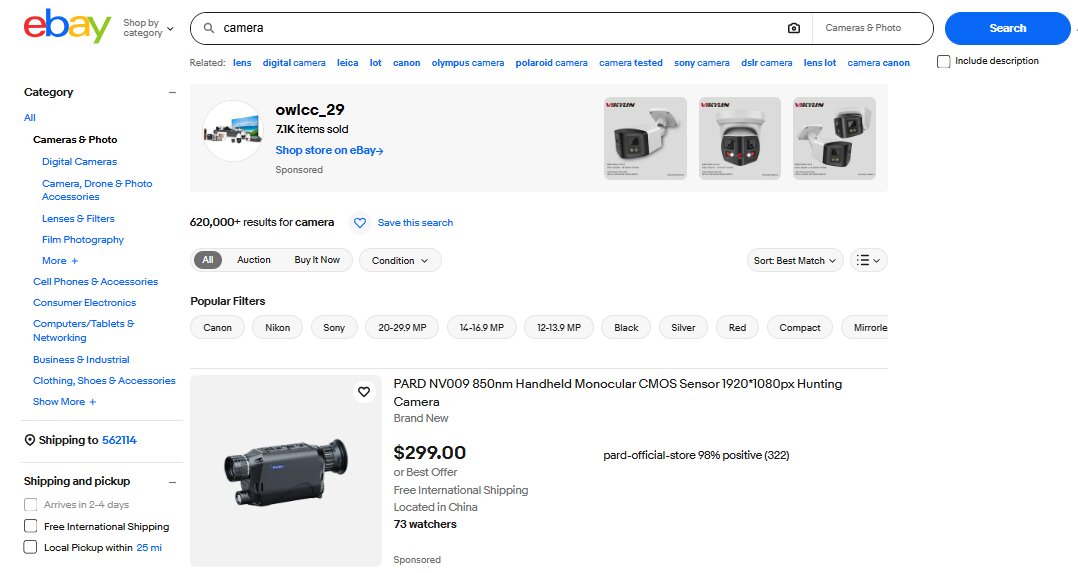
That $399,455 is the total the entire camera & photography category generated across eBay in a single month, not what one seller makes. And compared to clothing or electronics, it’s a relatively modest number. But that’s actually the point.
Most eBay sellers skip this category entirely because cameras feel technical. So while clothing sellers are fighting over $12 margins and electronics sellers are undercutting each other on AirPods, the camera category sits quietly with motivated buyers, thin competition, and a pricing gap that’s genuinely hard to find anywhere else on the platform.
That gap comes from the film photography revival. Gen Z buyers want tactile, analog experiences, and they’re searching for vintage 35mm cameras that thrift stores and estate sales are still pricing like old junk. A Canon AE-1 that costs $15 at an estate sale lists for $150 on eBay. The sourcing opportunity is real, and most sellers haven’t noticed it yet.
You don’t need to be a photographer to sell here. You need to know five or six camera models well enough to spot them, test them, and describe them honestly. That’s the entire barrier to entry.
Canon AE-1 and AE-1 Program
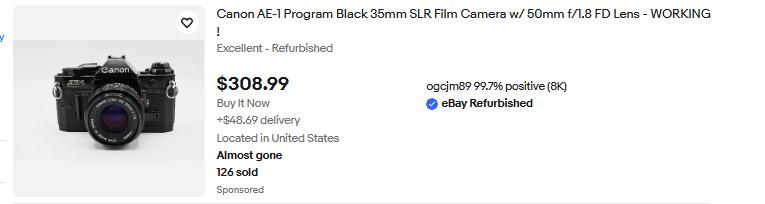
The most recognized vintage film camera in the world. Photography students, analog enthusiasts, and Gen Z buyers searching for their first film camera all look for this one by name, which means demand is consistent and the buyer already knows what they want before they find your listing.
Sellers: Learn to identify the sticky shutter before you source. It’s the most common fault on the AE-1 and the difference between a $15 find that lists for $150 and one that needs a repair that eats your margin entirely. Test it before you buy.
Buyers: Ask for a shutter test video before purchasing. It’s a known issue on this model and not always disclosed. A seller who includes one proactively is a seller worth buying from.
Pentax K1000
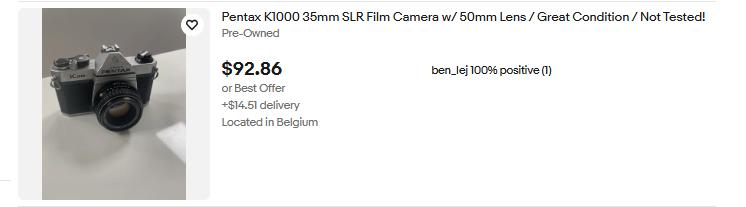
Photography professors still recommend this camera by name. It’s all manual, all-metal, and nearly indestructible, which makes it the go-to recommendation for darkroom courses. That institutional demand doesn’t fluctuate with trends. It just keeps coming.
Sellers: Students buying their first film camera are trusting your description completely. An honest, detailed listing builds the kind of feedback that turns one-time buyers into repeat customers.
Buyers: One of the most beginner-friendly manual cameras ever made. Just confirm it’s been tested and the light seals are intact before purchasing. Deteriorated light seals are the most common issue on older K1000s.
Vintage Manual Lenses (Helios 44-2, Super Takumar 50mm, Meyer-Optik Trioplan)
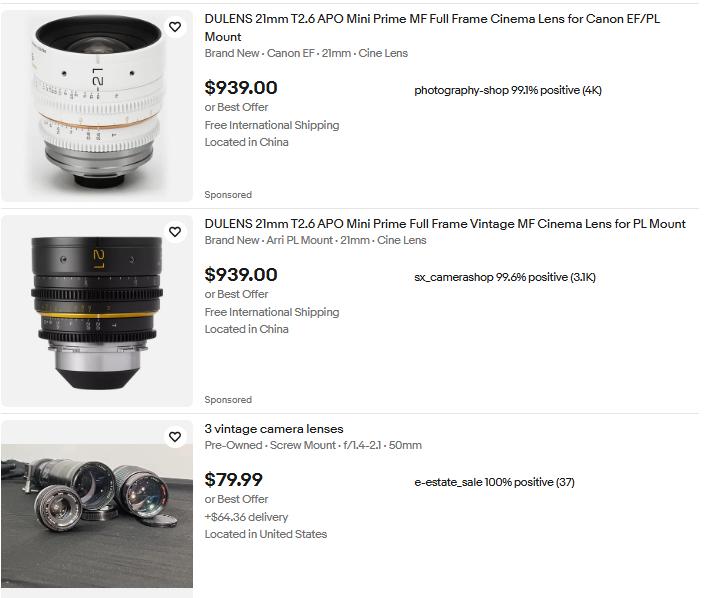
Photographers adapting vintage lenses to modern mirrorless cameras are chasing a look that modern glass simply can’t replicate. The Helios 44-2’s swirly bokeh has its own following; buyers search for it by name, which means they’re already halfway to purchasing before they find your listing.
Sellers: Source these at estate sales where they’re priced as generic old glass. Check the aperture blades for oil and the glass for fungus; those two checks protect your return rate and your reputation.
Buyers: Ask for a photo of the aperture blades stopped down to f/8 before buying. Oily blades are common in older lenses and affect exposure accuracy in ways that aren’t always obvious until you’re shooting.
6. Collectibles & Trading Cards
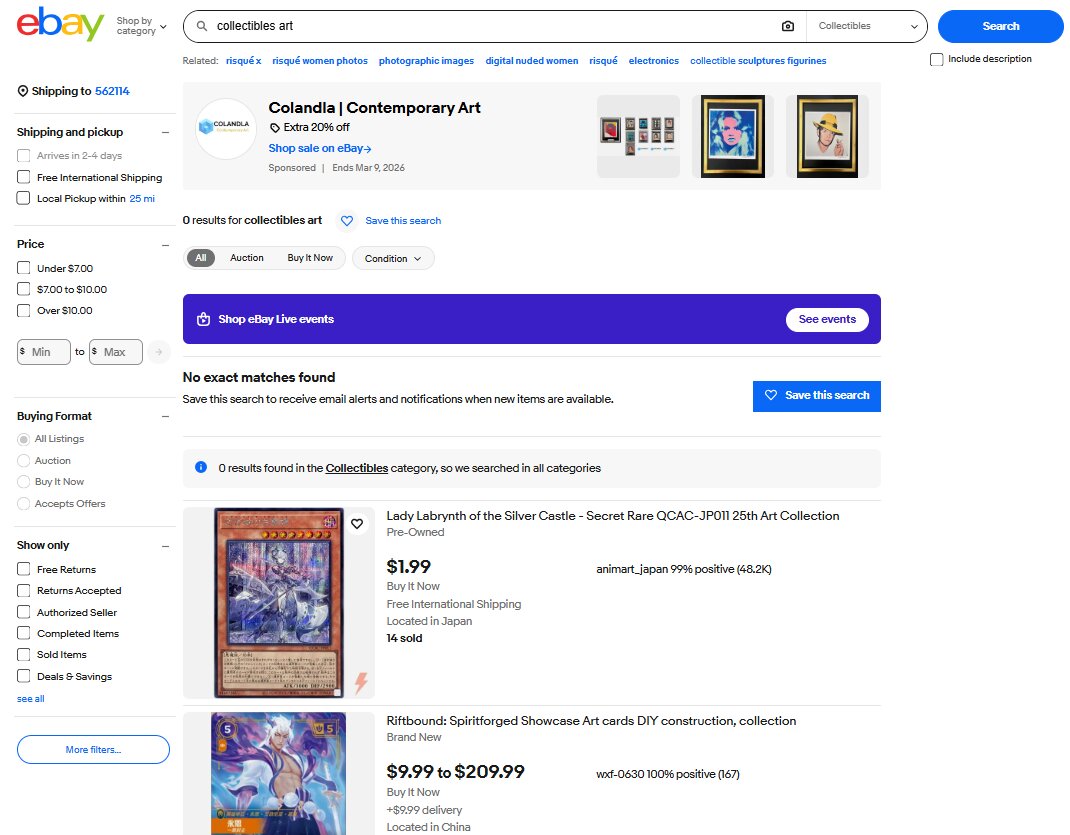
The median profit for collectors across all collectibles categories over the last three years reached $13,000. That’s not a fluke — it’s what happens when a category has passionate buyers, scarce supply, and a platform that’s actively investing in making high-value transactions feel safe.
That last part matters. eBay’s authentication program for trading cards, sneakers, and watches has brought serious money back to this category. Buyers who previously wouldn’t spend $500 on something they couldn’t physically inspect are now purchasing confidently because eBay verifies the item before it ships. PSA alone has sold 500,000 cards through its eBay storefront since integrating with the platform, which tells you everything about where serious collectors are spending.
Pokémon Cards
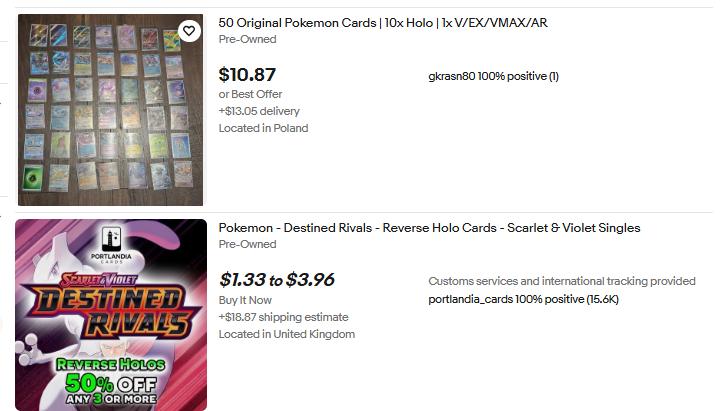
PSA-graded holos from Base Set and Jungle Set still sell for $50–$400+ for strong grades. Even raw commons from the right sets move steadily to buyers completing collections.
Sellers: Learn to spot fakes before you source a returned counterfeit, with negative feedback harder to recover from than a slow month.
Buyers: Graded cards from sellers with a verified feedback history in cards specifically are the safest purchase here. Raw cards can be great value; just know what you’re looking at.
Vintage Sports Cards (1980s–1990s Rookie Cards)
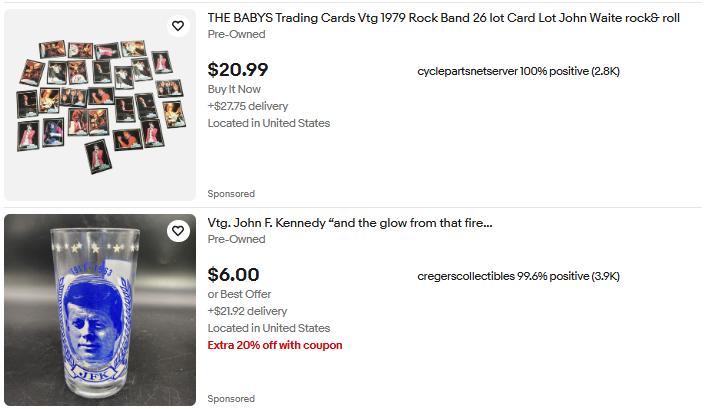
Sports card sales have risen 48% so far in 2025, and eBay’s CEO confirmed the growth is driven by sold-item volume, not just rising prices. Jordan, Griffey, and Gretzky rookies move consistently, and the grading premium on cards worth $40+ nearly always exceeds the cost of grading.
Sellers: A raw card worth $40 costs $15–$25 to grade and typically sells for $80–$200 graded. Skipping grading on cards above that threshold is leaving money on the table. Buyers: Raw cards are fine for budget collectors. If you’re buying as an investment, a grade removes the condition ambiguity that makes raw card values so unpredictable.
Coins and Stamps
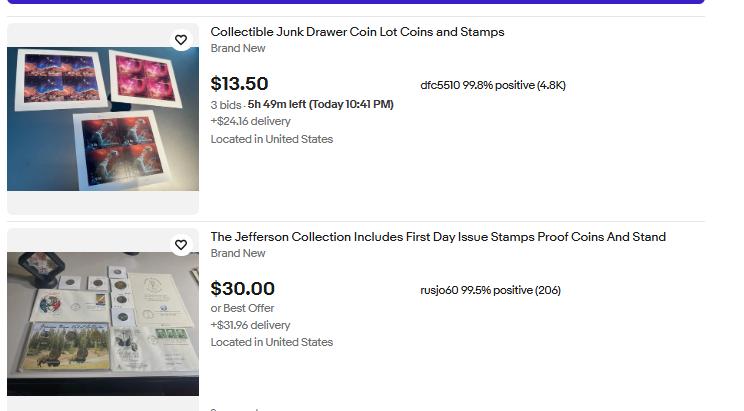
The barrier here isn’t capital; it’s knowledge. Sellers who can identify key dates, mint marks, and error coins price them better than the majority of their competition, who are listing by denomination rather than actual numismatic value.
Sellers: A 1955 doubled die Lincoln cent is not worth face value; it’s worth hundreds to the right buyer. Learn the key dates before you price anything.
Buyers: Look for listings that photograph both sides clearly and reference a grading standard. One side only? Ask for the other before purchasing.
7. Art Supplies
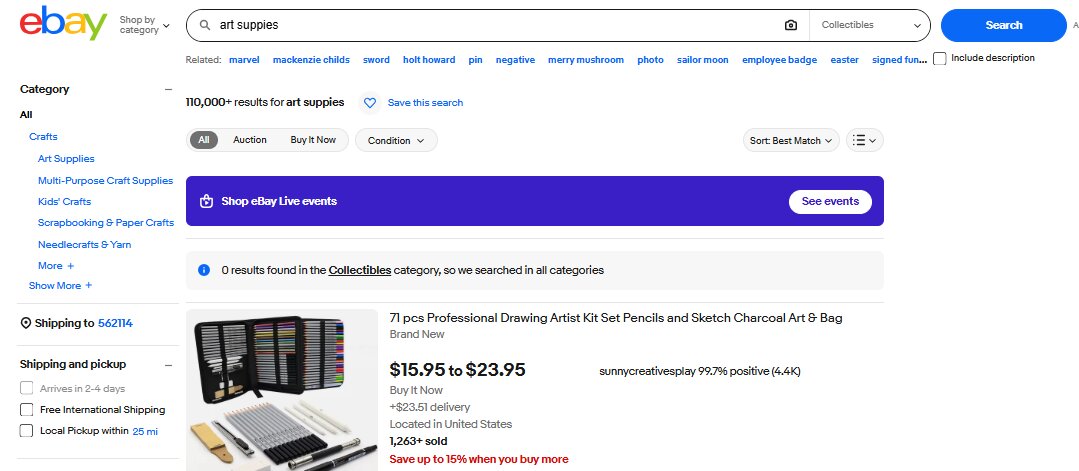
Art supplies recorded a 1,508% sell-through rate in a single 30-day window, meaning sellers moved 15 times their active inventory in a month. The total earnings of $25,375 aren’t enormous compared to clothing or electronics, but that’s not the point.
When sell-through is this high but earnings are modest, it means one thing: demand is real, supply is thin, and the category is wide open. Most eBay sellers haven’t noticed yet. That’s your window.
Watercolor Markers (Tombow, Copic, Winsor & Newton)
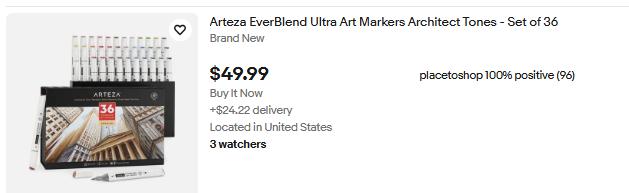
These brands have cult followings among illustrators and hand-letterers who don’t compromise on tools. Copic markers hold value unusually well because they’re expensive at retail; buyers shop eBay specifically to find them cheaper. Individual markers and refills sell alongside full sets, turning one buyer into multiple transactions.
Sellers: List individual markers and refills separately from full sets. Buyers often need specific colors rather than a complete set, and those individual listings face almost no competition. Buyers: Copic markers on eBay consistently run 20–30% below retail. Worth checking here before visiting an art supply store.
Acrylic Paint Bundles
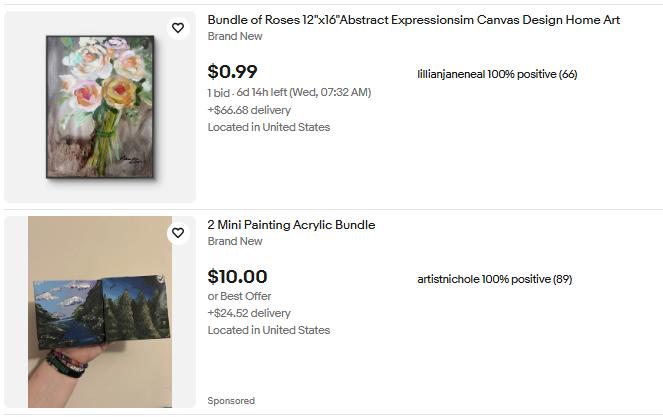
Individual tubes are commoditized. Curated bundles “warm tone portrait palette” and “landscape color bundle” are not. Selling by theme removes buyer decision fatigue and puts your listing in a pool with almost no competition.
Sellers: Build bundles around a painting subject rather than a color wheel. A buyer searching “portrait painting acrylic set” is far more motivated than one browsing “acrylic paint.” The sourcing cost difference is minimal. The price difference is not significant.
Buyers: Curated bundles are often cheaper than buying the same tubes individually at retail, and they save you the research of figuring out which colors you actually need.
Brush Pen and Calligraphy Sets
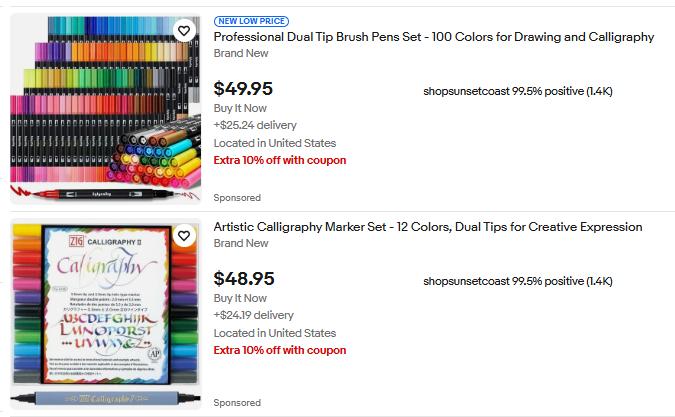
The hand-lettering community is large and active and purchases constantly. The difference between listing “brush pens” and “beginner calligraphy starter kit” is the difference between competing with thousands of listings and competing with almost none.
Sellers: Bundle by skill level, not product type. A beginner isn’t searching for “brush pens”; they’re searching for something that tells them it’s right for where they are. Meet them there.
Buyers: Look for listings that specify ink type. Water-based versus alcohol-based affects what paper you’ll need, and not every seller mentions it.
8. Health, Beauty & Personal Care
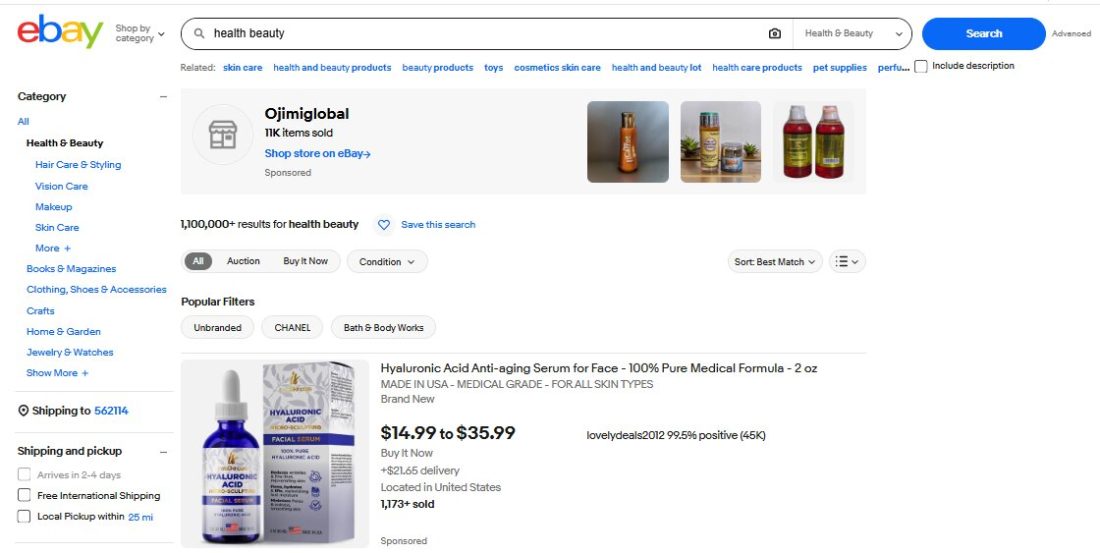
Most sellers who enter this category head straight for skincare and supplements. Reasonable instinct, but they’re walking past the biggest opportunity in the entire category without realizing it.
Fragrance was the fastest-growing beauty category in 2024, up 12% in dollar sales and now the second-largest prestige beauty category in the US. On eBay specifically, it has 800,000+ active listings, a 15,000%+ sell-through rate, and an average sale price of $28. Most eBay sellers haven’t positioned themselves here yet. That’s the window.
Discontinued and Niche Fragrances
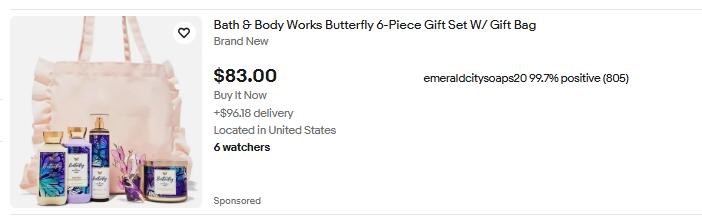
Retired Versace scents and discontinued Bath & Body Works releases, limited-edition flankers buyers searching for these have often been looking for months. When they find what they want, they don’t negotiate. They just buy, often well above retail.
Sellers: Estate sales, discount liquidators, and overseas suppliers are your best sourcing channels. Verify authenticity before listing; counterfeit fragrance is one of eBay’s most actively policed categories and the one mistake here you can’t recover from easily.
Buyers: eBay is genuinely the best place to find discontinued scents. Look for sellers with a fragrance-specific feedback history and listings that show the actual bottle, not a stock photo.
Korean Beauty Products (Cosrx, Some By Mi, Innisfree, Klairs)
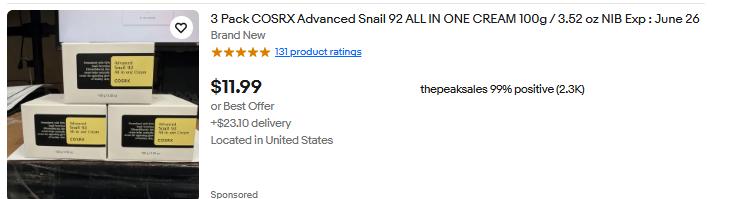
These brands have built passionate followings in the US almost entirely through social media, but their retail distribution hasn’t caught up yet. That gap between demand and availability is exactly where an eBay seller can step in with almost no competition.
Sellers: Products not sold in US retail stores have the thinnest eBay competition and the most motivated buyers. A list with ingredient highlights K-beauty buyers are informed and respond to specifics rather than generic product descriptions.
Buyers: eBay often has better selection and better pricing on K-beauty than US retail, particularly for cult products that haven’t reached Sephora or Ulta yet.
LED Facial Devices and Microcurrent Tools
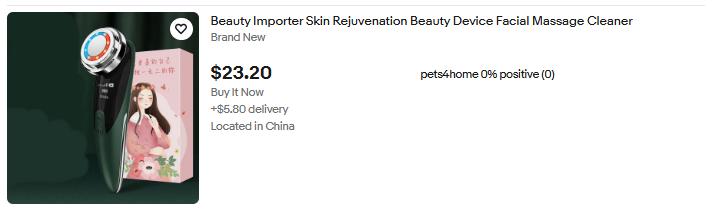
Mid-range facial devices in the $40–$120 retail range sell consistently as open-box or lightly used. Buyers want professional-grade results without the professional price, and eBay delivers that better than most channels.
Sellers: Honest condition descriptions are non-negotiable here. A return for a misrepresented device costs more than the margin you made on the sale. Buyers: Open-box facial devices on eBay are often unused retail returns functionally identical to new at a meaningful discount. Look for listings that include original packaging and accessories.
Health-Specific Supplements

Generic “multivitamin” listings are a sea of identical products fighting on price. “Magnesium glycinate for sleep,” “ashwagandha for stress,” and “lion’s mane for focus.” These are how buyers actually search, and those listings face a fraction of the competition.
Sellers: Name the benefit in your title, not just the ingredient. The buyer searching for “magnesium for sleep” has already decided what they want; they just need to find the right listing.
Buyers: Supplement prices on eBay are often lower than retail for identical products. Check the expiry date before purchasing; it’s the detail most buyers forget to ask about until after the package arrives.
9. Sporting Goods & Fitness Equipment
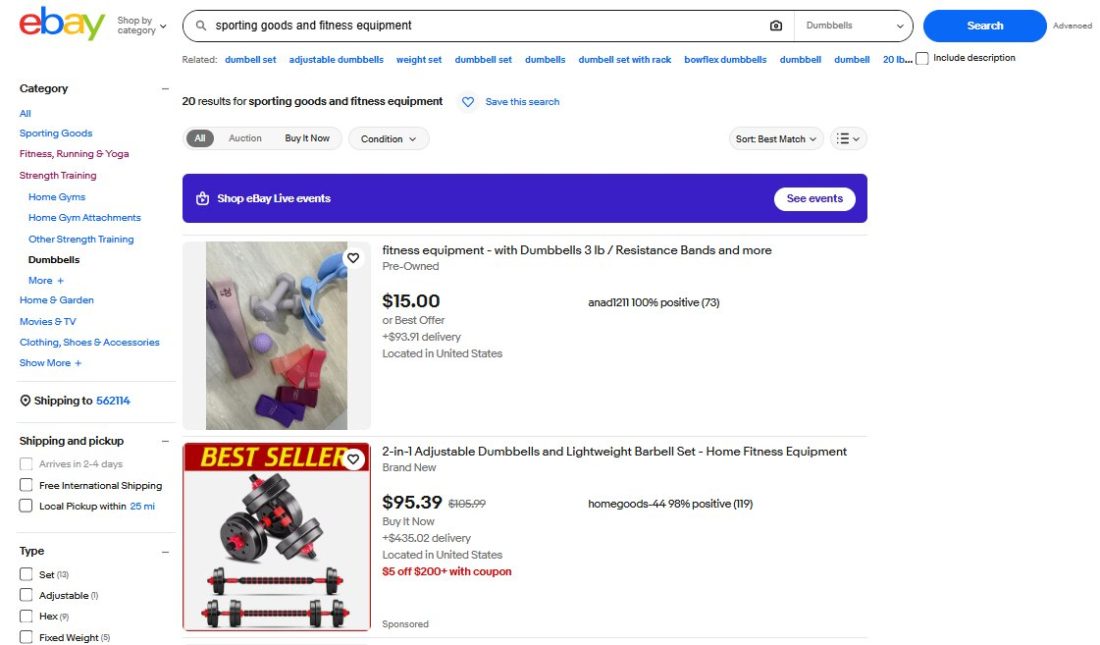
Most sellers think about fitness equipment twice a year, in January and September. Those are the real demand spikes, and they’re right about that. But the sellers actually making money here aren’t reacting to those spikes. They’re listed and indexed weeks before everyone else shows up.
eBay’s algorithm favors listings with history over fresh ones. A listing posted the day search volume peaks is competing against sellers who’ve been live for a month with watchers and sales behind them. The calendar insight here is simple: count back six weeks from every fitness spike and start listing then. You’ll spend less time chasing demand and more time sitting at the top when buyers arrive.
Adjustable Dumbbells (Bowflex SelectTech, PowerBlock)
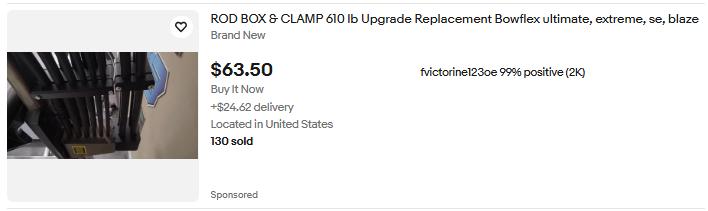
Premium adjustable dumbbells are one of those purchases buyers genuinely don’t want to pay full retail for. Used sets move consistently and almost always attract multiple watchers within days. The brand matters here. Buyers are searching for Bowflex and PowerBlock specifically, not “adjustable dumbbells.”
Sellers: Source locally through Facebook Marketplace and Craigslist, where these show up regularly from people who bought them optimistically in January and stopped using them by March.
Buyers: The condition on these is usually better than you’d expect; most were lightly used before being resold. Ask for photos of the weight selector mechanism specifically, as that’s the part most likely to show wear.
Premium Yoga Mats (Manduka, Liforme, Jade)
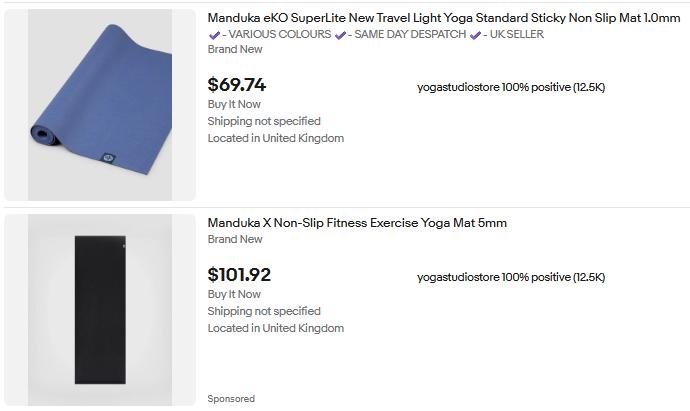
Budget yoga mats are commoditized. Premium mats hold value unusually well and have buyers who search by brand specifically a lightly used Manduka PRO sells for $60–$90 against a $120 retail price without much negotiation.
Sellers: Clean the mat thoroughly before photographing and listing. Yoga mat buyers are particular about hygiene; a listing that mentions it’s been cleaned and shows it in good condition converts significantly better than one that doesn’t address it.
Buyers: Premium yoga mats on eBay are often lightly used, bought by someone who tried yoga, decided it wasn’t for them, and never looked back. That’s functionally close to new at half the price.
Sports Memorabilia
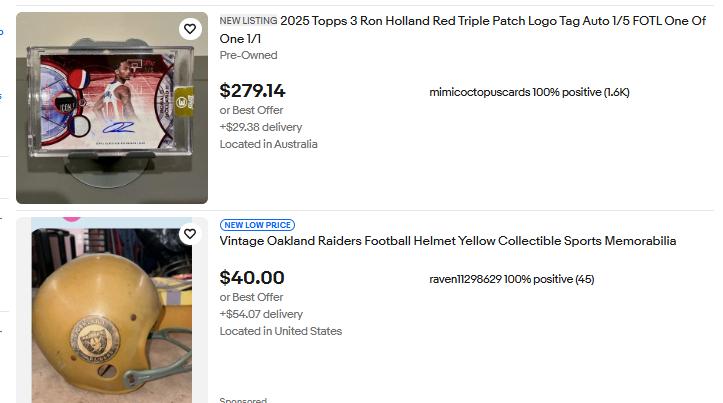
Authenticated autographs and game-used equipment bring in a buyer pool with genuinely deeper pockets than the rest of this category. An authenticated signed jersey is a completely different transaction from a $25 resistance band different buyer, different margin, different experience entirely.
Sellers: Authentication is everything here. An autograph without provenance is worth a fraction of one with a JSA or Beckett certificate behind it. If you’re sourcing memorabilia, factor the authentication cost into your margin before you buy.
Buyers: Never buy autographed memorabilia without third-party authentication. The market for forged signatures is significant; a JSA or Beckett certificate is the minimum standard worth paying for.
10. Pet Supplies
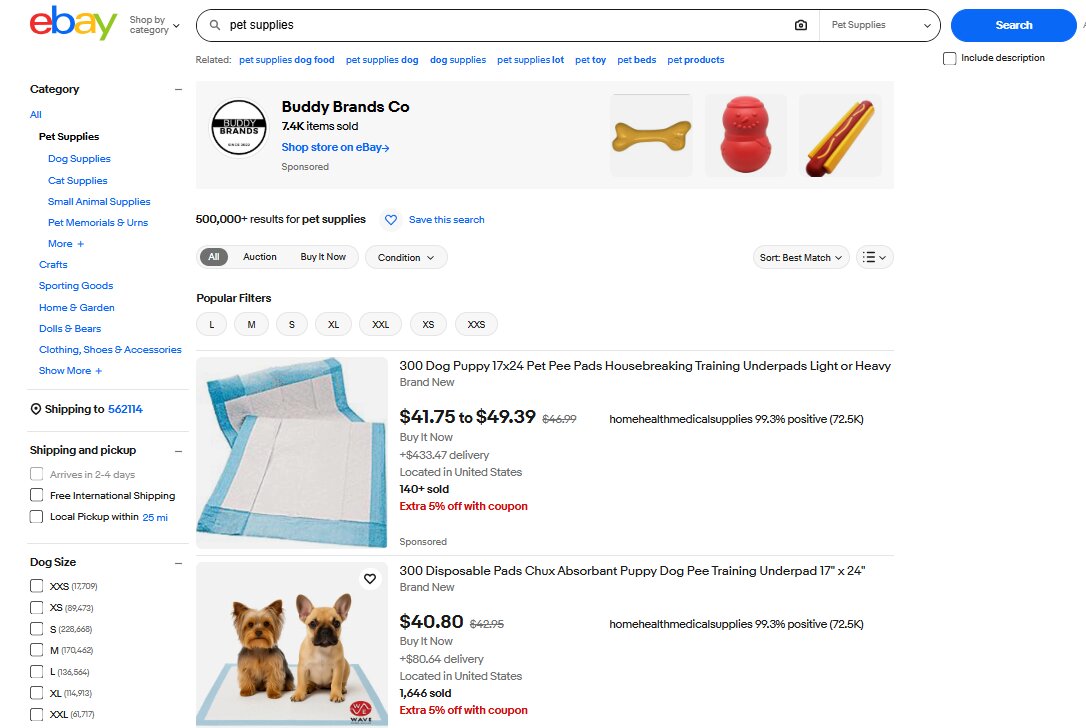
Pet owners don’t shop the way buyers in most other categories do. The decision isn’t purely rational; it’s emotional. A dog owner will pay $25 for a personalized collar that costs $4 to source because buying the generic $8 version feels like cutting corners on their pet. That emotional premium is consistent, predictable, and completely available to sellers who know how to position their listings.
The market backs it up. E-commerce accounted for almost all pet product sales growth in 2024, up 9%, while brick-and-mortar grew less than 1%. 86.9 million US households own a pet. The buyers are there. The question is whether your listings are speaking to them specifically enough to convert. 80/20 Dog Food Premium formulas such as AATU’s 80/20 range, made with 80% meat or fish and 20% Superfood Blend™, appeal to dog owners willing to pay more for higher-meat recipes.
Personalized Dog Collars and ID Tags
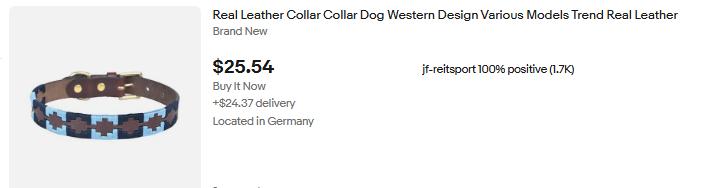
Engraved or embroidered with the dog’s name, low sourcing cost, zero seasonality, and a buyer who’s already decided they want one before they start searching. The personalization premium alone doubles your margin over generic collars without adding meaningful cost.
Sellers: Source from Alibaba or print-on-demand services. Keep production time visible in your listing. Buyers ordering these as gifts have deadlines, and sellers who communicate timelines clearly avoid the messages that slow everything down.
Buyers: Personalized collars on eBay are consistently cheaper than pet specialty retail for the same customization. Check the production and shipping time before ordering; it varies more than you’d expect between sellers.
Breed-Specific Harnesses and Leashes
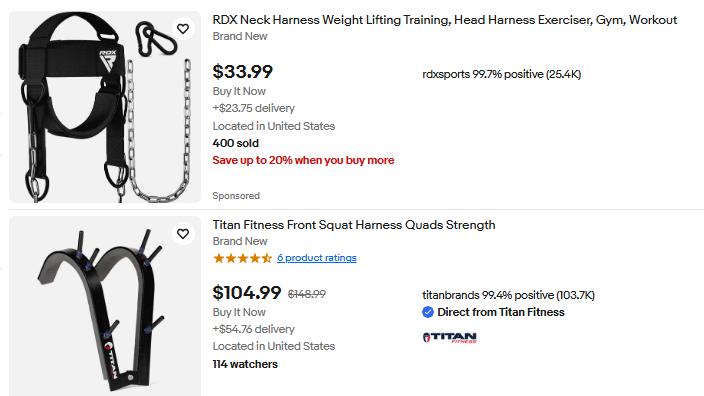
A “French Bulldog step-in harness extra-small soft mesh no-pull” has a completely different competitive landscape than a “dog harness.” Breed-specific buyers already know what they need; they’ve been filtering through generic listings for 20 minutes by the time they find yours. When your title speaks directly to their dog, the sale is almost already made.
Sellers: List by breed, size, and fit type every single time. It’s the single most effective title strategy in this entire category.
Buyers: Always check the listed measurements against your pet’s actual dimensions. Breed sizing varies between manufacturers more than it should.
GPS Pet Trackers
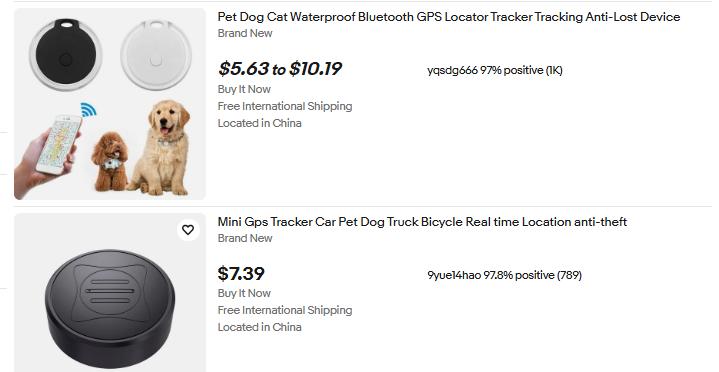
This isn’t a discretionary purchase. Buyers who’ve lost a pet once become highly motivated purchasers who don’t negotiate on price, which makes this one of the more reliable converters in the category.
Sellers: State clearly whether the tracker requires a monthly subscription. Buyers who discover fees after purchasing return the item immediately and leave feedback that follows you.
Buyers: Some of the best-reviewed trackers on eBay are older models that work without subscriptions. Worth knowing before defaulting to the newest option.
Compact Cat Furniture
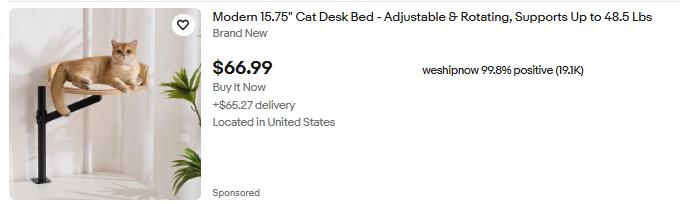
Cat furniture designed for smaller living spaces is genuinely underrepresented on eBay relative to how many cat owners are shopping for it. The demand is there. The supply isn’t keeping up which is exactly the kind of gap worth stepping into.
Sellers: Lead with dimensions and space-saving language in your title. “Wall-mounted cat shelf compact apartment” finds a buyer who’s already decided they want this; they just haven’t found the right listing yet.
Buyers: Confirm measurements with the seller before purchasing. Cat furniture dimensions in listings vary in accuracy more than they should.
11. Baby Items
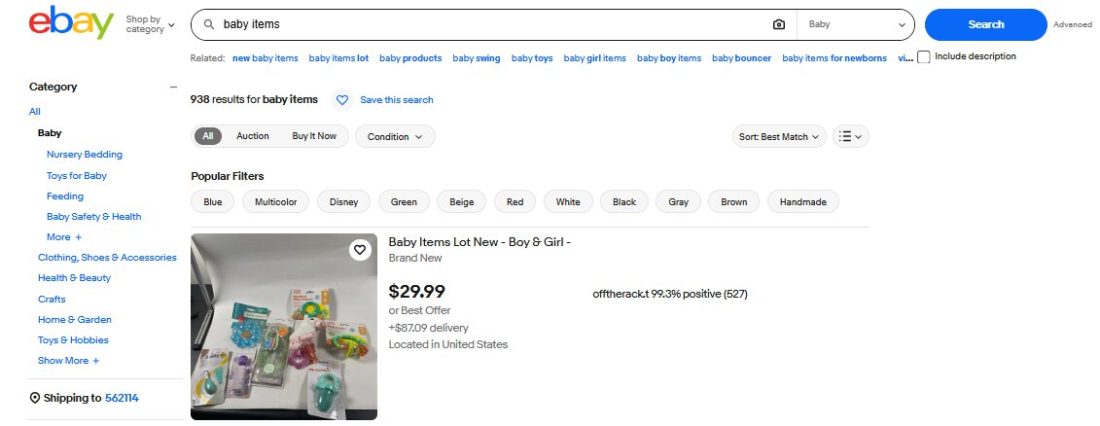
Baby items are counterintuitive. You’d assume parents insist on buying everything new, but the opposite is consistently true. Babies outgrow things before they wear them out, and parents know this better than anyone.
The secondhand market for baby gear carries a level of trust that most other secondhand categories can’t match, because the seller on the other end is usually another parent who treated the item exactly the way you would.
One pricing note before the products: never price used baby items more than 40–60% below retail. An item priced too low raises an immediate red flag in a category where safety is the buyer’s primary concern. Buyers here want reassurance, not a bargain.
Premium Baby Carriers (Ergobaby, Solly Baby, Tula)
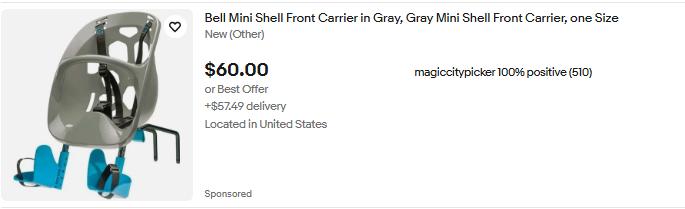
Parents use these for 6–18 months and resell. The cycle is consistent, and the demand never really dips; there’s always a new parent looking for exactly what the last one just outgrew.
Sellers: Wash before listing and say so explicitly. Baby carriers are a skin-contact item, and buyers notice when sellers address hygiene proactively; it builds trust before they’ve even read the full listing.
Buyers: Check the buckles and stitching carefully in listing photos. These are the two components that show wear first and matter most for safety.
Baby Monitors (Owlet, Nanit, Motorola)
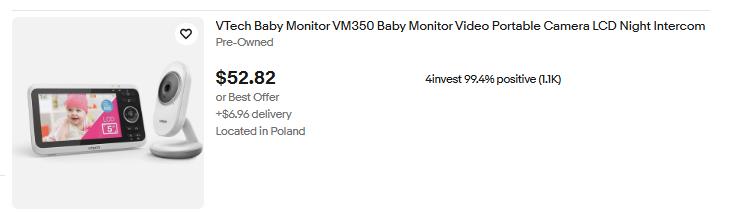
Tech-forward monitors hold value unusually well. The Owlet sock monitor has a particularly devoted resale market. Parents who want the health monitoring features at half the new price shop eBay specifically for them.
Sellers: Include what’s in the box. Missing accessories are the most common reason for returns in this sub-niche; a missing dock or sensor sock turns a smooth sale into a return request.
Buyers: Confirm the monitor is still supported by the manufacturer’s app before purchasing. Some older models have been phased out of app support. It’s worth checking before you commit.
Wooden and Montessori-Style Toys
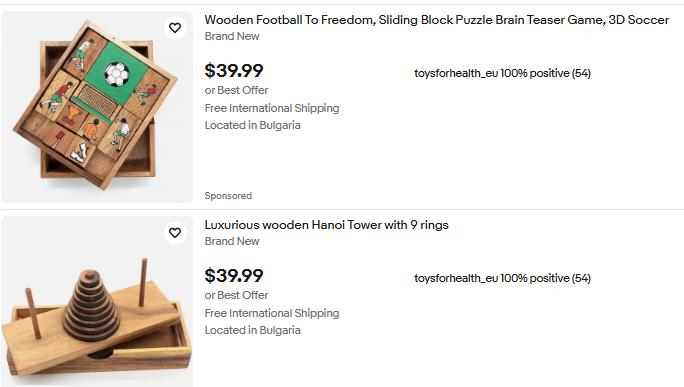
Nearly indestructible, aesthetically durable, and actively sought secondhand by parents who see buying them used as the sustainable choice. That ethos aligns with the brand values of Montessori-style products, which means the buyer is already predisposed to trust the secondhand market before they start searching.
Sellers: Clean thoroughly and photograph in good lighting. These toys look almost new when well cared for; let your photos show that rather than relying on condition descriptions alone.
Buyers: Check for small detached parts before purchasing, particularly on wooden puzzles and stackers. A missing piece on an otherwise perfect set is worth asking about upfront.
12. Home Goods & Décor
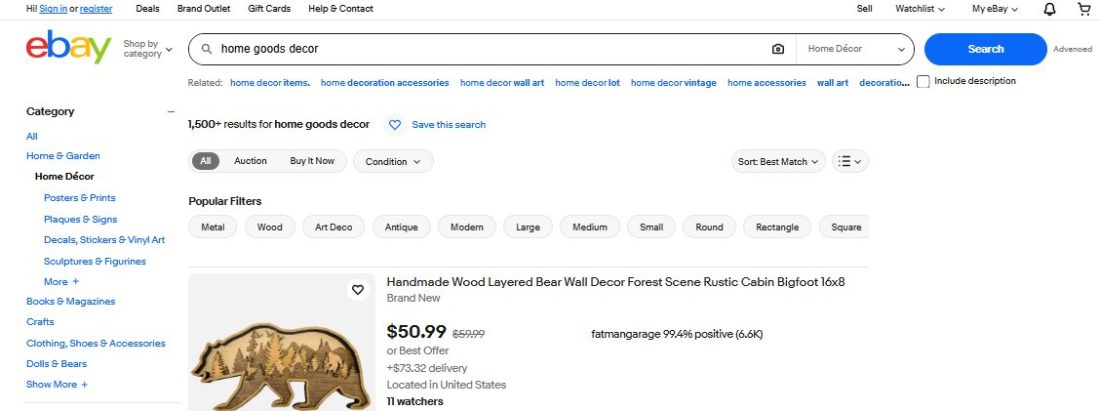
Home décor on eBay is less about what you’re selling and more about how you’re showing it. The same lamp photographed on a bare white floor sells for half the price of the same lamp styled on a bookshelf with a plant and a hardback book beside it. That’s not an exaggeration; it’s the single biggest lever in this category, and most sellers never pull it.
Buyers in this category are imagining the item in their home before they decide to purchase. Your job is to help them do that before they scroll past.
Vintage and Mid-Century Ceramics
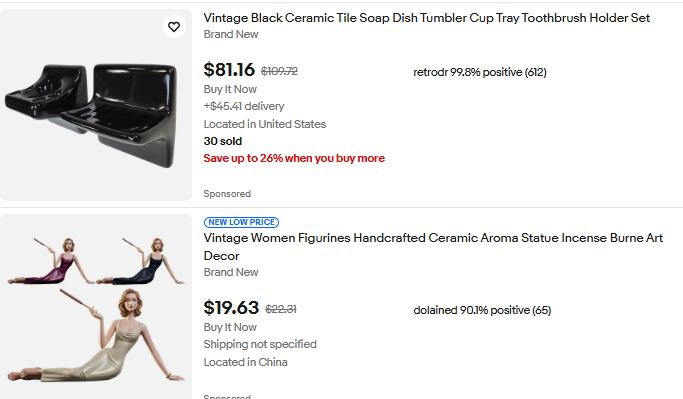
A studio pottery vase sourced for $12 at an estate sale lists for $80 when photographed well and described with period accuracy. The buyers shopping for these can’t find them in regular stores; they’re on eBay specifically because this is where they live.
Sellers: Learn pottery marks and studio signatures. It makes you a better sourcer at the estate sale and a more credible lister on eBay. Both ends of the transaction improve with the same knowledge.
Buyers: If a listing doesn’t mention the maker, period, or origin, ask before purchasing. A seller who knows what they have will answer immediately. One who doesn’t is worth scrolling past.
Specialty Kitchen Equipment (AeroPress, Cast Iron, Pour-Over Gear)
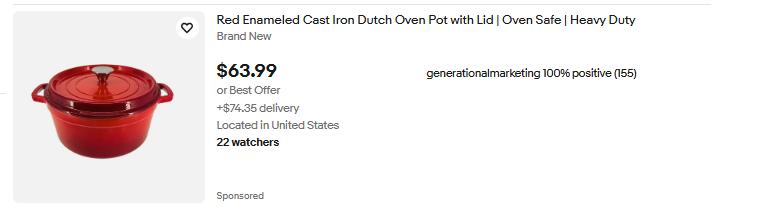
Passionate kitchen buyers come to eBay specifically because retail doesn’t carry the depth they want. A buyer searching for a specific cast iron size or a discontinued AeroPress accessory has already exhausted every other option before landing here, which means they’re motivated and ready to purchase.
Sellers: Food-contact items need to look clean in photos. A well-lit shot of a properly seasoned cast-iron skillet converts significantly better than a dark, ambiguous one.
Buyers: Quality cast iron and pour-over equipment on eBay often sell at 40–60% below retail for identical pieces. Check listing photos carefully for cracks or chips; they’re not always immediately visible.
LED Lighting and Discontinued Smart Home Accessories
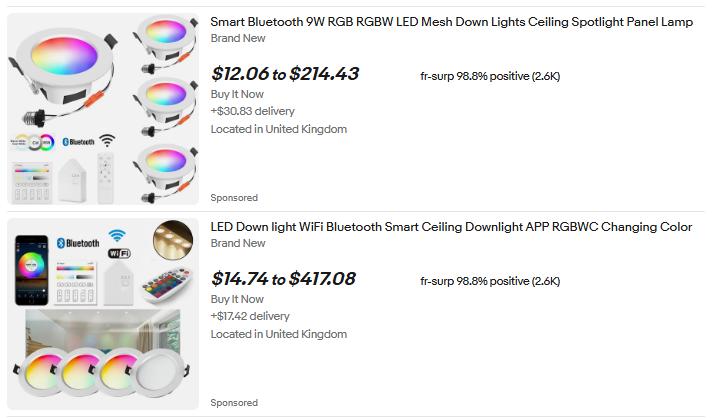
When a smart home product line gets discontinued, the accessory listings empty out while existing owners still need replacements. That gap is entirely yours if you’re paying attention to discontinuation announcements before everyone else notices.
Sellers: Track when brands like Wink, Iris, or older Nest lines get phased out. The moment retail stops stocking their accessories, motivated buyers shift to eBay and find almost no one there yet. Buyers: Verify compatibility with your existing system before purchasing smart home accessories from discontinued lines vary in firmware compatibility depending on when they were manufactured.
13. Jewelry & Watches
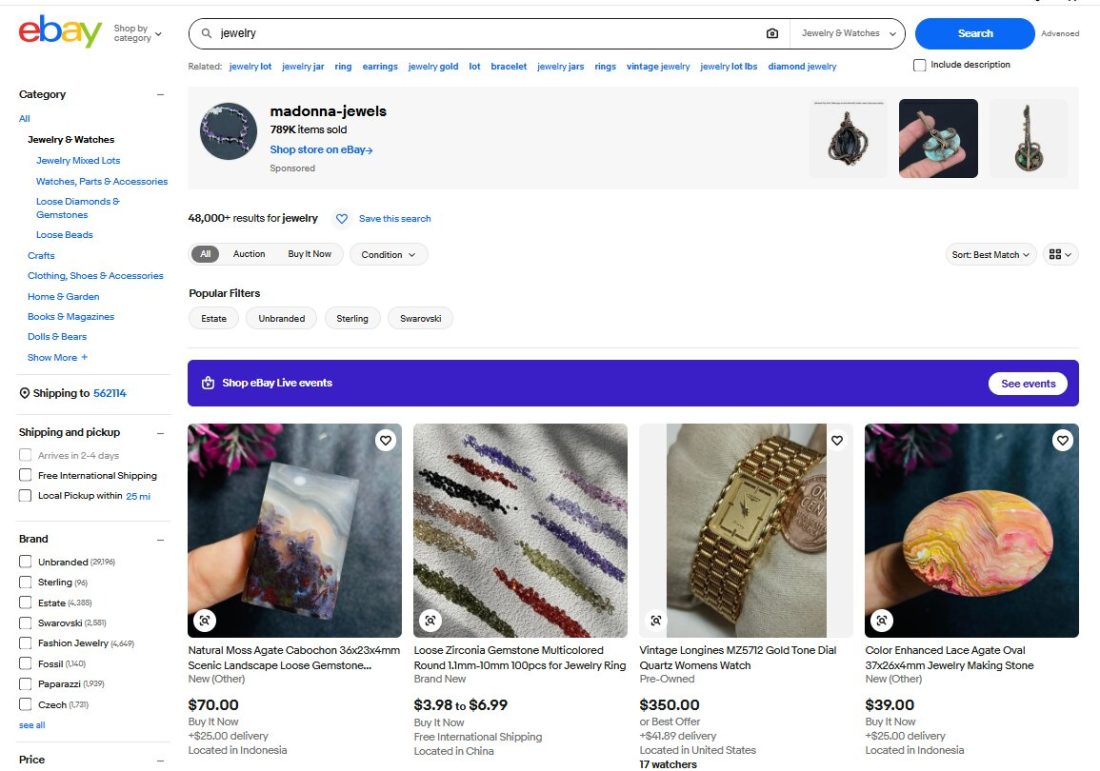
eBay’s authentication program has shifted something real in this category. Buyers who previously wouldn’t spend more than $100 on eBay jewelry are now comfortable spending $500, $1,000, or even $5,000 on the right piece because eBay verifies it before it ships. That changes the category from a bargain-hunting market into a legitimate premium marketplace, and the sellers positioned for that shift are the ones winning right now.
Pre-1980 Mechanical Watches (Seiko, Omega, Rolex)
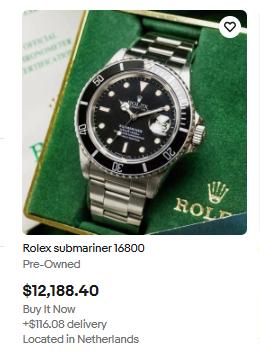
Estate sales are still the best sourcing channel here. Sellers without watch market knowledge consistently underprice these, sometimes dramatically. A vintage Omega Seamaster priced at $45 because the seller didn’t know what they had isn’t a hypothetical. It happens regularly to people who’ve taken the time to learn the references.
Sellers: Learn three or four references before you start sourcing. The Seiko 5, Omega Constellation, and Hamilton Khaki are reliable entry points with consistent demand, accessible sourcing prices, and enough collector interest to move quickly when listed accurately.
Buyers: For watches over $2,000, eBay’s authentication is automatic before the item ships. Between $500 and $1,999, the optional service costs $80, which is worth every cent on mechanical watches where condition significantly affects value.
Sterling Silver Jewelry (925-Marked)
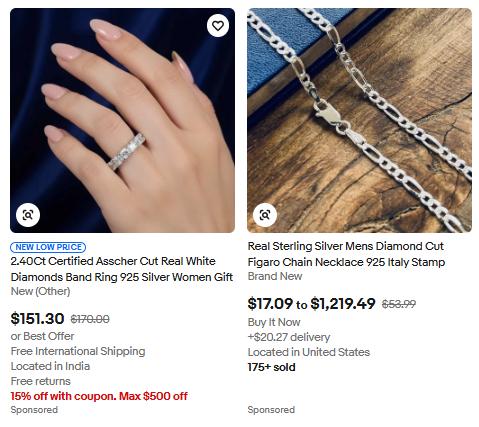
Sterling silver has consistent year-round demand from buyers who search by hallmark specifically. A 925-marked chain listed with the hallmark visible in photos and mentioned in the title sells within days. The hallmark is the product as much as the piece itself.
Sellers: Source from estate sales and thrift stores where silver is often mixed in with costume jewelry and priced the same. A basic silver testing kit pays for itself on the first find.
Buyers: Look for the 925 stamp in listing photos before purchasing. Sellers who photograph the hallmark clearly are confident in what they’re selling; that confidence is worth paying for.
14. Video Games & Gaming Gear
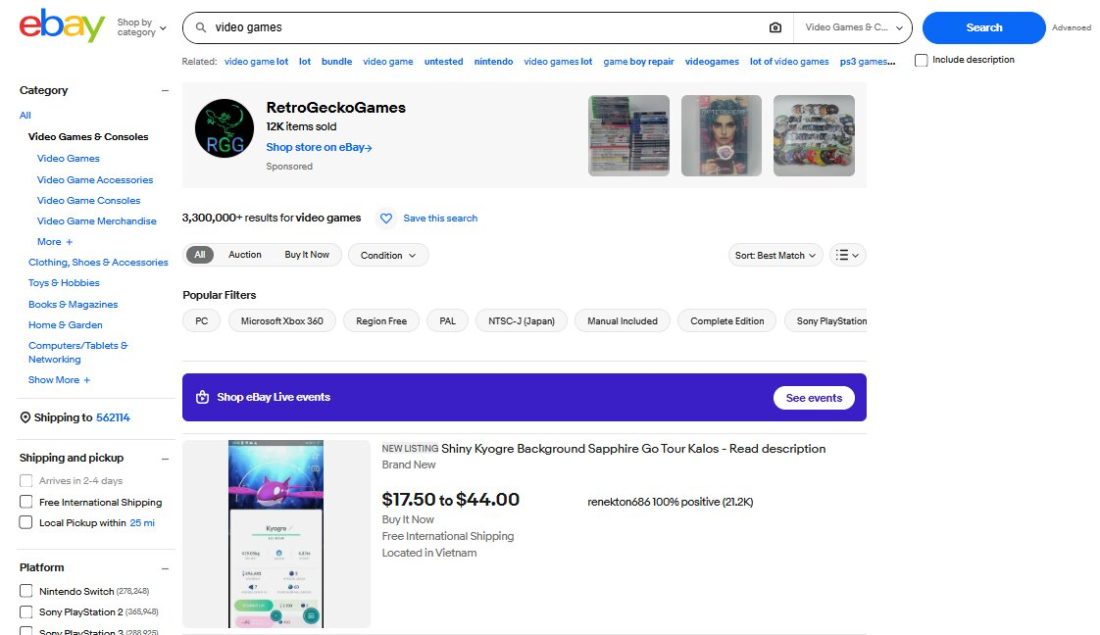
Gaming is over 40 years old now, and for the first time, multiple generations are carrying their own gaming memories into the present. That’s what’s driving the retro boom. The retro gaming market hit $3.8 billion in 2025 and is growing at 10% annually, significantly outpacing the broader console market.
The sourcing window hasn’t closed. It’s narrowed in urban thrift stores but remains wide open at estate sales, rural Goodwills, and Facebook Marketplace in smaller markets. And the buyer base has expanded from hardcore collectors to mainstream adults in their 30s and 40s who simply want to play the games they grew up with. That combination of growing demand and still-available sourcing makes this category more accessible than most people think.
Nintendo 64
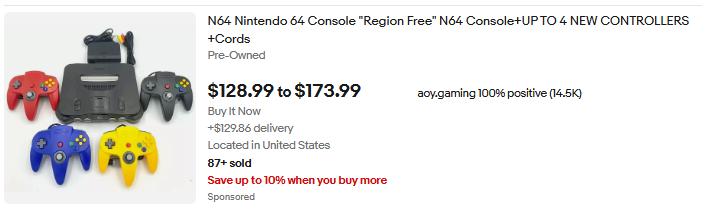
A working N64 with two controllers and an AV cable sells for $80–$120 consistently. Add a popular cartridge and you’re at $100–$150. Estate sales and rural thrift stores are still the best sourcing channels. Patience is the actual skill here more than anything else.
Sellers: Dual-format listings, buy it Now plus auctions achieve 22% higher final prices than single-format listings of retro hardware. Use both.
Buyers: Check that the cartridge slot contacts are clean before purchasing. Dirty contacts are the most common reason an N64 appears nonfunctional when it’s actually fine. A seller who tests and says so is worth the few extra dollars.
GameCube
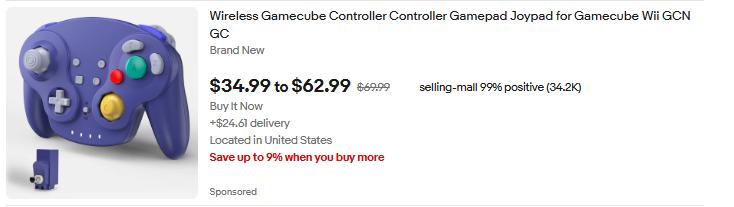
The GameCube has entered its collector premium era. Complete-in-box titles fetch significantly more than loose cartridges. Metroid Prime and Super Smash Bros. Melee is consistently among the most searched titles on eBay in this category.
Sellers: Original boxes and manuals are worth sourcing separately. A complete-in-box GameCube game sells for 2–3x the loose cartridge price to the right buyer.
Buyers: Confirm the disc reads cleanly before purchasing. GameCube discs scratch easily, and read errors aren’t always disclosed. A startup screen photo is the minimum worth asking for.
PlayStation 2 and Original Xbox
The PS2 is the best-selling console of all time. The installed base of buyers who grew up with it is enormous, and that generation is aging into disposable income right now. Hardware still surfaces, underpriced at thrift stores, to sellers who recognize it.
Sellers: List games individually rather than in lots wherever margin allows. Ten PS2 games in a lot sell for less per title than the same games listed individually to buyers searching by name.
Buyers: Laser lens degradation is common on older PS2 units and not always disclosed. Ask for a video of a game loading before purchasing. A seller confident in their unit will send one without hesitation.
Common Mistakes to Avoid Before You Start Selling Top-Selling Items on ebay
Most sellers who search “what are the top selling items on eBay” start listing within days. And for a while, it looks like it’s working. Views are coming in, and occasionally things start to sell.
But at the end of the month the numbers don’t add up. Margins are thinner than expected. The same items are being relisted for the third time
The reasons might be that it’s almost always one of the same four mistakes, made in the same order, by sellers who didn’t know what to measure.
Mistake 1: Ignoring Your Listing Quality on eBay
Most sellers treat their listing as an afterthought, the thing you knock out quickly after the real work of sourcing, pricing, and researching is done. The truth is, your listing is where most of your sales are won or lost, and the sellers who understand that treat it accordingly.
Here’s the number that should change how you think about this. About 61% of eBay’s traffic comes from mobile devices. That means the majority of people looking at your listing right now are on a screen roughly five inches wide, probably scrolling with one thumb, and probably doing something else at the same time.
A photo that looks acceptable on a desktop monitor, slightly underexposed, with the item centered but small in the frame and the background a little cluttered, is effectively invisible on a phone. Your main image has roughly two seconds to communicate what the item is and make someone stop scrolling. If it doesn’t do that job, the rest of your listing never gets read.
This isn’t about having professional photography equipment. It’s about the basics that most sellers skip. You can shoot in natural light near a window, fill the frame with the item, use a clean background, preferably a white foam board from a dollar store, and take enough angles that a buyer doesn’t have to ask questions. That last point matters more than most sellers realize because every question a buyer sends you is a sale that almost didn’t happen.
Your title carries the same weight as your photos, and it’s where eBay’s search algorithm decides whether you exist. Generic titles like “phone case” or “used laptop” bury you. Specific titles, brands, models, colors, conditions, and compatibility are how buyers find you and how eBay ranks you. If you can’t find your own listing by searching the way a buyer would, rewrite the title before you do anything else.
Mistake 2: Setting product prices without researching the audience type
Most eBay sellers set prices by checking competitors’ prices and undercutting them slightly. It feels logical. It’s also a race to the bottom that compresses your margin every time someone else does the same thing in response.
There’s a better approach to this. List at a slightly higher price than you actually need to sell for, and enable the Best Offer option.
This works for two reasons that are worth understanding separately. The first is setting a price higher than the listed price, which sets the buyer’s mental reference point for what the item is worth, even if they never intended to pay it. A $45 listing with Best Offer enabled feels like a different item than a $32 fixed-price listing, even if the item is identical and you’d happily take $32.
The second reason is how buyers’ minds behave during negotiation. A buyer who submits a $35 offer and gets it accepted feels like they won something. They didn’t just pay a price; they earned a discount. That feeling of agency makes them significantly more satisfied with the transaction, less likely to point out minor condition issues in feedback, and more likely to check your other listings before they leave. You sold the item for the price you wanted. They feel like they got a deal. That’s a trick to understand how people actually experience purchasing decisions.
Test this on your next ten listings against your current fixed-price approach. Price 15–20% above where you’d genuinely accept an offer, enable “Best Offer,” and auto-accept anything above your floor. Watch what happens to your conversion rate and your feedback tone.
Final Thoughts
If you’ve read this far, you already know more about the top-selling items on eBay than the majority of sellers currently listing on the platform. Most of them started with a category they liked. Whereas you’re starting with sell-through rates, competition checks, buyer behavior patterns, and a category-by-category breakdown of where the real margin lives.
eBay has over 133 million active buyers and 1.7 billion listings. The platform isn’t slowing down, the demand categories in this article aren’t going anywhere, and the barriers to entry for a serious individual seller are lower than ever. What’s scarce isn’t opportunity; it’s the combination of the right category knowledge, the right listing execution, and the right data to keep improving both.