

Amazon DSP ROI influences more business decisions than any audience strategy, creative test, or bidding tactic. Not because the campaigns are underperforming, but because they’re often measured using the wrong metrics. When stakeholders rely on ACoS or last-click attribution alone, they undervalue DSP’s true contribution to customer acquisition and long-term growth.
SellerApp’s 2026 State of Amazon Advertising report, built from $3B+ in managed ad spend across 33,000+ brands, found that DSPs’ share of total Amazon ad spend grew from 17.7% to 23.4% across 2025. More than one in three DSP-attributed purchases came from customers who had never bought from the brand before, and DSP clicks grew 156% year over year in Q1 2026. These signals point to a channel that’s expanding customer acquisition and demand generation, even if that impact isn’t fully reflected in traditional last-click metrics. Amazon DSP isn’t underperforming. It’s often being undermeasured. You’ve been there. Three months into a DSP campaign, your client pulls up the dashboard, squints at the ACoS, and says, “This is worse than before we started.” And you’re sitting there knowing the campaign is working. New customers are coming in. Branded search is up. Organic rank is quietly improving. You just can’t prove any of it before they start cutting budget. That’s not a DSP problem. That’s a reporting problem. In this guide, you’ll find the complete framework for measuring, reporting, and defending Amazon DSP ROI in a way that clients actually understand and trust, before the first invoice hits, not after.
Quick Guide
Why Your Best DSP Work Looks Like Failure on a Client Dashboard
The root of most DSP client conflicts isn’t performance. It’s measurement. When you apply a Sponsored Products metric to a demand creation channel, you get numbers that look broken even when the underlying strategy is working perfectly. Understanding why that happens is the first thing you have to get right before anything else in this playbook matters.
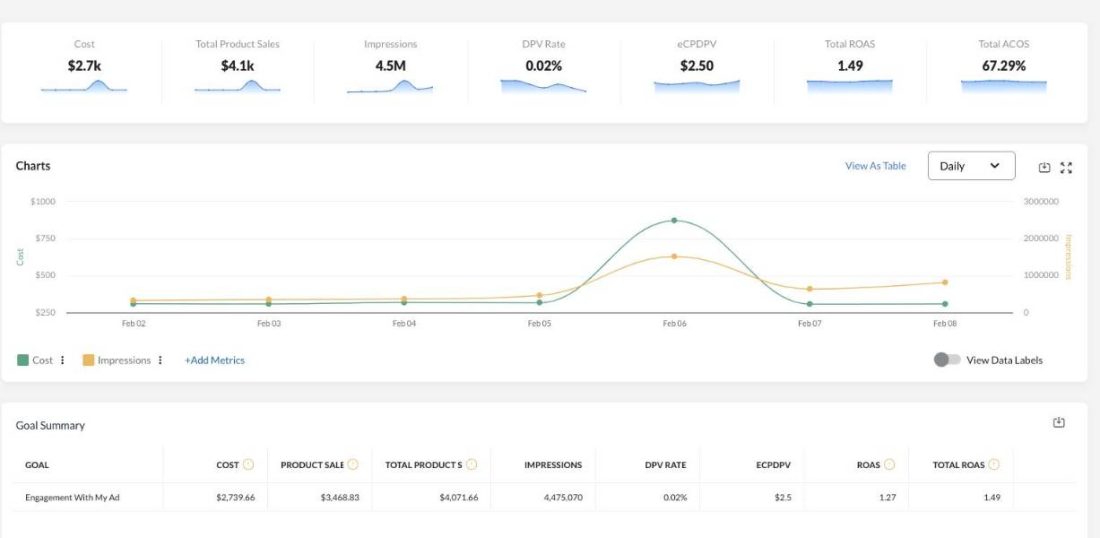
How ACoS Rewards Demand Capture and Punishes Demand Creation
ACoS was built for Sponsored Products. It measures how much ad spend it took to generate a direct, last-click attributed sale. That model works fine when someone searches “vitamin C serum,” sees your ad, clicks, and buys. Clean. Simple. One-to-one. But Amazon DSP doesn’t work that way. DSP is an impression-based channel. You’re showing ads to people who are browsing, watching content, living their lives.
They’re not raising their hand yet. You’re creating the intent before they even know they need you. Think of it this way. Sponsored Products is like a salesperson at the checkout counter. When the customer walks up ready to buy, they close the deal. ACoS measures how expensive that salesperson is per sale. DSP is like a billboard on the highway. It puts your brand in someone’s head. Three days later, they search Amazon for your product category and convert through a Sponsored Products ad. The SP ad gets credit. The DSP campaign gets nothing, even though it started the whole journey.This is why brands who judge Amazon DSP ROI purely through ACoS are reading the wrong scorecard entirely.
Amazon DSP ACoS vs ROAS (Why Neither Metric Alone Tells the Full Story)
Let’s say you’re running DSP for a pet food brand. Your DSP ACoS looks ugly, around 65%. Your client is concerned. But here’s what the dashboard isn’t showing you.
That same campaign is driving a 36.5% new-to-brand purchase rate. That is customer acquisition, and it has a lifetime value that ACoS will never capture.
ROAS gives you a slightly better picture because it flips the equation and at least tells you whether you’re generating returns. SellerApp’s benchmark data puts DSP video ROAS at 2.4X on average across brand objectives.
Not as flashy as your top Sponsored Products campaigns, but remember, those SP campaigns are often harvesting demand that DSP prospecting created.
ACoS and ROAS are outcome metrics for demand capture. Amazon DSP ROI requires demand creation metrics. They’re different games with different scoreboards.
The “Lower ACoS by Cutting DSP Spend” Illusion Clients Fall For
This is the dangerous one. A client sees high blended ACoS and tells the agency to cut DSP spend. The agency cuts it. ACoS drops. Everybody celebrates. Then 60 days later, Sponsored Products efficiency starts declining too, because DSP was quietly feeding the top of the funnel, keeping branded search volume alive, and warming up audiences that SP was converting.
Brands cut DSP budgets to “fix” their ACoS and then wonder six months later why their organic rank softened, and SP conversion rates dropped. They made the metrics look better while making the business worse. That’s the trap.
What Amazon DSP Advertising ROI Actually Looks Like
Most brands enter Amazon DSP expecting it to behave like a larger version of Sponsored Products. It doesn’t. Amazon DSP advertising ROI is generated much earlier in the customer journey, making it a demand-generation and customer-acquisition channel rather than a pure demand-capture channel. That means the way you measure success needs to change.
SellerApp’s 2026 State of Amazon Advertising Benchmark Report, built on $3B+ in managed ad spend across 33,000+ brands, found that Amazon DSP’s share of total Amazon ad spend increased from 17.7% to 23.4% in 2025. More importantly, 36.5% of DSP-attributed purchases came from new-to-brand customers, while DSP clicks grew 156% year over year. In Q1 2026, Amazon DSP also became cheaper per click than Sponsored Products for the first time in five years. These trends show that advertisers are increasingly using DSP to create demand earlier in the buying journey rather than simply capturing existing demand.
This changes how ROI should be evaluated. Instead of focusing only on ACoS or last-click ROAS, advertisers need to measure how DSP expands reach, acquires new customers, influences downstream conversions, and contributes to long-term business growth. Those are the outcomes that determine whether DSP is actually creating incremental value.
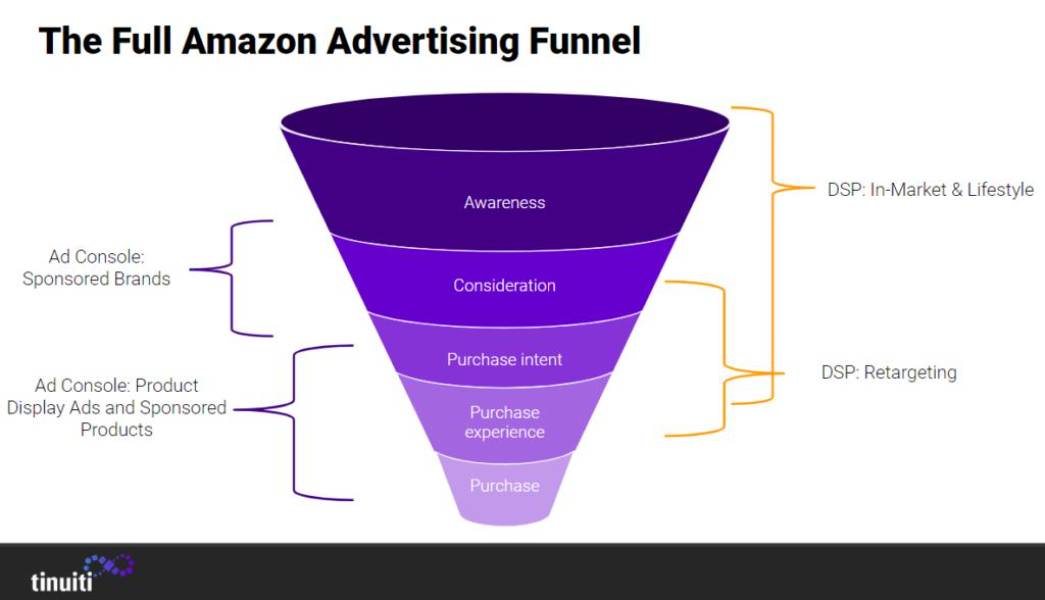
Demand Creation vs Demand Harvesting: Two Different ROI Models
Think of your Amazon advertising as a pipeline with two distinct stages. Demand creation is everything that happens upstream. DSP prospecting, awareness campaigns, video ads, retargeting lapsed buyers. Demand harvesting is downstream. Sponsored Products, Sponsored Brands, exact-match keywords. This is where intent gets captured and converted. Most brands over-invest in harvesting and under-invest in creation, then wonder why their cost per click keeps rising.
SellerApp’s 2026 benchmark data shows upper-funnel investment via DSP grew 72% in Q4 2025, while costs for those placements simultaneously fell 24%. The brands that understood this dynamic leaned in hard. Amazon DSP ROI needs to be measured at the pipeline level, not the campaign level. If your DSP prospecting puts 10,000 new shoppers into consideration for your brand and 15% of them eventually convert through Sponsored Products over 30 days, that’s a DSP win. It just doesn’t show up labeled that way.
The View-Through Blind Spot: Why You’re Underreporting DSP Performance
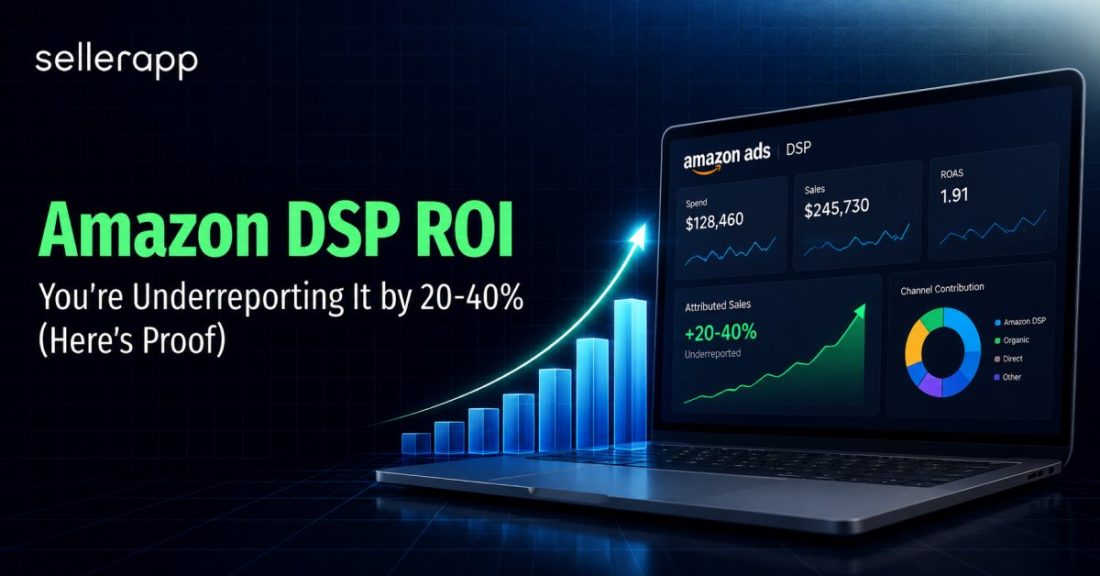
View-through attribution is where most brands leave massive value on the table. A shopper sees your DSP display ad while browsing a recipe site. They don’t click. Two weeks later, they search Amazon, click a Sponsored Products ad, and buy. Standard attribution gives 100% credit to the SP ad. View-through attribution says that DSP impression influenced this purchase. Amazon’s default view-through attribution window is 14 days. If you’re not looking at view-through data, you are systematically underreporting your campaign’s contribution to revenue. The consensus across the industry suggests brands underreport DSP performance by 20 to 40% when they ignore view-through data entirely. For a campaign generating $200,000 in attributed revenue, that’s potentially $80,000 of real impact that’s invisible on a click-only dashboard.
The Halo Effect: How DSP Lifts Organic Sales and Sponsored Ads Efficiency
When DSP runs prospecting campaigns, it drives branded search lift. More people learn about your brand and then actively search for it on Amazon. Those branded searches are typically your highest-converting, lowest-cost keywords, so your Sponsored Products campaigns get more efficient because DSP filled the funnel above them. On top of that, increased traffic to your product pages from DSP boosts your page’s conversion signal. Amazon’s algorithm notices higher traffic volume and sales velocity, which can lift your organic rank and generate free sales on top of paid ones.The actual Amazon DSP ROI equation looks like this. Direct attributed sales, plus view-through assisted sales, plus Sponsored Products efficiency gains, plus organic rank lift, plus new-to-brand customer lifetime value. When you add all of that up, the business case gets a lot more compelling than the raw ACoS number suggests.
Amazon DSP KPIs That Prove ROI (When ACoS Can’t)
If ACoS isn’t the right scorecard for DSP, you need a different set of Amazon DSP KPIs entirely. The good news is these metrics already exist inside your Amazon advertising console and DSP reports. The bad news is most teams either don’t pull them or don’t know how to present them in a way that lands with a client. Let’s fix that.
New-to-Brand Sales: The Customer Acquisition Metric ACoS Hides
New-to-brand sales data is the single most powerful metric for proving Amazon DSP ROI to a skeptical client. When you show a client that 36.5% of all DSP-attributed purchases came from customers who had never bought from their brand on Amazon before (SellerApp’s 2026 benchmark figure), you’ve just reframed the entire conversation.
You’re not talking about ad efficiency anymore. You’re talking about customer acquisition cost and lifetime value. For Pets and Beauty specifically, SellerApp’s research shows NTB rates running between 35 and 42%. For every 100 DSP-attributed purchases in those categories, 35 to 42 are brand new customers with potentially years of repeat purchase value ahead. No other Amazon ad format delivers new-to-brand acquisition at this scale. When you’re building your DSP reporting deck, NTB sales should be on slide one. Not buried in an appendix.
Amazon DSP ROAS Benchmarks: Retargeting vs Prospecting vs Blended
Not all DSP campaigns should be measured against the same ROAS expectation. This nuance matters enormously in client conversations. Retargeting campaigns, reaching people who already visited your product pages or abandoned their cart, will naturally show higher ROAS because you’re targeting warm audiences. These campaigns can often hit 3x to 5x ROAS or better. Prospecting campaigns, reaching net-new audiences, will show lower immediate ROAS. That’s by design. You’re planting seeds, not harvesting them. SellerApp’s data shows blended DSP video ROAS averaging 2.4x across brand objectives.
For pure prospecting, expect lower, and explain why upfront before the numbers come in.The mistake agencies make is blending retargeting and prospecting into one ROAS number and then comparing it against Sponsored Products benchmarks. Segment your Amazon DSP ROAS reporting by objective, always.
TACoS and Customer Lifetime Value: Connecting DSP to Total Business Growth
TACoS is where Amazon DSP ROI finally gets its proper due. SellerApp’s 2026 benchmark report identifies a healthy TACoS range of 10 to 15% across the platform. What most brands miss is that running strong DSP campaigns can actually reduce TACoS over time, even as it increases total ad spend short-term. DSP lifts organic rank. Higher organic rank drives more free organic sales. More organic sales grow the denominator in your TACoS calculation (total revenue, not just paid revenue).
So even if paid spend goes up, if organic revenue grows faster, TACoS improves. That’s the counterintuitive power of Amazon DSP ROI done right. For a pet food brand with a $45 monthly subscription value, acquiring a new customer via DSP at a $25 CPM might look expensive in month one. But if that customer stays subscribed for 18 months, the LTV is $810 from an acquisition that cost a few dollars in impressions. That’s not an expensive campaign. That’s one of the most efficient acquisition plays on the platform.
Amazon DSP ROI Measurement: Attribution That Clients Trust
Attribution is where Amazon DSP ROI either gets proven or gets dismissed. Most of the skepticism brands have about DSP doesn’t come from the channel underperforming. It comes from not knowing how to read the evidence correctly. The three tools below, used together, give you a case that holds up under scrutiny.
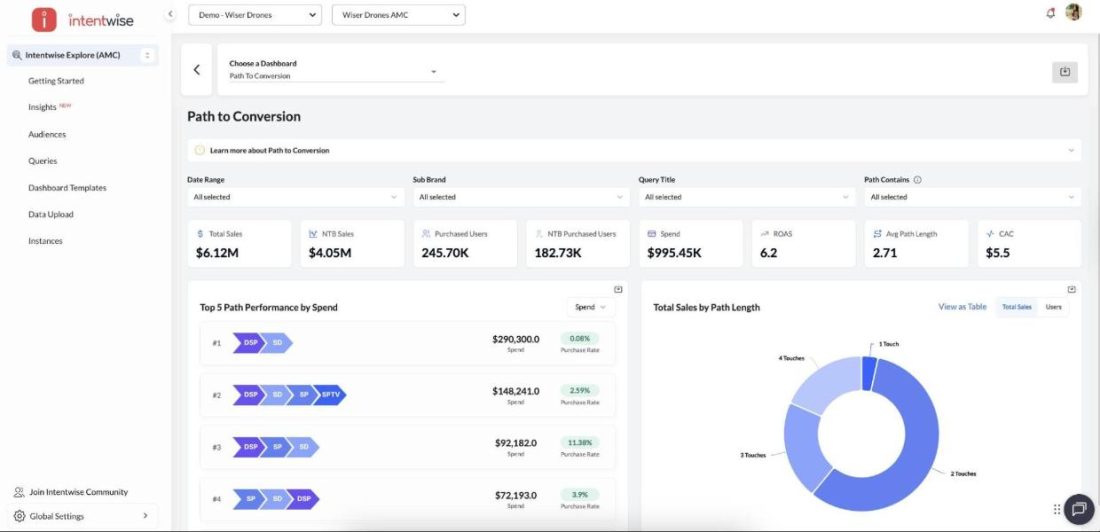
DSP Conversion Tracking: 14-Day Click, View-Through, and Modeled Attribution
Amazon’s DSP attribution setup isn’t complicated, but you have to understand what you’re measuring.
The 14-day click window credits DSP when someone clicked an ad and purchases within 14 days. The 14-day view-through window credits DSP when someone saw an impression (without clicking) and then purchased within 14 days. Modeled attribution, available through Amazon Marketing Cloud, gives you a probabilistic picture of how DSP touchpoints contributed across multi-step conversion paths.
The practical takeaway: always pull both click and view-through attribution when reporting Amazon DSP ROI. Present them transparently. If a client pushes back on view-through, explain that you’re not claiming full credit, you’re claiming influence. There’s a difference, and sophisticated clients appreciate the honesty.
Using Amazon Marketing Cloud for Multi-Touch, Cross-Channel Proof
AMC is the advanced analyst’s best tool for proving DSP ROI because it lets you run queries across your full event-level data to understand conversion paths that span multiple touchpoints.
You can show, at scale, that customers who saw a DSP awareness ad and then a Sponsored Brands ad converted at 2.3x the rate of customers who only saw the Sponsored Brands ad. That cross-channel proof is powerful in a client presentation in a way that no single-channel metric can match. SellerApp’s benchmark report identifies $50K to $250K monthly spend as the tier where managed DSP becomes viable and AMC analysis becomes feasible.
If you’re in that range and not using AMC, you’re leaving your best attribution evidence on the table.A time-lag analysis from AMC is often the most persuasive piece of reporting you can run. It shows how many days typically pass between a DSP impression and a resulting purchase. When you demonstrate that 40% of DSP-influenced conversions happen between 7 and 21 days after the exposure, you’ve explained in data exactly why clients shouldn’t judge DSP on week-one numbers.
Incrementality Testing: Proving DSP Caused the Sale
The gold standard for proving Amazon DSP ROI is incrementality testing. This is how you silence the “correlation, not causation” objection. The setup is a holdout experiment. Divide your target audience into two groups. One gets exposed to your DSP campaign. The other doesn’t. After the campaign period, compare conversion rates between the groups. The difference, after controlling for baseline behavior, is your incremental lift. Those are sales that genuinely would not have happened without DSP. When clients ask “how do I know DSP caused those sales,” incrementality testing is your answer. It’s the difference between showing correlation and showing causation, and in high-budget accounts, it’s what separates agencies that get renewed from agencies that get replaced.
The Anatomy of a DSP Report Clients Actually Understand
Knowing which metrics matter is only half the job. Presenting them in a way that a brand manager, a CFO, or a skeptical founder can follow is the other half, and it’s where a lot of otherwise solid DSP work falls apart. Good Amazon DSP ROI reporting isn’t about showing everything you know. It’s about showing exactly what they need to see, in the right order, with the right context.
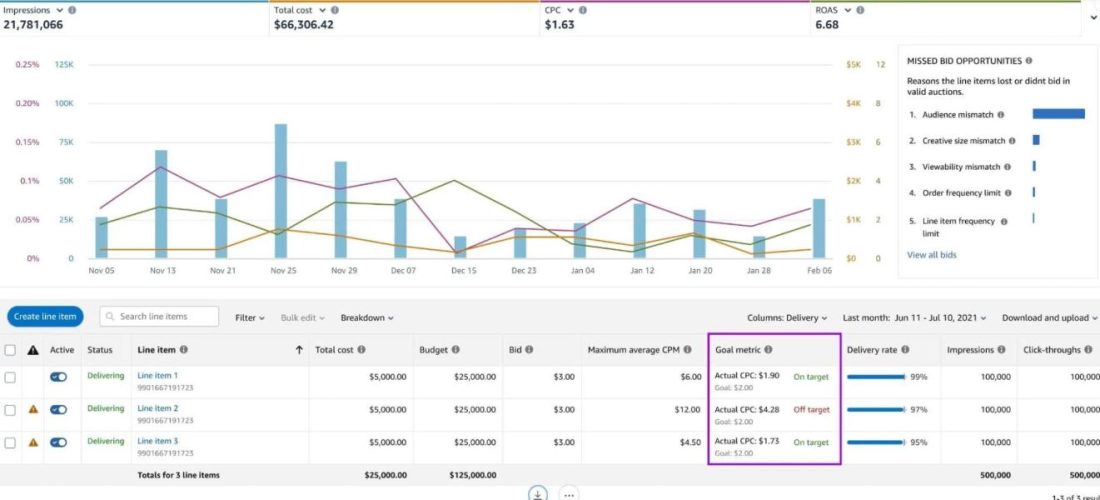
Where Every Dollar Goes: Fee-Level Cost Transparency
DSP has more fee layers than Sponsored Products. You have the media CPM, the audience data fees, the platform fees, and potentially agency margin. Most clients don’t understand why their effective CPM is higher than expected. SellerApp’s 2026 benchmark data shows the average Amazon DSP CPM hit $7.82 in 2025, up 47.46% from $5.30 in 2024. The Pets category reached $11.66 CPM. If you’re managing a Pets DSP account and your client sees an $11 CPM with no explanation, they panic. If you’ve pre-briefed them that Pets CPMs run premium because of high audience LTV and competitive density, they understand the investment and trust the plan. A transparent cost breakdown isn’t a weakness. It’s one of the fastest credibility builders in client management.
Segment by Audience, ASIN, and Geo. Never Blended Totals.
Blended totals are where DSP campaigns go to hide. Imagine you’re running DSP for a supplement brand. Blended across all campaigns, your ROAS is 1.8x and the client is concerned. But when you segment by objective, your retargeting audience ROAS is 4.2x, your prospecting ROAS is 0.9x (expected for top-of-funnel work), and your lapsed-buyer reactivation ROAS is 3.1x. Suddenly the story changes entirely. That story is invisible in blended totals. Always segment DSP reporting by audience type, by ASIN, and by geo if you’re running region-specific campaigns. Always.
How SellerApp Simplifies Amazon DSP ROI Reporting
Reporting that proves Amazon DSP ROI shouldn’t require you to manually stitch together data from three separate consoles into a spreadsheet every month. That’s archaeology, not analytics.
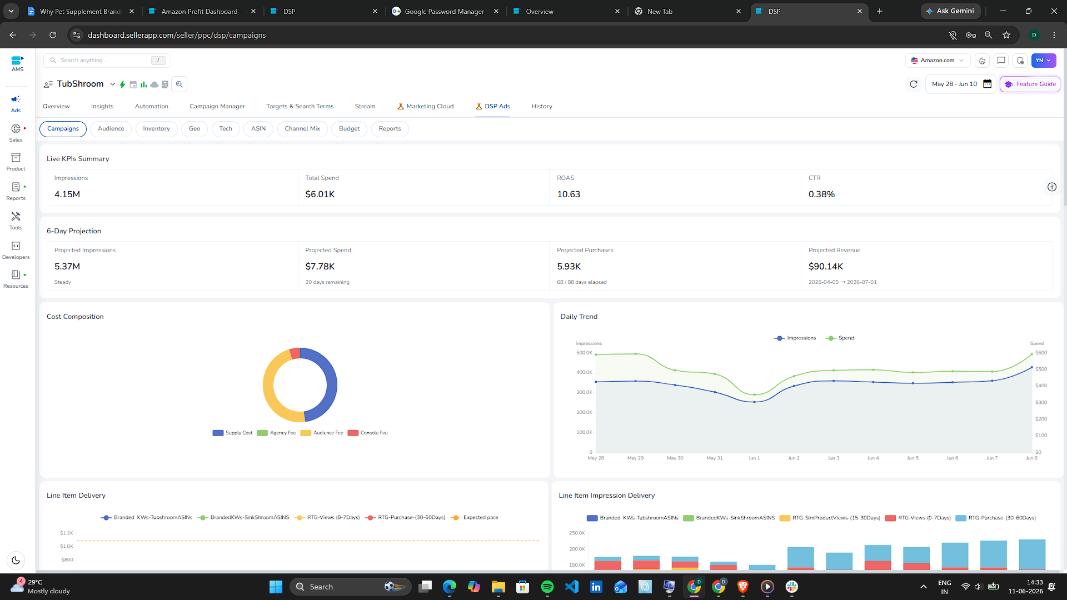
SellerApp’s platform is purpose-built for teams that need to communicate Amazon DSP ROI clearly. It brings live KPIs, including NTB rate, DPVR, ATC rate, attributed ROAS, and pacing against expected delivery, into a single view.
It automatically breaks DSP costs into their parts, media supply cost, audience data fees, and platform overhead, so the fee conversation is always grounded in data rather than defensiveness.
More importantly, SellerApp integrates directly with Amazon Marketing Cloud and Amazon Marketing Stream. AMC query outputs flow into the same reporting environment as your standard DSP console data and Sponsored Ads metrics.
The multi-touch attribution and time-lag analysis that makes AMC so valuable only becomes practically usable for client reporting when it’s integrated rather than exported and rebuilt each month manually.
The segmentation views also match exactly the reporting philosophy in this article. Audience-level attribution, ASIN-level performance, geo breakdowns, and channel mix analysis showing how DSP interacts with Sponsored Products and organic.
This is how you build the multi-layer story of Amazon DSP ROI that clients actually understand, not a single number, but a narrative backed by data at every level of the funnel.
Proving Amazon DSP ROI in Client Conversations: Objection Handling
Even with the right data, you’ll hit resistance. Clients who have spent years optimizing ACoS don’t rewire overnight, and that’s okay. The key is knowing which objections are coming before they arrive and having a response ready that’s grounded in data, not defensiveness. These are the three you’ll hear most often.
“But My ACoS Went Up”
Lead with context, not defense. Something like: “ACoS measures the efficiency of demand capture. DSP’s job is to create that demand in the first place. When we run DSP prospecting, we’re feeding more people into consideration. Many of those people convert through Sponsored Products, which ACoS doesn’t attribute back to DSP. Here’s what actually changed: our NTB rate is up 14 points, branded search volume increased 22%, and TACoS improved despite higher total spend. That’s the full picture.” When you lead with NTB, branded search lift, and TACoS improvement, the ACoS conversation becomes a footnote.
“Sponsored Products Is Cheaper”
This objection is technically true and still completely misses the point. Sponsored Products does have lower CPC on average, though SellerApp’s benchmark data highlights something significant. SellerApp’s 2026 State of Amazon Advertising Benchmark Report found that Amazon DSP clicks grew 156% year over year, reflecting advertisers’ increasing adoption of DSP as part of their full-funnel advertising strategy. But the deeper answer is this, SP and DSP are not substitutes. Saying SP is cheaper is like saying your checkout counter is cheaper to run than your marketing department. True, and irrelevant. You need both. The real cost comparison should be acquisition cost for net-new customers, where DSP’s 36.5% NTB rate often makes it the more efficient new customer channel hands down.
Set the ROI Narrative Before Launch, Not After the First Invoice
The biggest mistake in DSP client management is waiting until month two to have the attribution conversation. By then, the client has already formed an opinion based on incomplete data and the wrong metrics. The teams that retain DSP clients long-term are the ones who set expectations in writing before a single impression is served.
Pre-Campaign KPI Contracts by Funnel Stage
Before any money is spent, sit down with your client and agree on which KPIs matter at each funnel stage. For awareness campaigns: CPM, reach, DPVR, branded search lift. For consideration campaigns: ATC rate, DPVR, NTB rate. For retargeting and conversion campaigns: ROAS, conversion rate, revenue attribution. When you agree on this upfront, you eliminate the post-campaign debate about whether DSP worked. You already defined what “working” looks like for each objective. This is how you build long-term client relationships on DSP, not by hiding the attribution complexity but by getting ahead of it.
The 30/60/90-Day Expectation Timeline for DSP Results
DSP results compound over time. If you don’t set this expectation explicitly, clients will judge a 90-day campaign on 30-day data and pull the plug too early. Days 1 to 30 are the learning phase. CPMs stabilize, audience data signals build, and creative performance starts differentiating. Watch DPVR and ATC rate movement. Days 31 to 60 are the optimization phase. Budget shifts toward what’s working, ROAS improves, and NTB data becomes statistically meaningful. Days 61 to 90 are the compounding phase. Organic rank effects show up. Lapsed-buyer audiences are populated enough to run efficiently. The halo effect on SP conversion rates becomes measurable. Month one is a down payment on month three performance. That’s a story clients can follow and commit to, as long as you tell it before the campaign launches.
Conclusion: From ACoS Obsession to Total Growth Accounting
ACoS is a tactical metric. It measures how efficiently you captured existing demand. It has zero ability to tell you whether your advertising is building a durable business. Amazon DSP ROI, measured properly, tells you whether you’re winning the customer acquisition game, building brand equity that reduces long-term cost of sale, and maintaining a funnel healthy enough to sustain growth when SP competition pushes CPCs higher, as it has every single year. The market is voting with its budgets. The brands winning in 2026 will not be the ones with the lowest ACoS. They’ll be the ones who figured out how to measure total growth, communicate it clearly, and build a full-funnel stack where DSP and Sponsored Products do exactly what they were each designed to do.Build that stack. Tell that story. And stop letting ACoS end conversations that should be just getting started.
FAQs
Amazon DSP advertising ROI should be measured beyond direct sales. A complete view includes new-to-brand sales, view-through conversions, assisted conversions, customer lifetime value, and organic or Sponsored Ads lift.
Effective Amazon DSP ROI measurement also requires Amazon DSP analytics to understand how shoppers move across touchpoints.
By combining Amazon DSP conversion tracking with broader Amazon DSP KPIs, advertisers can determine whether campaigns are creating new demand, influencing future purchases, and generating incremental growth rather than simply claiming credit for existing sales.
The Amazon DSP ACoS vs ROAS comparison comes down to how efficiency is expressed. ACoS shows ad spend as a percentage of attributed sales, while Amazon DSP ROAS shows how much attributed revenue is generated for every advertising dollar spent.
However, neither metric proves incrementality.
Strong Amazon DSP ROI measurement should combine Amazon DSP ROAS with new-to-brand rate, view-through conversions, reach, and lifetime value. Amazon DSP analytics helps advertisers understand whether performance comes from acquiring new customers or retargeting existing demand.
The most important Amazon DSP KPIs depend on the campaign objective. Awareness campaigns should track reach, frequency, CPM, and DPVR, while consideration campaigns need ATC rate and new-to-brand metrics.
Conversion campaigns can focus more heavily on Amazon DSP ROAS and attributed revenue. Reliable Amazon DSP ROI measurement connects these metrics across the funnel. Using Amazon DSP analytics and Amazon DSP conversion tracking helps advertisers see how exposure influences later actions instead of judging every campaign against the same last-click performance standard.
Amazon DSP conversion tracking connects ad exposure and clicks to later customer actions within defined attribution windows. It captures both click-through and view-through conversions, helping advertisers understand influence beyond the final click.
For proving Amazon DSP ROI, this matters because many shoppers see a DSP ad before converting through another channel. Amazon DSP analytics can then reveal multi-touch journeys and time lags. Strong Amazon DSP ROI measurement uses this evidence to separate immediate attributed revenue from the campaign’s broader contribution to customer acquisition and growth.
Amazon DSP ROAS measures attributed revenue against ad spend, but it cannot show whether a campaign created demand or captured demand that already existed. Two campaigns with identical Amazon DSP ROAS may produce very different business outcomes.
Proving Amazon DSP ROI requires additional evidence, including new-to-brand growth, assisted conversions, and customer lifetime value. Amazon DSP analytics and Amazon DSP conversion tracking provide that context. A complete Amazon DSP advertising ROI framework evaluates how campaigns influence the entire purchase journey, not just the final attributed sale.
Better Amazon DSP ROI measurement starts with defining success by funnel stage and reporting campaigns by audience, ASIN, geography, and objective. Amazon DSP analytics should be used to identify conversion paths, attribution delays, and cross-channel influence.
For proving Amazon DSP ROI, brands should combine Amazon DSP conversion tracking with Amazon DSP ROAS, new-to-brand sales, and other Amazon DSP KPIs. Understanding Amazon DSP ACoS vs ROAS also prevents teams from applying demand-capture metrics to demand-creation campaigns and misreading true performance.