

Competitive Pricing Intelligence for Amazon Sellers: Tools and Best Practices
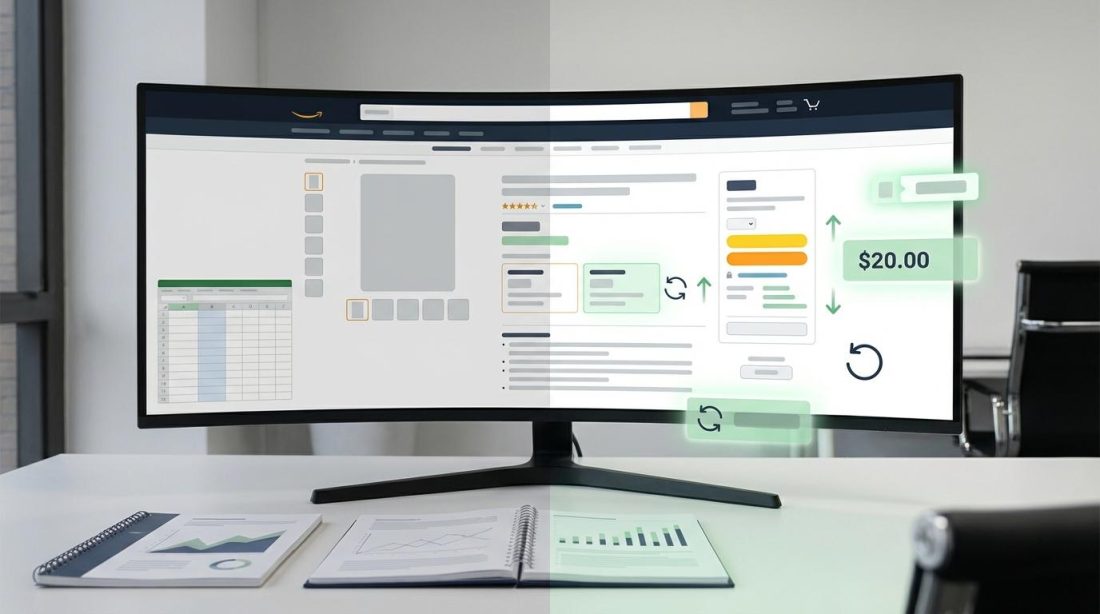
Here’s the reality of selling on Amazon: prices change every 10 minutes. You’re competing with 2.5 million other sellers. And while you’re manually checking spreadsheets, your competitors are using automation.
Data from retailer price monitoring platforms shows something interesting. Sellers with automated tools respond to price changes 24 times faster than manual checkers. That speed difference? It means more Buy Box wins and better margins.
But here’s what’s wild. 73% of Amazon sellers still track prices manually. They’re spending hours each week on this. Meanwhile, algorithmic competitors are eating their lunch.
The difference between sellers who grow and sellers who struggle often comes down to one thing: information. You need to know what competitors are doing. You need to spot trends fast. And you need to adjust without destroying your profits.
Why Pricing Intelligence Actually Matters
Look, pricing intelligence gives you three real advantages on Amazon.
First, you can see what’s happening in real-time. No more guessing about competitor moves. Second, you stop making panic price cuts that kill your margins. Third, you win more Buy Box placements. And that matters because the Buy Box controls 80% of Amazon sales.
Here’s a real example. An electronics seller was tracking 200 competitor ASINs. They noticed a pattern. Three big competitors dropped prices 15% during the first week of every month.
So what did they do? They kept premium pricing for three weeks. Then matched prices strategically during week one. Result? Their margins stayed at 28% while the category average was 19%.
The actual benefits you get from pricing intelligence:
- Faster reactions – You see price changes in minutes, not days. No more finding out too late that everyone dropped their prices yesterday.
- Better decisions – Historical data shows you patterns. Like when competitors always run sales. Or which months see price wars. You can plan around this stuff.
- Less grunt work – Automation cuts out 15+ hours of weekly price checking. That’s time you can use for actual business growth.
- Margin protection – Smart rules prevent you from matching every stupid price drop. You stay competitive without bleeding money.
What Manual Monitoring Actually Costs You
Let’s do the math on manual price checking.
Say you monitor 50 products. That takes about 10 hours weekly. At $50 per hour opportunity cost, you’re losing $26,000 per year just on time.
But the hidden cost is worse. You miss price changes for days. Your Buy Box percentage drops. Sales decline. And you don’t even know why until it’s too late.
One home goods seller tracked this. With manual monitoring, they held the Buy Box 42% of the time. After switching to automated tracking, Buy Box ownership jumped to 67% in 90 days. That’s a 37% sales increase without spending more on ads.
How to Choose the Best Tools for Price Tracking?
Modern price tracking tools do way more than just compare prices.
Good tools track unlimited competitor products. They show you 12+ months of price history. They send alerts when things change. And they connect to your repricing software so you can respond automatically.
When you’re looking at tools, focus on these things:
- How often they check prices – Minimum every 6 hours. Better tools do it hourly or in real-time across thousands of products at once.
- Alert options – You need custom notifications. Email, Slack, or API connections. The key is getting relevant alerts without drowning in noise.
- Data you can actually use – Current prices aren’t enough. You need trends, promotional patterns, stock levels, and Buy Box tracking for the full picture.
- Connections to other tools – Your pricing data should talk to inventory systems, ad platforms, and repricing software. That’s how you build smooth workflows.
Here’s how different approaches actually compare:
| Feature | Manual Tracking | Basic Tools | Advanced Automation |
| Time Required | 10-15 hours/week | 2-3 hours/week | 30 minutes/week |
| ASINs Monitored | 20-50 products | 100-500 products | 1,000+ products |
| Update Frequency | Daily at best | Every 6-12 hours | Real-time to hourly |
| Response Speed | 24-48 hours | 6-12 hours | Minutes |
| Historical Data | Manual logs only | 30-90 days | 12+ months |
| Alert System | None | Email alerts | Multi-channel + API |
| Annual Cost | $26,000 (time loss) | $500-2,000 | $2,000-10,000 |
| Buy Box Impact | 35-45% ownership | 50-60% ownership | 65-75% ownership |
As you can see, the upfront cost of advanced tools pays for itself through time savings and better Buy Box performance. Most sellers break even within 90 days.
Real example: A beauty seller connected pricing intelligence to their ad system. When competitors dropped prices more than 10%, their PPC bids automatically decreased to protect margins. When they had price advantages, ad spend increased. This improved ad efficiency by 31% while keeping profits steady.
Statista’s data shows e-commerce hitting $6.86 trillion in 2025. Competition is getting tougher. Sellers with automated intelligence have a clear edge.
How to Actually Use Pricing Intelligence
Using competitive pricing right isn’t about matching every price drop. That’s how you go broke.
You need a framework. Balance competitiveness with profit goals. Set clear rules. Review performance regularly. And adjust based on what the data tells you.
The best approach uses tiers. Competitor drops price under 5%? Hold steady. Protect your margins. Drop of 5-10%? Adjust strategically based on inventory and sales speed. Only match bigger drops on high-volume products where Buy Box eligibility matters most.
Seasonal patterns matter too. Electronics drop 20-25% in November and December. Outdoor gear increases 15-20% from March to July. Industry analysts say sellers who plan around these patterns beat reactive competitors by significant margins.
Key things to remember about pricing intelligence:
- Start small – Track your top 20 products first. Validate the approach. Then expand to your full catalog once you know it works.
- Set minimum margins – Create profit floors your automated systems can’t cross. This prevents destructive price wars that benefit nobody.
- Check patterns weekly – Schedule regular reviews. Look at pricing data. Spot trends. Adjust your rules based on what you learn.
- Test different approaches – Run A/B tests on similar products. Try different response thresholds. Find what actually works for your business.
The advantages build over time. Sellers who use pricing intelligence consistently get better at reading their market. They pivot faster. They capture more profitable sales.
In a $500+ billion marketplace, these advantages separate category leaders from sellers barely scraping by.