

Self-publishing isn’t the hard part anymore. Almost anyone can upload a manuscript to Amazon in a weekend. What’s difficult in 2026 is getting that book seen, read, and taken seriously once it’s live on Amazon Kindle Direct Publishing.
Every day, thousands of new titles go up. Most of them don’t fail because the writing is bad. They fail mostly because the author does not understand how Amazon determines what to display to readers, how pricing impacts visibility, or why a book with positive ratings might nevertheless appear on page three of search results. Many authors realize something is wrong after the launch window has already passed.
Do you think that the confusion arises only with the introduction of AI tools? Not exactly, because fluctuating royalty regulations, Kindle Unlimited dynamics, and international storefronts that perform very differently from those in the United States are also the reasons. What worked two or three years ago may no longer be effective now. Most books silently slip away because authors guess, duplicate old advice, or consider KDP as a “set and forget” platform.
If you are thinking that this guide, instead of repeating what KDP is, focuses on how Amazon Kindle Direct Publishing actually works in practice today and how discoverability really happens, where royalties are won or lost, and how thoughtful authors turn a single book into something that compounds over time, then you are thinking absolutely right.
Shall we start?
Quick Guide:
Hold on, this isn’t the boring part. Are you sure you know exactly what Amazon Kindle Direct Publishing (KDP) is?
Amazon Kindle Direct Publishing, also known as Amazon KDP, is the platform behind the modern self-publishing trend. In simple terms, it’s a platform that allows anyone to upload a script, choose how the book should appear, set a price, and make it available to millions of readers on Amazon’s global storefronts.
However, you’d be mistaken if you thought Amazon KDP is just another tool.
The biggest shift Amazon KDP created is the removal of traditional barriers. With no upfront printing expenditures, review boards, or contracts limiting creative direction, authors finally have something that traditional publishing rarely provides: complete control.
They decide their own pricing, cover, launch plan, and even how often they want to update their content.
And because royalties are paid monthly rather than quarterly, they also get faster feedback on what’s working and what’s not. The learning loop of writing, publishing, adjusting, and republishing is one of the biggest advantages authors have today.
Format flexibility is often overlooked, but it’s quite an advantage. KDP supports Kindle eBooks, paperbacks, and hardcovers all through print-on-demand. That means the book is only printed when someone buys it, so you never have to sit on unsold inventory or pay storage fees.
Many new authors publish their eBooks first, modify the content based on early reviews, and then roll out paperback and hardcover versions to generate additional revenue streams. Now, this staggered approach often leads to better rankings and more stable long-term sales.
KDP also connects seamlessly with two major Amazon programs:
KU gives your book access to Amazon’s subscription readers, where you’re paid per page read. It’s surprisingly powerful for genres like romance, fantasy, thriller, and self-help categories, where binge reading is common.
KDP Select, meanwhile, is Amazon’s exclusivity program. You give Amazon 90 days of exclusivity for your eBook, and in return, you get tools like Free Book Promotions, Kindle Countdown Deals, and priority visibility in KU.
You also need to understand that Select isn’t just a marketing program, but it also helps you rank. Books enrolled tend to see slightly better algorithmic positioning, especially during their first 30 days.
But the cost is that you can’t sell the eBook anywhere else during that period. Some authors use a hybrid method; they keep the first book in a series exclusive to build readership and publish the rest “wide” across other stores.
Amazon KDP still works in 2026, but it no longer rewards optimism. It rewards structure.
For U.S. authors, the platform has moved past its experimental phase. Early on, it was possible to publish a single book, price it well, and rely on novelty or luck to carry it. That era is largely over. What exists now is a mature marketplace where outcomes follow predictable patterns, and those patterns strongly favor authors who approach publishing as a long-term system rather than a one-time event.
The U.S. Kindle store is crowded, but it is not random. Most revenue continues to concentrate around a relatively small percentage of titles, and those titles tend to share a few traits. They belong to authors with multiple books. They hold reader attention long enough to generate completion and follow-on behavior. They are organized into categories where the reader’s intent is clear and consistent. When books meet those conditions, Amazon has every incentive to keep showing them.
New U.S. authors can still make money on KDP, but the path looks different from what it did even three years ago. The first book rarely performs as a standalone income source. Instead, it functions as a data point. It tells Amazon who the book is for, how readers behave once they open it, and whether they want more from the same author. Authors who understand this don’t panic when the first launch is quiet. They publish again, adjust positioning, and let the catalog do the work.
Kindle Unlimited remains one of the most misunderstood levers in the U.S. market. In 2026, KU income is less about page count and more about reader behavior. Books that are finished, continued, and followed by another download generate stronger signals than longer books that readers abandon. This is why tightly written series and practical nonfiction continue to outperform broader, unfocused projects. Amazon is not measuring effort. It is measuring outcomes.
What has changed most in the last year is enforcement and efficiency. Amazon has become far better at filtering out low-effort content, especially books that feel duplicated, rushed, or purely algorithmic. At the same time, the platform has improved its ability to reward books that demonstrate real reader engagement, even without massive ad budgets. A small amount of consistent traffic now does more to stabilize rankings than large, short-lived spikes.
For U.S. authors looking toward 2026, the direction is clear. Amazon KDP is becoming less forgiving but more predictable. Authors who build recognizable brands, publish in connected themes, and maintain their listings over time are gaining advantages that didn’t exist before. International sales spill over more reliably. Multiple formats reinforce each other. Backlists matter more than launches.
So is Amazon KDP worth it in 2026? For authors chasing quick wins, probably not. For authors willing to think like publishers, absolutely. The platform still offers global reach, no inventory risk, and direct access to readers at scale. What it no longer offers is success without intent.
It can be well said that Amazon KDP has raised the bar.
We have jotted down six simple steps for you to start with:
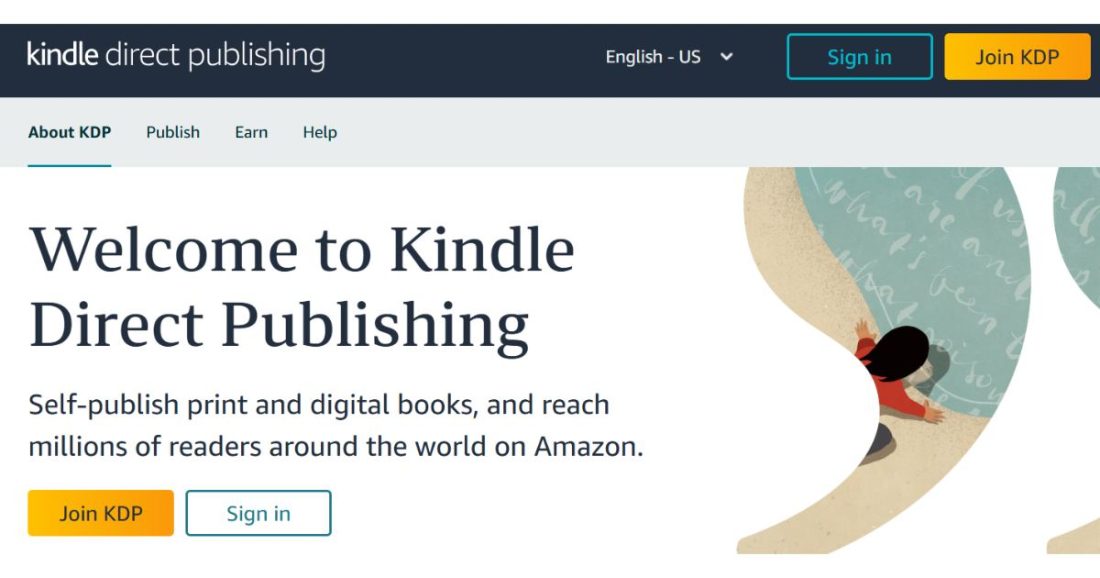
Sign in with your Amazon account, enable two-step verification, then go to Your Account → Getting Paid to add bank details and tax information to complete your tax profile. If you’re outside the U.S., you’ll typically submit a W-8BEN (or W-8BEN-E for entities) to avoid default U.S. withholding; fill that in before your first payout.
Add your bank (or wire) details so Amazon can pay royalties directly.
Complete tax info and bank setup. Early missing or incorrect tax forms are the most common reason payments are withheld or delayed.

Edit first, then format. For 2026 the recommended flow is:
Tools you should consider are Kindle Create (exports KPF/EPUB), Reedsy Book Editor, Atticus, and Vellum (Mac). KDP accepts EPUB (preferred), .doc/.docx (via tools), and KPF and always validates with Kindle Previewer before upload.
Having low-quality covers can reduce clicks. Use Canva or BookBrush for a fast, decent cover, or hire a pro for genres that rely on visual signals (romance, thriller, nonfiction business). Test thumbnails at small sizes, as most browsing happens on phones.
Create two thumbnails and run a quick poll (email list or social) to see which gets more interest; make decisions based on data, not gut instinct.
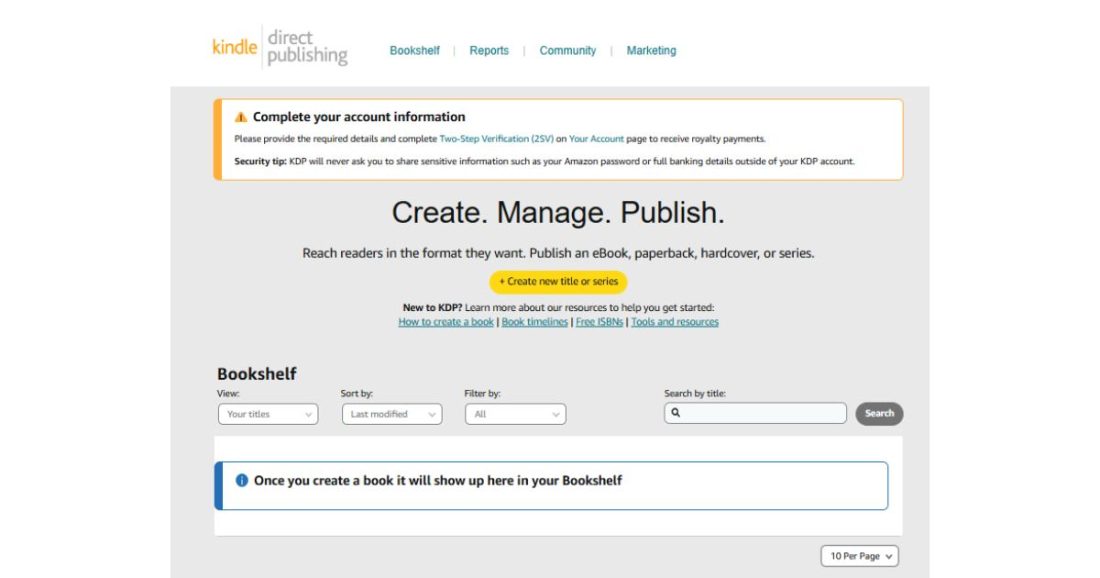
Upload your EPUB or KPF and use KDP’s Online Previewer or the Kindle Previewer app to check formatting across devices. For paperbacks/hardcovers, upload a print-ready PDF interior and cover. KDP runs a quality check and flags obvious issues.
Test the largest and smallest supported Kindle screen sizes and scroll through the first three chapters as a reader would; that’s where first impressions form.
eBook royalty basics: two main choices, 70% or 35% royalty options. The 70% option applies only when your price and distribution meet KDP’s rules. It’s calculated on the list price excluding VAT, and you pay a small delivery fee per sale (KDP lists an average delivery cost, which varies by file size). If you choose 35%, no delivery cost applies. Refer to Amazon’s official royalty page for the current territory and pricing rules.
Example A: 70% calculation (exact):
List price = $4.99.
Royalty before delivery = 70% × $4.99. Calculate digit-by-digit: 4.99 × 0.7 = (4.99 × 7)/10 = 34.93/10 = $3.493.
Assume average delivery cost shown by KDP = $0.06 (varies by file size). Royalty after delivery = $3.493 − $0.06 = $3.433 → rounded to $3.43 paid to author.
Example B: 35% calculation (exact):
List price = $0.99 (outside 70% band). Royalty = 35% × $0.99 = 0.35 × 0.99 = 0.3465 → rounded to $0.35 per sale. (No delivery fee applies with the 35% option.)
Print (paperback/hardcover) basics: royalties are calculated as (royalty rate × list price) − printing cost. Historically, many paperbacks used a 60% royalty rate, but KDP changed print royalty thresholds in 2026; books priced below certain list price cutoffs may now fall into a 50% royalty band. Always run KDP’s Printing Cost & Royalty Calculator for your page count, trim size, and marketplace to get exact numbers.
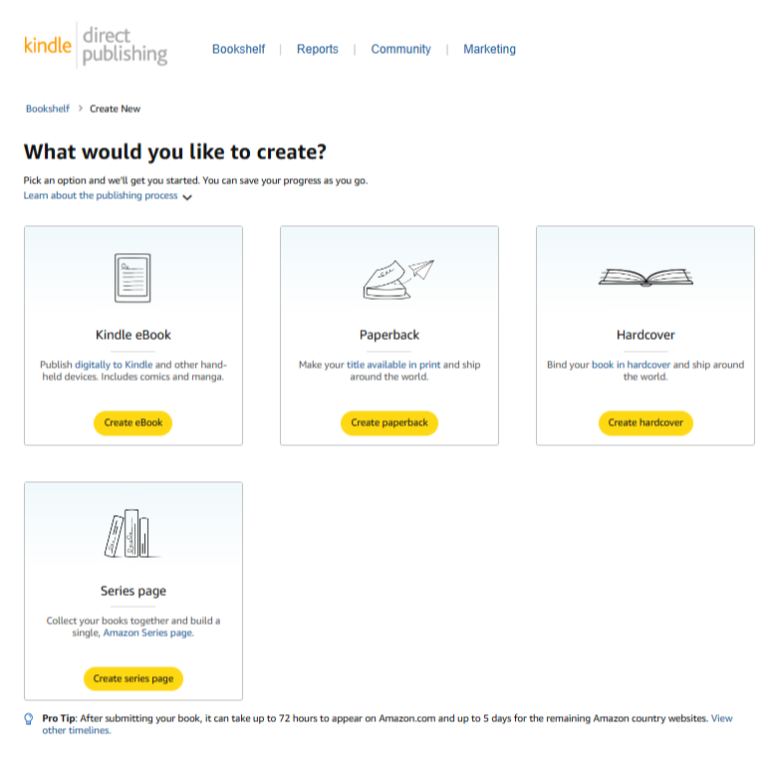
After you click Publish, Amazon reviews your submission. The typical time to go live is about 3-10 business days, depending on the book type (eBook vs. print) and content checks and rights validation. Paperbacks/hardcovers can take a bit longer because of print setup. If there’s a problem, KDP will email you with the details of the issue.
Launch checklist: set categories and 7 keyword slots thoughtfully; choose KDP Select or not (90-day exclusivity for KU benefits); set up an author page (Author Central); Schedule any ad campaigns for the day your book goes live.
When you start, Amazon’s royalty system looks straightforward. You choose 35% or 70%, set a price, and wait for the sales to come in. In reality, royalties are one of the easiest places for authors to quietly lose money, often without realizing it for weeks.
In recent times, Amazon doesn’t treat royalty rates as a preference. It treats them as a result. Whether your book earns 70% or drops to 35% depends on how your pricing, file size, and regional settings behave across Amazon’s ecosystem. Many authors discover too late that a small pricing experiment, a long-term discount, or an oversized file pushed their book out of the “healthy” range. The dashboard doesn’t flash a warning. The payouts just shrink.
International sales add another layer that most guides barely touch. You don’t need multiple KDP accounts to sell globally. One account automatically distributes your book across every supported marketplace.
Each region runs on its own pricing logic. A price that works cleanly in the U.S. can slip below the royalty threshold in India or convert awkwardly in Japan. When that happens, Amazon applies the lower rate for that market without asking. Over time, international royalties grow, but margins become thin unless you actively manage regional pricing. Authors who review these settings regularly often “find” revenue they were already earning but at the wrong rate.
Print formats bring their own surprises. Paperback and hardcover royalties in 2026 are tighter but more predictable. Rising print costs mean page count, trim size, and interior layout matter more than most authors expect. Cutting ten unnecessary pages or tightening formatting can increase per-copy royalties more than raising the list price. This is where publishing decisions begin to resemble manufacturing decisions, rather than creative ones.
Most sellers publish one book and wait. They refresh the dashboard. They assume sales will tell them what’s working. Usually, nothing happens. The authors who last on KDP don’t publish more because they’re confident; they publish more because they’ve already seen what doesn’t work.
Launches, for example, don’t behave the way they used to. Pre-orders won’t save a weak book, but they do expose problems early. If a title gets attention before release and then drops hard on day one, that’s your signal. Something didn’t match expectations. ARC readers help here, not because of reviews alone, but because they say the quiet part out loud before the algorithm does. The most successful authors we know tweak descriptions, covers, and even subtitles after receiving early feedback, sometimes just days before release.
Cross-promotion looks glamorous from the outside. In reality, most swaps have no effect. The ones that work tend to repeat. Same authors. Same audiences. Over time, you start to recognize patterns of who readers click, who actually buys, and who just skims newsletters. At that point, it stops feeling like collaboration and begins to feel like shared infrastructure.
International sales sneak up on you. At first, it’s a few downloads from a country that doesn’t seem worth considering. Then, one month, they don’t drop when U.S. sales do. Authors who notice early and adjust their pricing or descriptions usually retain those markets. The sellers who ignore it often leave money on the table without ever realizing it was there.
Series change everything, mostly because they remove pressure. One book can fail, and the series can still win. Readers forgive weaker openers if the second book delivers. Amazon notices that behavior. That’s when rankings stop jumping around and start settling. A catalog with a clear reading order feels safer to the algorithm than a shelf of disconnected titles.
Audiobooks are important A book with multiple formats sticks around longer. It looks finished. Some readers only ever listen. Others switch formats halfway through. When audio launches close to the ebook, the whole listing tends to hold better over time even if audio sales are slow at first.
Scaling on Amazon KDP in 2026 doesn’t feel like growth. It feels like fewer surprises. Fewer sudden drops. Fewer launches that vanish without explanation. That stability doesn’t come from tactics. It comes from paying attention long enough to connect the dots.
Most authors misunderstand Amazon ads because they expect them to behave like Facebook or Google ads. They don’t. On KDP, ads are less about immediate profit and more about teaching Amazon what to do with your book.
In 2026, Amazon ads function primarily as a signal amplifier. When a new book launches, Amazon has very little confidence about who should see it. Ads accelerate that learning process. Even modest, controlled ad spend gives the algorithm clean data: who clicks, who buys, who reads, and who goes on to the next book. That information often matters more than whether the ads are profitable on day one.
This is why many experienced authors run ads even when they break even or lose a small amount upfront. The goal isn’t short-term return. It’s stability. Books that receive consistent, predictable traffic tend to hold rankings longer and recover faster from dips. Ads smooth out the volatility that kills most launches.
Step 1:
Keyword ads behave differently now than they did a few years ago. Broad, high-volume keywords are far more competitive and expensive, especially in the U.S. marketplace. Authors who rely only on obvious keywords often burn budget without learning anything useful. What works better is starting with narrow, specific phrases, long-tail searches, and competitor titles, then expanding only after conversion patterns become clear. This mirrors how Amazon sellers test products before scaling spending, and the logic is identical.
Use the SellerApp Amazon Keyword tool to better research and get good results.
Step 2:
Category and auto-targeting campaigns also play distinct roles. Auto campaigns aren’t just for discovery. They’re diagnostic tools. They show you how Amazon wants to position your book. When authors review search term reports carefully, they often uncover reader intent they hadn’t considered, which feeds back into metadata, descriptions, and even future book topics.
Step 3:
One mistake new authors make is turning ads off too quickly. Amazon ads don’t perform instantly because Amazon itself is still learning. Campaigns often look inefficient for the first one to two weeks, then stabilize once the system understands which impressions are worth serving.
Step 4:
Another overlooked reality is how ads interact with Kindle Unlimited. Even if an ad doesn’t lead to a direct sale, it can still be profitable if it leads to a KU read, especially for a series. Many authors discover that ads that look unprofitable at the book level are highly profitable at the catalog level. Amazon doesn’t show that clearly. You have to connect the dots yourself.
Publishing globally on KDP is exciting, but it comes with responsibilities. Understanding how payments, taxes, and legal requirements work ensures your author business runs smoothly.
Payments
Amazon pays royalties via direct deposit in most countries, but alternatives like Payoneer or Wise are now widely used, making it easier for authors in regions with limited banking access. Payout frequency remains monthly, and tracking your bank transfer timing helps manage cash flow effectively.
Taxes
U.S. tax withholding is a key consideration, even for international authors. Completing and submitting a W-8BEN (or W-8BEN-E for entities) properly ensures you aren’t over-withheld. Many authors also work with tax advisors familiar with cross-border royalties to minimize surprises.
Copyright and ISBNs
Protecting your work is essential. Amazon provides a free ISBN for print books, but owning your ISBN gives you control over distribution and rights. Copyright registration protects your content legally, making it easier to enforce your rights internationally or expand into translations and audiobooks.
Compliance tips
Keep clear records of your sales, bank statements, tax submissions, and ISBN allocations. This not only makes audits simpler but also helps when applying for KDP programs, loans, or partnerships. Treat your author business like any small business: organized, proactive, and transparent.
Amazon Kindle Direct Publishing has made global self-publishing accessible, but to truly succeed, it will require more than just writing. The most successful authors approach Amazon KDP mindfully. They use AI and data tools for creative and marketing advantages, optimize pricing and royalties based on real-world data, expand into multiple formats and languages, and maintain tight control over legal and financial compliance.
SellerApp has been proven useful for Amazon KDP authors as well. Keyword intelligence, competitor analysis, and performance tracking help authors understand demand before they write, rather than after a book has failed to sell.
Instead of publishing blindly, you can have a team that can analyze the marketplace based on how readers behave on Amazon.
The authors who thrive are those who combine creativity with strategy, turning each book into both a work of art and a step toward a long-term publishing legacy.
Read more:
How to Sell on Amazon India – A Complete Guide
Amazon Product Detail Page – A Comprehensive Overview
Amazon Sponsored Products vs. Sponsored Display Ads – Detailed Guide
Merch by Amazon: How to Get Started
How to Make Money on Amazon With and Without Selling Products








Alaya Brooks
February 1, 2026Overall, this guide covers everything a beginner needs to know to succeed with Kindle Direct Publishing. It’s a comprehensive, easy-to-follow resource that both new and experienced authors can benefit from.
Ellery James
February 2, 2026I liked how you broke down the technical requirements without making them sound intimidating. It makes me feel much more confident about publishing my first book.
Zariah Cole
February 4, 2026The real author examples and success stories added a lot of motivation to the article. It’s inspiring to see what’s possible with the right approach.
Kaia Monroe
February 4, 2026I appreciate how the article highlights both opportunities and challenges of self-publishing with KDP. It’s refreshingly honest and sets realistic expectations.
Faelina Windveil
February 6, 2026The explanation of how to get and manage reviews was very practical. It’s something many new authors overlook, but it truly impacts long-term success on Amazon.
Lucian Stormrider
February 6, 2026I found the marketing strategy suggestions especially helpful, publishing is just the first step, but selling is the real challenge. The guidance on using social media and promotions makes the journey feel less overwhelming.
Ronan Silverthorn
February 8, 2026Your tips on creating a professional cover and interior design really stood out to me. Those aspects can make such a difference in how readers perceive your book.
Bastian Ravenspire
February 10, 2026The section on royalty options and pricing strategies was super insightful. It’s great to get a realistic view of how authors can earn more with KDP
Calix Frostveil
February 11, 2026I love how you explain the importance of selecting the right categories and keywords, it makes discoverability feel much more achievable. The advice on optimizing metadata is really useful for boosting visibility.
Frederick Loxley
February 11, 2026I appreciated the realistic overview of both the opportunities and challenges of KDP. It’s refreshing to see an article that doesn’t sugarcoat the work involved.
Kieran Lockwood
February 11, 2026The explanation of how to handle reviews and reader engagement was very practical. It’s something many new authors overlook but can impact long-term success.
Sebastian Norwood
February 11, 2026I found the guidance on marketing and promotion strategies really helpful. It’s clear that publishing is only part of the journey, selling is just as important.
Florence Kingswell
February 12, 2026The tips on optimizing book descriptions and metadata were great. They seem simple, but I can see how they would boost discoverability on Amazon.
Katherine Montrose
February 13, 2026The tips on optimizing book descriptions and metadata were great. They seem simple, but I can see how they would boost discoverability on Amazon.
Rosalie Davenport
February 14, 2026I liked how you included real examples of successful KDP authors, it makes the process feel more achievable. This article is really motivating and informative.
zarapembury
February 17, 2026Your breakdown of royalty options and pricing strategies is very insightful. It makes it easier to decide what pricing model will work best for different types of books.
Frederick Loxley
February 18, 2026The section on formatting your manuscript and cover design tips was especially useful. Those details can really make a difference in how professional your book looks.
Maxwell Thornton
February 20, 2026I appreciate how the article explains the importance of choosing the right categories and keywords for KDP success. It’s exactly what new authors need to know before publishing their book.
Naomi Whitaker
February 24, 2026This article gives a clear and practical overview of how Kindle Direct Publishing works and how authors can get started. The step-by-step guidance is super helpful for first-time publishers.
Wystan Shadowbane
February 28, 2026This article gives a clear and practical breakdown of how Kindle Direct Publishing works and what new authors need to know before they start. The step-by-step tips on formatting and uploading really help simplify the whole process.