
So I’m sitting at this pub in Georgetown last Tuesday, right? Having a drink with a buddy who runs a seven figure e-commerce brand. He leans in and asks me straight up, “What’s the actual deal with Amazon physical stores? Because everything I read online is either from 2019 or complete garbage.”
And you know what? He’s right. Most content about Amazon brick and mortar stores is outdated, overhyped, or missing the real story entirely.
Here’s what actually happened since Amazon opened its first brick and mortar store back in 2015. They tried a bunch of stuff. Most of it failed spectacularly. Some of it sort of worked. And the whole time, everyone was looking at the wrong thing.
It’s 2026 and we’ve spent the last three months tracking every single Amazon physical store opening, closure, and strategy shift since they started this whole adventure. Talked to people who worked at Amazon Fresh stores. Dug through financial filings. Watched the pattern repeat over and over.
The story is messier and way more interesting than the typical “Amazon is disrupting retail” narrative you see everywhere.
TL:DR (The Bottom Line If You’re In a Hurry)
Look, if you’re searching for an Amazon brick and mortar store near you, here’s what you need to know right now without all the corporate BS.
Amazon operates roughly 600 brick and mortar locations worldwide as of 2026. But here’s the kicker. When you search for “Amazon physical store near me” you’re probably going to land on a Whole Foods, not some futuristic checkout-free convenience store everyone was buzzing about back in 2018.
The Amazon brick and mortar stores story went completely sideways from what everyone predicted. They closed all 68 Amazon Books locations in March 2022. Every single Amazon brick and mortar bookstore, gone. The Amazon 4-Star stores? Closed. Pop-Ups? Dead. Amazon Go convenience stores dropped from 30+ locations to just as of 2026 with Amazon Fresh grocery stores keep shutting down left and right throughout 2025.
Quick Numbers You Actually Care About
Key Facts for 2026
Amazon CEO Andy Jassy flat out said on the October 31 earnings call that physical stores still represent 80-85% of retail but “that equation is going to flip over time” and AI will accelerate the decline.
Translation? Amazon brick and mortar stores aren’t the future. Delivery infrastructure is.
The company closed 14 Amazon Fresh brick and mortar locations in the UK in September 2025. They shuttered four Amazon brick and mortar store locations in Southern California in October 2025. Another one closed in Federal Way, Washington affecting 125 workers. The pattern is contraction, not expansion.
Here’s what most people miss about the Amazon brick and mortar strategy. Those checkout-free stores everyone thought ran on pure AI? They actually relied on 1,000 workers in India manually reviewing security footage. About 700 out of every 1,000 transactions in 2022 needed human verification. That’s not artificial intelligence, that’s artificially positioned intelligence.
Three Ways This Actually Plays Out
If you’re a traditional retailer wondering if Amazon opening brick and mortar stores means game over for your business, relax a bit. Amazon has proven they don’t really understand physical retail. Running warehouses efficiently doesn’t translate to creating great in-store experiences. Their technology-first approach keeps failing. The real threat isn’t their physical stores, it’s their delivery network.
If you’re a consumer looking for Amazon physical stores to shop at, your realistic options are Whole Foods for groceries, maybe an Amazon Fresh if you live in specific metro areas, or possibly an Amazon Go if you happen to be in Seattle, Chicago, New York, or San Francisco. That’s it. The widespread Amazon brick and mortar store rollout everyone expected never happened.
If you’re a seller on Amazon trying to figure out what Amazon brick and mortar locations mean for your business, focus on delivery speed and Prime member satisfaction. The physical stores matter way less than optimizing for same-day delivery eligibility and understanding that easier returns (through Whole Foods locations) will affect your category differently than you think.
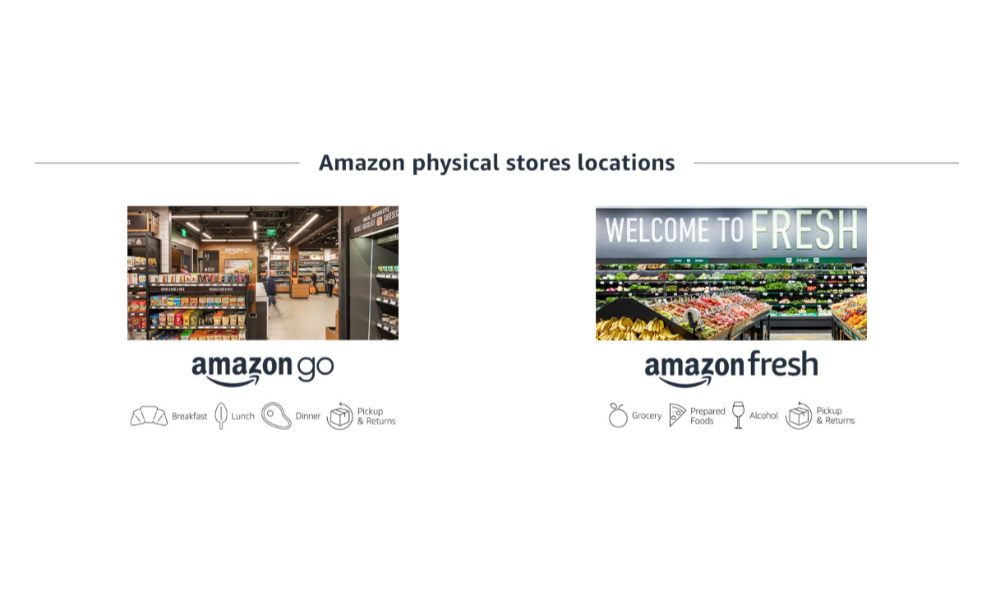
Does Amazon have physical stores? Yeah, they do. About 600 worldwide. Does Amazon have brick and mortar stores where you can walk in and buy stuff? Absolutely. But it’s not what you think.
When someone asks “does Amazon have a brick and mortar store” they usually mean something like a Best Buy or Target. A place with aisles full of products where you grab a cart and shop. Amazon has those, sort of. They’re called Whole Foods Market. And they’re grocery stores. Not general merchandise retailers.
The question “does Amazon have any brick and mortar stores” gets complicated because Amazon keeps opening and closing locations faster than most people can track. In January 2025 they might have 75 Amazon Fresh stores. By November they’re down to 60. The Amazon brick and mortar locations number changes constantly.
Here’s what really exists when you search for an Amazon physical store near me in 2026.
Whole Foods Market with 528 locations across the United States. These are upscale grocery stores Amazon bought for $13.7 billion back in 2017. They sell organic produce, fancy cheese, expensive kombucha. You know the type. Prime members get discounts and special deals. This is the backbone of Amazon brick and mortar stores that actually work.
Amazon Fresh operates roughly 60 Amazon brick and mortar grocery store locations scattered across nine states. California has the most with 22 stores (after they closed four more in October 2025). These grocery stores feature Dash Carts for self-checkout and integrated Amazon Locker returns. They’re bigger than convenience stores but smaller than traditional supermarkets. And they keep closing locations because the economics don’t work.
Amazon Go runs 16 convenience stores in Seattle, Chicago, New York City, and San Francisco. These are the checkout-free stores that use camera technology to track what you grab. Well, theoretically. More on that disaster in a minute. Down from about 30 locations in early 2023.
That’s the complete list of Amazon physical stores you can actually visit. Everything else closed.
A decade ago on November 2, 2015, Amazon opened its first Amazon brick and mortar bookstore in Seattle’s University Village shopping center. Honeslty, the whole industry probably lost its mind.
For twenty years, Amazon systematically destroyed brick and mortar bookstores through online sales and deep discounting. Borders went bankrupt in 2011. Barnes & Noble barely survived. Independent bookstores closed by the hundreds. Then Amazon decided to open their own physical bookstores.
The irony was so thick you could sell it by the pound.
Jennifer Cast, who ran Amazon Books as VP, told reporters it was “data with heart.” They were taking all the data from Amazon.com and creating physical spaces around it. Books displayed face-out instead of spine-out. Shelf tags showed star ratings.
Every Amazon brick and mortar bookstore carried only 5,000 to 6,000 titles (versus the tens of thousands at traditional bookstores), all selected based on online ratings, sales data, and regional preferences.
They opened more locations. By 2018, Amazon operated Amazon brick and mortar bookstore locations in Seattle, San Diego, Portland, Los Angeles, Chicago, Boston, New York, and about a dozen other cities. Rumors swirled about plans for 400 stores. Media coverage exploded.
And you know what happened? Nobody really shopped there.
Think about it from a customer perspective. If you wanted a specific book, you’d order it on Amazon.com for probably less money with free Prime delivery showing up tomorrow. Why drive to an Amazon physical store to buy the same book at the same price when you could click a button instead?
The Amazon brick and mortar bookstore concept only made sense if you wanted to browse, discover new titles, or handle physical books before buying. But Amazon’s stores carried limited selection, didn’t create compelling discovery experiences, and didn’t offer anything you couldn’t get easier online.
March 2, 2022. Amazon announced they were closing all Amazon brick and mortar bookstore locations. Every single one. Twenty-four stores, done. They also killed all Amazon 4-Star and Pop-Up locations at the same time. Sixty-eight total closures in one announcement.
The Amazon brick and mortar bookstore business lasted six years and change. Amazon never released specific numbers on how much money they lost, but industry analysts estimate it was substantial.
“When sellers ask me about Amazon’s physical retail moves, I tell them to look at what Amazon does, not what Amazon says. They said bookstores were about creating customer experiences. Then they closed every single store. They said 4-Star stores showcased their best products. Closed. They said Amazon Go would revolutionize convenience retail. They’ve closed half the locations. The only thing that stuck was Whole Foods, which they bought rather than built. That tells you everything about whether Amazon actually understands brick and mortar retail.” – Dilip Vamanan, Co-Founder of SellerApp
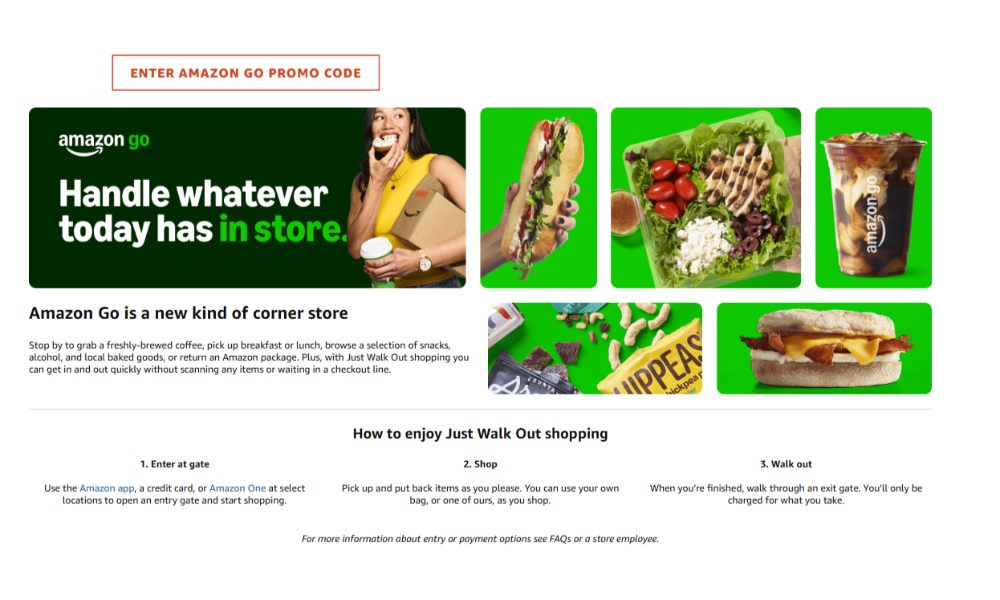
On January 22, 2018, Amazon opened its first Amazon Go store to the public in Seattle after more than a year of delays. The concept was genuinely amazing when you first heard about it.
Walk into the store. Grab whatever you want off shelves. Walk out without stopping at a checkout. Your Amazon account gets charged automatically for whatever you took. No cashiers. No checkout lines. No friction.
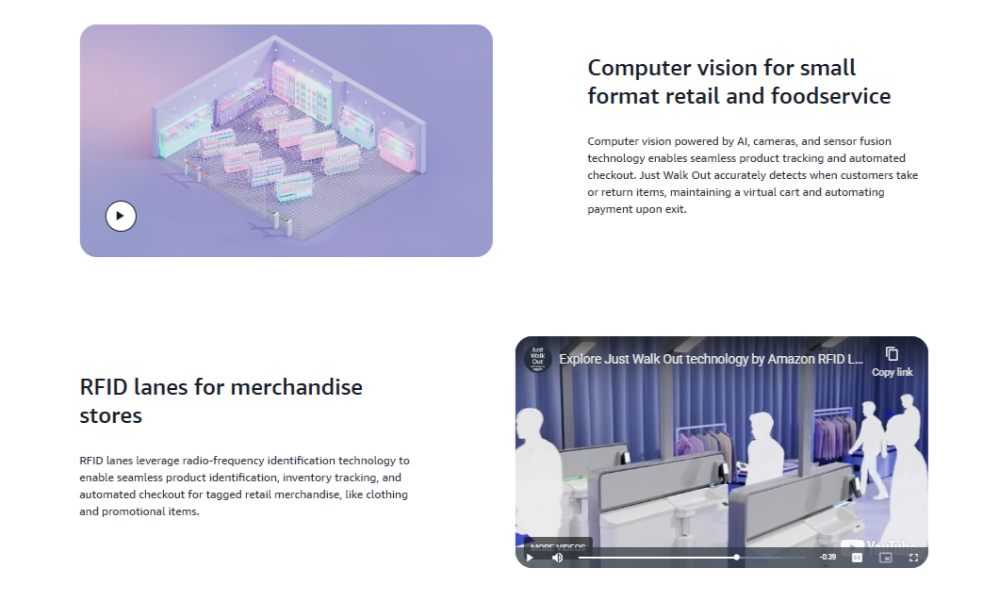
Amazon called it Just Walk Out technology. They described it using phrases like “computer vision, deep learning, and sensor fusion” similar to what powers self-driving cars. Cameras and sensors throughout the store tracked customers and inventory. Machine learning algorithms determined what you picked up or put back. Your virtual cart updated in real-time.
The media ate it up. Bloomberg reported in September 2018 that Amazon was considering opening as many as 3,000 Amazon Go locations across the United States by 2021. Investors got excited about the Amazon brick and mortar store concept finally making sense. Technology eliminating labor costs. Data collection at massive scale. The future of retail.
Then in April 2024, The Information published a story that changed everything.
Turns out the Just Walk Out technology that supposedly ran on pure artificial intelligence actually relied on about 1,000 people in India manually reviewing transactions. In 2022, roughly 700 out of every 1,000 Just Walk Out sales required human verification by watching security footage. Amazon’s internal target was just 50 manual reviews per 1,000 sales. They missed it by a factor of 14.
The cameras captured video of customers shopping. But the AI couldn’t reliably determine which specific product someone grabbed off a crowded shelf, especially when multiple people moved through small spaces, children rearranged items, or customers changed their minds mid-shop and put things back in wrong locations.
So workers in India sat watching footage and manually confirming purchases. Sometimes it took hours for customers to receive receipts after leaving stores because humans needed time to review the video and verify the transaction.
Amazon disputed the characterization, saying the Indian workers were “training the AI” and “validating a small minority of shopping visits.” But the damage was done. The revolutionary Amazon physical store technology everyone thought was pure computer intelligence turned out to require massive human labor from overseas workers paid far less than US minimum wage.
Does Amazon have physical stores that actually work without armies of people manually checking security footage? As of November 2025, only 16 Amazon Go stores remain operational. They closed more than half their locations since early 2023, including stores in Seattle, New York City, San Francisco, and most recently Woodland Hills, California in February 2025.
In March 2024, Amazon announced they were removing Just Walk Out technology from large-format Amazon Fresh grocery stores entirely. They replaced it with Dash Carts, which are essentially smart shopping carts where customers scan items themselves as they shop. Way less sophisticated. Way more practical. Actually works without hidden human labor.
The Amazon brick and mortar store vision of checkout-free shopping powered by AI crashed hard into reality. Amazon still licenses Just Walk Out to third parties, with over 200 locations using it at airports, stadiums, universities, and hospitals. But those are controlled environments with limited products and higher margins that can absorb the technology costs. For regular retail? Dead on arrival.
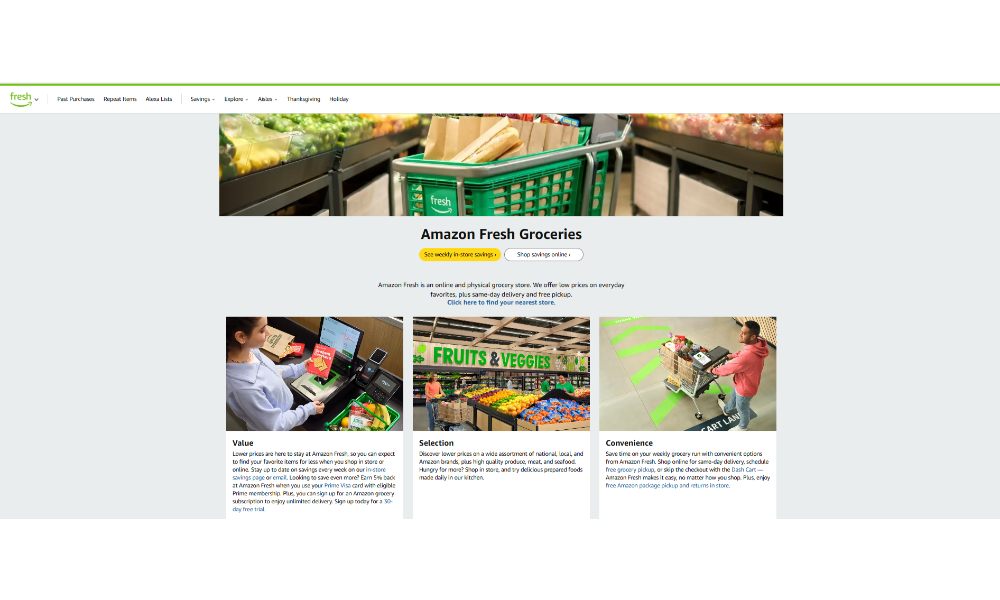
On August 2020, Amazon opened its first Amazon Fresh brick and mortar grocery store in Woodland Hills, California. This was separate from Whole Foods. Different brand, different positioning, different price point.
Amazon Fresh targeted mainstream grocery shoppers, not the organic-obsessed Whole Foods demographic. The stores featured bright color-coded aisles, grab-and-go meal sections, conventional grocery brands alongside Amazon’s private label products, and integrated technology like Just Walk Out or Dash Carts depending on location.
The company rolled out Amazon Fresh stores rapidly through 2022. They had big plans. Really big plans. Amazon opening brick and mortar stores for mainstream grocery was supposed to challenge Kroger, Albertsons, Safeway, and other traditional supermarkets.
Then everything fell apart.
2023 brought an 18-month pause in Amazon Fresh expansion. CEO Andy Jassy told investors the company needed to figure out how to make the stores “stand out” and improve their economics. Translation? They were losing money and customers weren’t particularly excited about the stores.
People who visited Amazon Fresh locations often described them as “soulless.” The technology felt unnecessary. The selection wasn’t better than regular grocery stores. Prices weren’t particularly competitive. The whole experience felt like Amazon took a warehouse mentality and tried to make it pretty with bright colors.
Then the closures started. Wave after wave throughout 2024 and 2025. In fact, 2026 seems uncertain.
March 2025 saw Amazon Fresh brick and mortar closures in Thousand Oaks, California and Manassas, Virginia. June 2025 brought the shutdown of a Federal Way, Washington location that impacted 125 workers. September 2025 they closed the Plainview, New York store.
September 2025 delivered the biggest news. Amazon announced they were closing all 14 Amazon Fresh stores in the United Kingdom and converting five of them to Whole Foods locations. The company admitted the Amazon Fresh brick and mortar format wasn’t working in the UK market at all.
October 2025 continued the bloodbath. Four more Amazon Fresh closures in Southern California hit La Habra, La Verne, Mission Viejo, and Whittier. Each closure came with the same corporate statement about “certain locations working better than others” and promises to help employees find new roles within Amazon.
As of November 2025, approximately 60 Amazon Fresh brick and mortar stores remain operational across nine US states. California has 22 locations (down from 26 before the October closures). Illinois, Maryland, New Jersey, New York, Pennsylvania, Virginia, and Washington have scattered locations.
Despite all the closures, Amazon actually opened two new Amazon Fresh stores in 2026. One in Philadelphia in August. Another in Silver Spring, Maryland earlier in the year. They’re still testing the format, just way more cautiously than before.
The company is experimenting with different Amazon Fresh brick and mortar approaches simultaneously. Revised store layouts with better product flow. Micro-fulfillment centers attached to some locations. Two-level stores combining Amazon Grocery mass-market products on the ground floor with Whole Foods on the second level. Hybrid formats mixing concepts.
But the momentum clearly shifted away from physical Amazon Fresh expansion toward same-day grocery delivery infrastructure. That’s where Amazon’s investing billions. Not in building more Amazon brick and mortar grocery store locations that keep losing money.
“The biggest lesson from Amazon Fresh is this. You can’t just throw technology at retail problems and expect it to work. Grocery customers want three things. Good products at fair prices. Convenient locations. Pleasant shopping experiences. Amazon Fresh had the convenience part in some cities. But they missed on price competitiveness and completely whiffed on creating experiences people actually enjoyed. No amount of Dash Carts or colorful signage fixes that fundamental problem. We’ve seen sellers make the same mistake, thinking technology solves everything. It doesn’t. You need to understand what customers actually want first.” – Brij Purohit, Co-founder of SellerApp
Interestingly, on June 16, 2017, Amazon announced it was acquiring Whole Foods Market for $13.7 billion. The deal closed in August 2017, giving Amazon instant ownership of 460+ grocery stores across the United States, Canada, and the United Kingdom.
This is the only Amazon brick and mortar store acquisition that actually worked. Eight years later, it’s still the backbone of Amazon’s entire physical retail presence.
Whole Foods brought Amazon what none of their experimental formats could deliver. Established stores in premium real estate locations. Existing customer relationships and brand loyalty. Proven operations and supply chains. Immediate grocery credibility. Management expertise in physical retail that Amazon desperately lacked.
The acquisition gave Amazon 460 stores on day one. By November 2025, that number grew to approximately 528 Whole Foods locations in the United States, plus additional stores in Canada and UK. Not explosive growth, but steady. And crucially, profitable.
Amazon integrated Whole Foods into its ecosystem gradually rather than radically overhauling everything. Smart move. They added Prime member benefits like exclusive discounts and deals. They installed Amazon Lockers in stores for package pickup. They tested technology like Amazon One palm-scanning payments and Dash Carts at select locations.
But they kept Whole Foods essentially being Whole Foods. The upscale organic grocery brand that health-conscious customers trusted. The prepared foods and service departments that created real value. The curated selection that justified premium pricing.
What makes Whole Foods different from every other Amazon brick and mortar store concept? It was already working before Amazon bought it. Amazon didn’t need to invent a new retail format or prove a new technology. They just needed to not screw it up.
Compare that to Amazon Books, where Amazon tried creating bookstores from scratch and failed. Or Amazon 4-Star, where they invented a weird concept nobody wanted. Or Amazon Fresh, where they built grocery stores that couldn’t compete with established chains. Or Amazon Go, where revolutionary technology didn’t actually work at scale.
Whole Foods succeeded because Amazon recognized they didn’t understand grocery retail as well as Whole Foods did. So they let Whole Foods keep being Whole Foods while adding Amazon capabilities around the edges.
In January 2025, Amazon promoted Whole Foods CEO Jason Buechel to oversee ALL of Amazon’s grocery operations, including Amazon Fresh and Amazon Go. The message? Whole Foods expertise would guide Amazon brick and mortar strategy going forward, not Silicon Valley tech-first thinking.
Throughout 2026, Amazon continued integrating Whole Foods more deeply. In June, they restructured grocery leadership with several Whole Foods executives taking key positions. In August, they announced plans to bring Whole Foods corporate staff under Amazon’s central structure by end of 2026.
The company also started rolling out Whole Foods Daily Shop locations. These smaller format stores (around 7,000 to 14,000 square feet versus traditional 40,000+ square feet) target urban customers who want to grab essentials quickly without navigating massive stores. The first opened in Manhattan’s Upper East Side in March 2024, with more New York City locations planned through 2026 before expanding to Boston, Chicago, and Washington DC.
Whole Foods Daily Shop represents Amazon’s most recent physical retail innovation. And notice something? It’s built on Whole Foods branding and expertise, not Amazon’s experimental technology-first approach that kept failing everywhere else.
The Amazon brick and mortar locations that actually work all trace back to this one acquisition. Everything else? Mostly failures.
More recently, on March 2, 2022, Amazon simultaneously announced closure of all Amazon 4-Star stores and all Amazon Pop-Up locations. Combined with the Amazon brick and mortar bookstore closures, this killed 68 physical stores in one announcement.
Amazon 4-Star stores launched in 2018 with a simple concept. Stock only products rated 4 stars or above on Amazon.com, bestsellers, and trending items. Create a physical version of Amazon’s algorithmic product recommendations. About 33 locations opened across the United States.
The stores felt weird when you visited. Random assortment of products. Kitchen gadgets next to toys next to electronics next to books. No coherent merchandising logic beyond “customers rated these items highly online.” It was like walking through Amazon.com search results physically manifested.
Customers didn’t really get it. If you wanted highly-rated products from Amazon, you’d just order them online. Why drive to an Amazon physical store to browse random stuff your neighbors liked? The discovery experience wasn’t compelling. The selection was limited compared to online. The whole concept felt forced.
Amazon Pop-Up stores started even earlier, operating as temporary kiosks in malls and shopping centers. They showcased Amazon devices like Echo speakers, Fire tablets, Kindle e-readers, and Ring doorbells. By March 2022, only about 9 Pop-Up locations remained (down from many more at peak).
These Pop-Up locations made sense as product demonstration centers. Letting customers try Echo speakers and see how Fire tablets worked. But they couldn’t sustain foot traffic or generate meaningful revenue. Most malls were dying anyway. The economics didn’t work.
Amazon’s official statement when closing everything said they wanted to “focus more on our Amazon Fresh, Whole Foods Market, Amazon Go, and Amazon Style stores and our Just Walk Out technology.” The real message? These experimental Amazon brick and mortar store concepts failed to find product-market fit.
Physical store sales across these non-grocery formats reported lower revenue in 2021 than 2018. They were declining, not growing. Amazon captured only 2.4% of the grocery market even with Whole Foods and online delivery combined. Their non-grocery physical retail wasn’t even registering on any meaningful scale.
Neil Saunders, managing director of GlobalData Retail, said the closures represented Amazon acknowledging “the bookstores weren’t delivering the returns Amazon was looking for.” The stores “lacked a real purpose” despite merchandise being well-presented. They were “designed for people to pop in and browse rather than as destinations where people would head on a mission to buy something.”
That’s the fundamental problem with most Amazon brick and mortar stores Amazon tried building themselves. They optimized for browsing and discovery, but nobody goes to physical stores just to browse anymore. Not when you can browse infinite selection online while sitting on your couch in pajamas.
Customers visit brick and mortar stores with specific missions. Grab groceries for tonight’s dinner. Pick up a prescription. Buy a birthday gift for someone. Return an online purchase. Get something immediately instead of waiting for delivery.
The Amazon brick and mortar locations that worked addressed specific customer missions. Whole Foods for grocery shopping. Amazon Lockers for package pickup. Amazon Fresh for quick grocery trips (sort of, when the economics work). Everything else? Just interesting experiments that burned cash.

Rather weirdly, on May 25, 2022, Amazon opened Amazon Style in Glendale, California. Their first Amazon brick and mortar clothing store. About 30,000 square feet at The Americana At Brand outdoor shopping center.
The concept used the Amazon Shopping app heavily. Customers browsed displayed items, scanned QR codes to see sizes and colors available, used tools to generate QR codes for personal tracking or sharing, checked ratings and reviews, and sent items directly to fitting rooms or pickup counters. Fitting rooms had touchscreens where shoppers could request different sizes or related items without leaving the changing area.
Amazon positioned this as combining online convenience with physical try-before-buy experiences. They curated selections from brands like Steve Madden, Levi’s, and Lacoste alongside Amazon-exclusive fashion lines. The technology aimed to solve the endless frustration of not finding your size on racks.
Amazon Style showcased hundreds of brands chosen by “fashion creators” and informed by millions of customer ratings on Amazon.com. The selection rotated frequently based on what was trending online. In theory, this created the best of both worlds. Physical shopping powered by digital intelligence.
In March 2021, Amazon had surpassed Walmart as the largest apparel retailer in the United States, partly due to pandemic-driven online shopping. Wells Fargo analysts estimated Amazon’s domestic apparel and footwear sales exceeded $41 billion in 2020, including third-party seller sales. So expanding into physical fashion retail seemed logical.
But they shut it down in 2023.
Amazon announced no plans for additional Amazon Style stores. They quietly shelved expansion. No official explanation. Just silence. The concept apparently didn’t generate results justifying national rollout.
Fashion retail faces entirely different challenges than grocery. Seasonality. Sizing complexity. Rapid trend cycles. Deeply entrenched competition from specialists like TJX Companies (T.J. Maxx, Marshalls), fast-fashion retailers like H&M and Zara, department stores, and thousands of boutiques.
More fundamentally, fashion customers want inspiration, serendipitous discovery, and tactile experiences that feel joyful, not efficient. Walking around with your phone scanning QR codes to see what’s available doesn’t feel fun. It feels like work. You’re basically doing Amazon’s inventory management for them while shopping.
The lack of Amazon brick and mortar clothing store expansion beyond one location tells you everything. Even with Amazon’s resources, technology, and data, physical retail requires solving emotional and experiential problems that algorithms can’t address.
Fashion shoppers want to be surprised. They want to discover something unexpected. They want helpful staff who can pull together complete outfits. They want to feel good about the experience, not just efficiently complete a transaction.
Amazon nails efficiency. They absolutely suck at joy. And fashion retail is fundamentally about joy, not efficiency.
So Amazon Style sits there in Glendale as a monument to misunderstanding what physical retail actually requires. The Amazon brick and mortar store concept that proved technology alone can’t overcome fundamental strategic misalignment with customer desires.
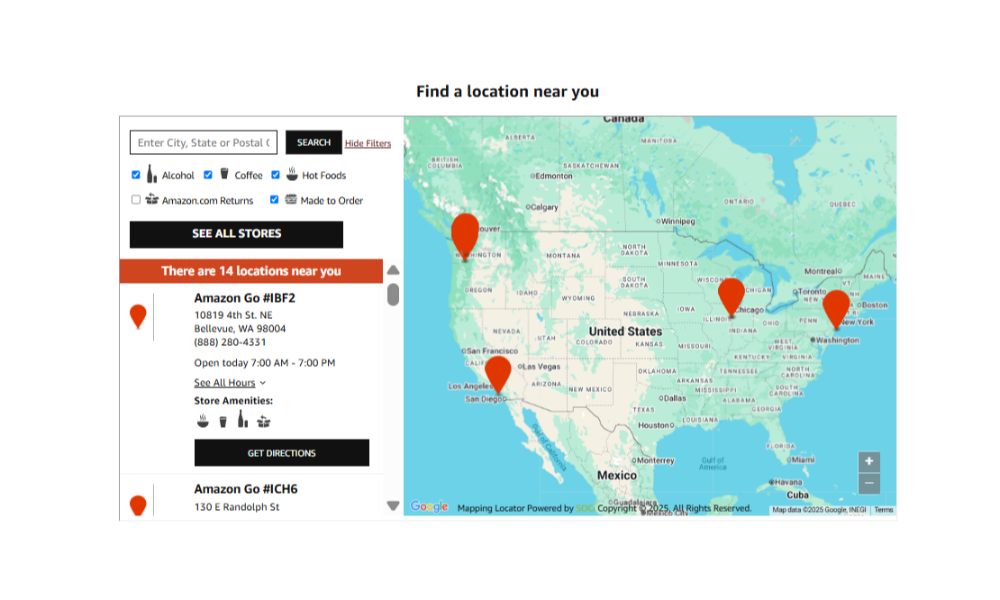
Alright, let’s cut through confusion and get specific. People constantly ask how many Amazon physical stores exist or how many Amazon brick and mortar stores operate worldwide. Here are the actual numbers as of November 2025.
Whole Foods Market operates 528 stores across the United States. This includes traditional large-format locations averaging 40,000+ square feet plus newer Daily Shop small-format stores around 7,000 to 14,000 square feet in urban areas. Whole Foods also has stores in Canada and the United Kingdom. The US count of 528 represents about 18% concentration in California (94 stores), with significant presence in New York, Florida, and Texas.
Amazon Fresh runs approximately 60 Amazon brick and mortar grocery store locations across nine US states. California hosts 22 stores after October 2025 closures. Other states with Amazon Fresh include Illinois, Maryland, New Jersey, New York, Pennsylvania, Virginia, Washington, and a couple others. This number fluctuates constantly as Amazon opens and closes stores based on performance metrics.
Amazon Go maintains 16 convenience store locations as of November 2025. These are concentrated in Seattle (roughly 8 stores), with additional locations in Chicago, New York City, and San Francisco. Amazon closed more than half its Amazon Go stores since early 2023, contracting from about 30 locations to current count.
Amazon Style had 1 location in Glendale, California. That’s the complete Amazon brick and mortar clothing store footprint. One store. Never expanded. Also, they shut this one down in 2023.
Amazon Books operates 0 stores. All Amazon brick and mortar bookstore locations closed in March 2022.
Amazon 4-Star operates 0 stores. All closed March 2022.
Amazon Pop-Up operates 0 stores. All closed March 2022.
Total Amazon brick and mortar store count worldwide is approximately 600 locations. Almost all are grocery-focused (Whole Foods and Amazon Fresh). Only 17 stores (Amazon Go) focus on convenience or apparel.
For comparison, Walmart operates almost 5,000 locations in the United States alone. Target runs nearly 2,000 stores. Kroger manages approximately 2,800 supermarkets under various banners. CVS has over 9,000 locations. Dollar General operates more than 19,000 stores.
Amazon’s physical footprint is tiny relative to traditional retailers. Physical stores represent less than 7% of Amazon’s total revenue. In Q3 2025, Amazon physical store sales reached $5.6 billion versus $67.4 billion from online stores. The physical presence barely registers financially compared to Amazon’s e-commerce dominance.
When someone searches “Amazon brick and mortar store near me” or “Amazon physical store near me,” likelihood of finding something depends entirely on where they live.
California has the densest Amazon brick and mortar store locations concentration in the country. 94 Whole Foods Market stores (18% of all US Whole Foods). 22 Amazon Fresh stores (after October 2025 closures). Multiple Amazon Go stores in San Francisco. California has more Amazon physical stores than any other state by far.
New York offers significant Amazon brick and mortar locations, particularly in New York City and surrounding areas. 13 Whole Foods Market stores. Multiple Amazon Fresh and Amazon Go locations in Manhattan and surrounding boroughs. The Whole Foods Daily Shop concept launched in Manhattan’s Upper East Side with more NYC locations planned.
Texas houses 36 Whole Foods Market stores across major metro areas like Austin, Houston, and Dallas. But almost no Amazon Fresh or Amazon Go presence. The Amazon physical store footprint in Texas centers entirely on Whole Foods.
Florida has 38 Whole Foods stores scattered across Miami, Tampa, Orlando, and other markets. Again, limited Amazon Fresh or Amazon Go presence. Florida represents Whole Foods territory almost exclusively.
Washington obviously hosts significant Amazon brick and mortar store locations given Seattle is Amazon’s headquarters. Multiple Amazon Go stores in Seattle proper (roughly 8 locations). Amazon Fresh stores. Whole Foods locations. Washington serves as Amazon’s testing ground for physical retail concepts before potential expansion.
Illinois features Amazon physical stores concentrated in Chicago metro area. Amazon Go locations downtown. Amazon Fresh stores in suburbs. Whole Foods Market across Chicagoland. Illinois represents one of Amazon’s stronger physical retail markets outside California and Washington.
Other states with Amazon brick and mortar locations include Massachusetts, New Jersey, Maryland, Virginia, Pennsylvania, Colorado, Oregon, and several others. But density drops significantly. Most states have Whole Foods only, if anything.
States with zero Amazon physical stores include most of the South (Alabama, Mississippi, Arkansas, Louisiana), most of the Midwest (Iowa, Nebraska, Kansas, Montana, Wyoming, North and South Dakota), and various other states. Rural America has essentially no Amazon brick and mortar store presence whatsoever.
The geographic concentration reveals Amazon’s physical retail strategy. Focus on wealthy urban and suburban markets. Target Prime member demographics. Don’t bother with rural or lower-income areas. Let online delivery and Walmart stores serve those markets.
If you live in Manhattan, Los Angeles, Seattle, Chicago, or San Francisco, you might have multiple Amazon physical stores options within 10 miles. If you live anywhere else, you probably have one or two Whole Foods stores maximum, possibly nothing.
Sarah Martinez lives in Silver Spring, Maryland and commutes to downtown Washington DC for work. She’s been an Amazon Prime member for six years. Her weekly routine with Amazon brick and mortar stores illustrates how the ecosystem actually functions in 2026, not the futuristic vision media portrayed.
Monday Morning Pattern
Sarah orders dog food, laundry detergent, and replacement phone charging cable on Amazon.com around 10am. Instead of home delivery, she selects “Pickup” at the Whole Foods store on her commute route. This saves $3.99 delivery fee and eliminates worry about packages getting stolen from her apartment building entrance.
Total time on Amazon app making order? Three minutes. She’ll grab the package Wednesday when she stops at Whole Foods anyway.
Wednesday Evening Routine
Sarah leaves her DC office around 5:45pm. Stops at the Georgetown Whole Foods location on her way to the Metro station. She’s grabbing ingredients for tonight’s dinner plus basics like milk and coffee. Her Prime membership gives her 10% off sale items and exclusive Prime member deals on organic produce.
While waiting at the meat counter, she opens the Amazon app and retrieves her Monday package order. Scans the QR code. Store associate hands her the package. No box required. No label required. Just scan and grab. Takes two minutes total.
She does her grocery shopping. Spends about $67 for the week’s essentials. Checks out normally (this Whole Foods doesn’t have Dash Carts yet). Uses Amazon One palm scanner to pay, linking directly to her Amazon account and getting Prime discounts automatically applied.
Friday Lunch Break
Sarah needs a quick lunch near her office. There’s an Amazon Fresh brick and mortar store two blocks away. She walks over around 12:30pm when the lunch rush hits.
Grabs a Dash Cart at the entrance. Scans her Amazon app to link the cart. Puts together a salad from the grab-and-go section, grabs an iced coffee, adds a protein bar for afternoon snack. Everything gets scanned as she adds items to the cart. The cart screen shows running total.
Walks out through the Dash Cart lane. Takes maybe 8 minutes total from entering store to leaving with lunch. No traditional checkout line. Cart charges her Amazon account automatically as she exits. Receipt shows up on her phone.
She’s never used the Just Walk Out technology that Amazon promoted years ago. This location doesn’t have it. Just practical Dash Carts that work reliably.
Saturday Morning Discovery
Sarah realizes she forgot coffee on her Wednesday Whole Foods trip. Checks the Amazon app. Sees her preferred brand available for same-day delivery through Amazon Fresh. Adds it to cart along with milk, eggs, and Greek yogurt.
Total order $31.40. As Prime member, she pays $9.95 for same-day delivery (non-Prime members pay $12.99). Selects 2-4pm delivery window. Goes about her Saturday. Everything arrives at 2:45pm in insulated packaging with gel ice packs keeping perishables fresh.
Monthly Amazon Physical Store Impact
Over six months, Sarah spent approximately $4,800 on groceries and household goods through Amazon’s ecosystem. About 60% came from online orders (delivery or pickup). About 40% from in-store shopping trips. None required revolutionary AI surveillance technology. All reinforced her Prime membership value, making the $139 annual fee feel justified.
She’s never visited an Amazon Go store (none convenient to her locations). Never been to Amazon Books or 4-Star (they all closed before she moved to Maryland). Tried the Amazon Style clothing store once visiting family in California but found it unnecessarily complicated compared to regular stores.
Her actual Amazon physical store experience centers entirely on grocery through Whole Foods and Amazon Fresh, supplemented by increasingly robust same-day delivery that makes physical visits optional rather than mandatory.
Why This Matters
Sarah represents how Amazon brick and mortar stores actually function for most customers who use them. Not futuristic checkout-free experiences. Not revolutionary AI-powered shopping. Just practical grocery stores offering convenient pickup, decent selection, Prime discounts, and self-checkout options that work.
The technology works through practical solutions like Dash Carts, Amazon One palm scanning, package pickup, and mobile app integration. Not through surveillance cameras and overseas workers manually reviewing footage.
CEO Andy Jassy laid out Amazon’s real perspective on physical retail during the October 31, 2025 earnings call. His comments reveal everything about the Amazon brick and mortar strategy going forward.
“I still think if you look at the worldwide market segment share of retail, still 80% to 85% of it lives in physical stores,” Jassy told analysts. “That equation is going to flip over time. And I think AI is going to only accelerate that.”
Read between those lines. Jassy believes brick and mortar retail is fundamentally doomed. Physical stores dominate today, but e-commerce will eventually take over. Artificial intelligence will speed up the transition by making online shopping even more convenient and personalized.
This explains everything about current Amazon brick and mortar strategy.
Strategic Pillar One: Whole Foods as Foundation
Whole Foods represents the only Amazon brick and mortar stores generating consistent positive results. The 2017 acquisition delivered established real estate, proven operations, existing customer relationships, premium brand positioning Amazon couldn’t replicate from scratch.
In January 2025, Amazon promoted Whole Foods CEO Jason Buechel to oversee ALL grocery operations including Amazon Fresh and Amazon Go. By mid-2025, Amazon announced plans to unify Whole Foods corporate staff under Amazon’s central structure by end of 2026.
The message is clear. Whole Foods expertise guides physical retail strategy going forward, not Silicon Valley experimental technology approaches that kept failing.
Strategic Pillar Two: Technology Licensing Over Store Operations
Amazon removed Just Walk Out from its own large-format stores but simultaneously expanded licensing the technology to third parties. As of 2026, Just Walk Out powers over 200 locations globally at airports, stadiums, universities, hospitals, small-format stores operated by other retailers.
Why? Lower-margin business but valuable brand positioning, data collection, proof of concept without Amazon bearing full operational costs. The Amazon physical store strategy shifted toward providing infrastructure rather than operating retail.
Strategic Pillar Three: Same-Day Delivery as Real Priority
Amazon expanded same-day delivery of fresh groceries from approximately 1,000 US cities in late 2024 to over 2,300 cities by late 2025. More than doubled geographic coverage. The company invested billions in temperature-controlled facilities, insulated packaging, quality assurance systems enabling delivery of perishables within hours.
This creates fundamental challenges for traditional grocers. If customers can add milk, eggs, fresh produce to regular Amazon orders with same-day delivery, why drive to stores? The delivery infrastructure threatens to make Amazon brick and mortar store near me searches obsolete for routine shopping.
In August 2025, Amazon claimed over $100 billion in grocery-related gross merchandise sales over the previous 12 months. Making Amazon theoretically the third-largest grocer in the US without counting most physical stores. Growth came primarily from delivery, not brick and mortar.
Strategic Pillar Four: Controlled Experimentation Without Commitment
Amazon continues testing multiple formats simultaneously. Daily Shop small-format Whole Foods stores. Micro-fulfillment centers attached to existing Whole Foods. Hybrid stores combining Amazon Grocery with Whole Foods on multiple floors. Store-within-a-store concepts at select Whole Foods featuring Amazon products.
But each experiment starts small. One or two locations. Limited geography. Careful metric tracking. If concepts don’t deliver targeted results within predetermined timeframes, Amazon closes locations quickly and reallocates resources.
This explains why Amazon brick and mortar stores worldwide peaked around 2022 then contracted significantly through 2023-2026. Not failure, but optimization through controlled experimentation. Amazon treats physical stores like software beta testing. Rapid iteration. Aggressive pruning. Zero sentimentality about underperforming assets.
Strategic Pillar Five: Prime Membership Value Creation
Physical stores serve broader objectives beyond revenue generation. Whole Foods exclusive discounts. Package pickup and return locations. Same-day delivery from stores. Dash Cart technology for faster checkout. Every physical touchpoint reinforces Prime membership value proposition.
With over 200 million Prime members globally, small increases in retention or reduced churn deliver massive revenue impacts. If Whole Foods integration or convenient returns reduce Prime cancellations by even 2%, the financial justification for Amazon physical stores extends beyond traditional retail profitability metrics.
Physical stores become marketing expenses and Prime retention tools rather than profit centers. Amazon can operate stores at breakeven or modest losses if they serve larger strategic objectives around Prime membership.
“I’ve consulted with literally hundreds of e-commerce brands over the past eight years. The ones that tried copying Amazon’s physical retail playbook almost universally failed. Here’s why. Amazon has AWS printing money. They have $500+ billion in annual revenue. They can afford to lose hundreds of millions on experimental stores while figuring things out. You can’t. Most brands can’t. Unless you have infinite capital and patience, don’t try replicating Amazon’s approach to brick and mortar. Focus on what actually generates ROI for your business, which usually isn’t physical retail experiments.” – Lola S.C., DTC founder (8-figure beauty brand, exited 2023)
Let’s talk honestly about the Amazon brick and mortar store technology disasters, because they teach more than successes.
The April 2024 revelation that Just Walk Out relied on 1,000 workers in India manually reviewing transactions exposed fundamental computer vision limits for retail. Cameras track movement, but determining precisely which yogurt container someone grabbed off a crowded shelf requires human judgment, especially when children rearrange products, customers change minds mid-shop, multiple people crowd small spaces.
Amazon spent hundreds of millions developing the technology. Deployed to fewer than 30 of its own stores. Eventually removed from large-format locations. Current status in 2026? Amazon licenses Just Walk Out to third parties for controlled environments like airport convenience stores, stadium concession stands, university grab-and-go locations where smaller spaces, limited SKUs, higher margins justify technology costs.
The lesson for Amazon physical stores? Revolutionary technology requiring massive hidden human oversight doesn’t scale economically for regular retail.
Dash Carts put scanning responsibility directly on shoppers using built-in screens, scales, scanners integrated into shopping carts. Customers scan items as they add them, see running totals, check out directly through cart.
Technology costs less to deploy. Requires less infrastructure. Puts customers in control rather than surveilling them. Scales easily across stores. Works reliably without armies of overseas workers watching footage.
Dash Carts now appear in Amazon Fresh stores and select Whole Foods locations. Not revolutionary, but practical. Turns out practical matters more than futuristic in retail.
Amazon One uses palm recognition for payment and identity verification. Customers hover palm over scanner, linking palm vein pattern to Amazon account. Technology works reliably, doesn’t require handling cards or phones, provides unique biometric security.
Rolled out across many Whole Foods locations. Used at Amazon physical stores for checkout. Licensed to third parties including stadiums and entertainment venues. As of 2026, Amazon One represents one of Amazon’s few physical retail technologies gaining actual adoption.
Success factor? Solves real customer pain point (contactless payment) without creating new friction (setup takes 30 seconds) and works reliably without hidden human oversight.
The pattern across Amazon brick and mortar store technology? Solutions that are genuinely practical and solve real problems gain adoption. Revolutionary concepts requiring massive infrastructure, hidden costs, or behavioral changes fail consistently.
If you sell on Amazon, the physical store question feels distant from daily concerns about PPC campaigns, inventory levels, review velocity. But it shouldn’t be completely ignored.
The Amazon brick and mortar strategy directly impacts sellers in specific ways most people miss.
Sellers using Fulfillment by Amazon (FBA) have inventory distributed to facilities near Whole Foods or Amazon Fresh stores enabling same-day or two-hour delivery through Prime Now. This creates velocity advantages for products qualifying for rapid delivery.
Specifically optimize for:
Products showing up as available for same-day delivery convert at meaningfully higher rates than standard two-day Prime delivery. The Amazon physical store infrastructure enables that delivery speed in dense urban markets where Whole Foods and Amazon Fresh locations cluster.
Amazon’s investment in grocery delivery and Amazon brick and mortar grocery store locations opened categories for sellers navigating food and beverage requirements. Amazon Grocery private label launched late 2025 with most items priced under $5, but third-party sellers compete in premium subcategories.
Organic snacks. Specialty diet foods. International cuisine ingredients. Artisanal condiments. Gourmet coffee. The category grew nearly 2x faster than other Amazon categories in first half of 2025 according to company statements.
Physical stores create browse-and-discover moments for grocery products that pure online listings can’t replicate. If your product gets selected for Whole Foods shelves (even limited distribution), it validates the product and creates halo effects for online sales.
Whole Foods locations accepting Amazon returns without boxes or labels reduces return friction dramatically. For sellers, this means higher return rates (easier returns equal more returns) but also higher initial sales (customers more willing to try products when returns feel effortless).
Net effect varies by category but typically positive for items where fit, size, color are decision factors. Apparel, shoes, home goods, small electronics all see impacts from convenient Amazon physical store returns at Whole Foods.
Smart sellers factor convenient returns into strategy rather than fighting it. Some successful brands actually promote easy returns as competitive advantage, knowing confident shoppers convert at higher rates.
Amazon doesn’t publicly break down physical store data insights, but information flows into product recommendation engines, search ranking algorithms, advertising targeting. Products performing well at Whole Foods stores might gain subtle advantages in online visibility. Items frequently bundled together in physical shopping carts inform “frequently bought together” suggestions online.
Sellers can’t directly access this data, but understanding that physical shopping patterns inform online algorithms should influence product development and bundling strategies.
With Amazon physical stores serving primarily as Prime member value-adds, sellers should obsess over Prime member preferences. Prime members spend roughly 2-3x more on Amazon than non-Prime customers. Higher lifetime values, better conversion rates, greater brand loyalty.
Products and listings optimized for Prime member preferences (fast shipping, Subscribe & Save eligibility, high ratings, clear benefits) win disproportionately. Physical stores intensify this dynamic by making Prime membership feel more valuable through Whole Foods discounts and convenient returns, which increases Prime retention, which means more high-value customers shopping Amazon.
Short answer? Not really. Not at any meaningful scale.
Does Amazon have physical stores customers can visit? Yes, approximately 600 locations worldwide. Does Amazon have brick and mortar stores providing broad general merchandise selection like Walmart or Target? Absolutely not.
The Amazon physical store footprint focuses almost entirely on grocery. 528 Whole Foods locations. 60 Amazon Fresh stores. Together they account for 588 of roughly 600 total stores (98%). The remaining 12 locations include 16 tiny Amazon Go convenience stores and 1 Amazon Style clothing store.
Compare that to Walmart’s nearly 5,000 US locations averaging 180,000 square feet carrying groceries, apparel, electronics, home goods, pharmacy, automotive, sporting goods, toys, basically everything. Or Target’s nearly 2,000 stores averaging 130,000 square feet with similar broad merchandise mix.
When people ask “is Amazon a brick and mortar company” the answer is technically yes but practically no. Amazon generates 93% of revenue from online sales, AWS cloud services, Amazon advertising, and Amazon seller services. Physical stores represent just 7% of total revenue.
For context, Walmart generates roughly 90% of revenue from physical store sales with only 10% from e-commerce. Target generates about 85% from stores and 15% from digital. Those are brick and mortar companies with significant online presence. Amazon is an e-commerce and cloud company with a modest brick and mortar grocery presence.
The question “does Amazon have any brick and mortar stores” gets asked because people expect Amazon to compete everywhere. But Amazon made deliberate choice. Dominate e-commerce. Build best-in-class cloud infrastructure through AWS. Create sticky ecosystem through Prime membership. Use physical stores strategically for grocery and package pickup, not general merchandise retail.
This explains why Amazon vs brick and mortar discussions miss the point. Amazon isn’t trying to beat Walmart and Target at physical retail. They’re trying to make physical retail less necessary through delivery infrastructure, selection, convenience, and Prime member benefits that keep customers shopping online.
The Amazon brick and mortar strategy is defensive and experimental, not offensive. Defensive in grocery (where customers still prefer shopping in person for perishables). Experimental everywhere else (testing concepts rapidly, closing what doesn’t work).
Based on current trajectories, stated strategies, and CEO Jassy’s October 2025 comments, here’s realistic outlook for Amazon physical stores over next 12-18 months.
Amazon Fresh will likely contract further to 40-50 US stores by late 2026, focusing on markets where format shows genuine traction (dense urban areas with high Prime member concentration). Stores outside core markets will close as leases expire and performance metrics disappoint.
Amazon will test increasingly hybrid formats combining Amazon Grocery mass-market products with Whole Foods-style prepared foods and service departments. But aggressive expansion remains off the table. The Amazon brick and mortar grocery store concept keeps failing to find economic viability at scale.
Smaller-format Whole Foods stores (7,000-14,000 square feet) will expand beyond New York City to Boston, Chicago, Washington DC, possibly San Francisco or Los Angeles by end 2026. Format solves real urban customer needs for quick trips without navigating massive stores.
Expect 10-15 Daily Shop locations operational by end 2026. This represents the most likely area for Amazon opening brick and mortar stores going forward. Small footprint. Lower capital requirements. Built on proven Whole Foods brand rather than experimental concepts.
Amazon Go won’t disappear entirely but won’t expand meaningfully. Company will maintain 15-20 locations in Seattle, Chicago, New York, San Francisco as showcase stores and testing labs for licensed technology. Suburban Amazon Go formats might see 2-3 new openings, but aggressive expansion remains off table.
The Amazon physical store convenience concept failed to achieve unit economics justifying national rollout. Just Walk Out technology proved too expensive. Customer demand wasn’t strong enough to offset costs.
Amazon will add 100+ third-party locations using Just Walk Out technology by end 2026, focusing on airports, stadiums, hospitals, universities, corporate campuses where controlled environments and higher margins justify costs.
Amazon markets it as infrastructure solution like AWS for retail, not core Amazon physical store technology. This shift represents Amazon playing to their strength (providing technology platforms) rather than operating retail (which they’ve proven they’re mediocre at).
Amazon will expand same-day fresh grocery delivery to 4,000+ US cities by late 2026, covering roughly 75% of US population. Infrastructure investment will dwarf Amazon brick and mortar store investments by orders of magnitude.
Temperature-controlled warehouses. Insulated packaging production. Delivery fleet expansion. Same-day delivery becomes Amazon’s primary grocery strategy, making physical stores secondary convenience options rather than core channel.
Albertsons, Kroger, regional grocery chains will report declining same-store sales as Amazon same-day delivery captures market share in core markets. Expect 2-3 mid-sized regional chains to file bankruptcy by late 2026 as they can’t match Amazon delivery economics while maintaining extensive physical networks.
Walmart remains the only traditional retailer with resources to match Amazon investments. The brick and mortar vs Amazon battle intensifies in grocery specifically, with Amazon attacking through delivery rather than stores.
Total Amazon brick and mortar stores worldwide will likely decline to 550-575 locations by late 2026 through continued closures outpacing new openings. Whole Foods grows modestly (535-540 stores). Amazon Fresh contracts significantly (40-45 stores). Amazon Go holds steady (15-18 stores). Amazon Style closed (0 stores).
The broader trend remains clear. Physical stores decline in strategic importance for Amazon while delivery infrastructure becomes actual battleground. The question “does Amazon have physical stores” will still get answered “yes” in 2026, but the number keeps shrinking for non-grocery formats.
Since we keep talking about Amazon vs brick and mortar retail, let’s flip perspective. If you’re a traditional retailer wondering how brick and mortar compete with Amazon, here are strategies that actually work based on what Amazon’s failures revealed.
Amazon nails efficiency and convenience. They suck at joy, discovery, human connection. Fashion retailer Altar’d State thrives by creating Instagram-worthy store designs with rotating art installations, local artist collaborations, staff who actually help you put together complete outfits rather than just ringing up transactions.
Hardware store Ace Hardware competes with Amazon by offering localized advice from staff who actually know the difference between wood screws and machine screws and can recommend the right product for your specific project. The experience matters more than lowest price for customers tackling home repairs.
The Amazon physical store experiments that failed (Books, 4-Star, Go, Fresh to large extent) all prioritized technology over experience. They felt sterile and transactional. Successful brick and mortar retailers do the opposite.
Amazon.com carries millions of products. That breadth is overwhelming. Sorting through 10,000 search results for “women’s black t-shirt” is the opposite of convenient.
Successful physical retailers curate manageable selections saving customers time and decision fatigue. Bookstore Powell’s in Portland carries 1 million books across carefully curated sections with knowledgeable staff recommendations. Way smaller selection than Amazon but way better discovery experience.
Grocery store Trader Joe’s carries maybe 4,000 SKUs versus typical supermarket’s 40,000+. Limited selection forces curation. Customers trust Trader Joe’s to stock only good products, so they don’t need to comparison shop every purchase. The Amazon brick and mortar stores that failed carried limited selection without earning trust in the curation.
Amazon does zero community building. They’re transactional. Independent retailers thrive by becoming community fixtures. Hosting events. Sponsoring Little League teams. Knowing customers by name. Supporting local causes.
Hardware store McLendon’s in Washington competes with Amazon and Home Depot through decades-long relationships with contractors, DIY enthusiasts, and homeowners. When you need advice or have a problem, you go where people know you.
The does Amazon have brick and mortar stores question misses this point. Having stores and building community are completely different things. Amazon has stores. They don’t build community. That’s the opportunity.
Same-day delivery is impressive but still requires waiting hours. Brick and mortar stores offer immediate gratification. Walk in, buy what you need, walk out with product immediately.
This advantage matters most for urgent needs. Pharmacy for prescription. Hardware store for emergency repair. Grocery store for tonight’s dinner ingredients. Auto parts store when your car breaks down.
Focus on categories where immediacy creates meaningful value. Don’t compete with Amazon on products where waiting 2 days doesn’t matter. Compete where waiting 2 hours or 2 minutes creates real problems.
Create Hybrid Models Blending Online and Offline
Best Buy arguably won the how can brick and mortar compete with Amazon challenge better than most retailers. They stopped trying to beat Amazon on price. Instead they focused on consultation, demonstration, immediate availability, and services like Geek Squad installation and support.
You can research products online, visit Best Buy to see them in person, buy online for in-store pickup same day, get installation help, come back if you have problems. The omnichannel integration creates value Amazon’s pure e-commerce model struggles to match.
Successful brick and mortar retailers don’t view Amazon physical stores as main competitive threat. They view Amazon’s delivery infrastructure and online selection as threats, then build strategies leveraging unique advantages of physical presence to create experiences, curation, community, immediacy, and services Amazon can’t easily replicate.
You’re reading this because you probably Googled “Amazon brick and mortar store near me” or “Amazon physical store near me” or something similar. Here’s the honest practical answer without corporate marketing spin.
If You Want to Shop Amazon Physical Stores
Your realistic options in November 2025:
Whole Foods Market (528 US locations) provides full-service grocery stores with Prime member discounts, prepared foods, organic produce, upscale products. Find locations at wholefoodsmarket.com/stores. Most major metro areas have multiple locations. Rural areas have none.
Amazon Fresh (roughly 60 locations across 9 states) offers grocery stores with Dash Carts for self-checkout, mainstream grocery selection, grab-and-go meals, integrated Amazon Locker returns. California has most locations (22 stores). Other states include Illinois, Maryland, New Jersey, New York, Pennsylvania, Virginia, Washington. Find locations through Amazon.com or Amazon Shopping app.
Amazon Go (16 locations) runs convenience stores in Seattle, Chicago, New York City, San Francisco. Small footprint stores (1,500-3,000 square feet typically) with grab-and-go food, beverages, snacks, essentials. Some locations use checkout-free technology (sort of), others require Dash Cart or traditional checkout. Find locations at Amazon.com/go.
If You Want Amazon Returns
Many Whole Foods locations accept Amazon returns without boxes or labels. Use Amazon Shopping app to locate stores with return counters near you. This is honestly the most useful aspect of Amazon physical stores for most customers.
Process takes 2-5 minutes. Open Amazon app. Select the order you want to return. Choose “Return at Amazon Hub Locker” or “Return at Whole Foods Counter” depending on location. App generates QR code. Show QR code at store. Hand them your item. Done. Refund processes within 24-48 hours.
If You Want Amazon Lockers
Thousands of Amazon Locker locations exist at non-Amazon retailers including Whole Foods, 7-Eleven, Rite Aid, apartment buildings, shopping centers, college campuses, convenience stores. Use Amazon Shopping app to find lockers near your location when placing orders.
Lockers provide secure package delivery to locations you can access easily. Way more widespread than actual Amazon brick and mortar stores. Basically every mid-sized city has dozens of Locker locations even if it has zero Amazon-operated stores.
If You Want Amazon Products
Physical Amazon brick and mortar bookstore locations don’t exist anymore. Amazon 4-Star stores are closed. Your options for shopping Amazon products in physical stores:
Best Buy sells Amazon devices (Echo speakers, Fire TV, Kindle e-readers, Ring doorbells, Blink cameras). Usually full selection with knowledgeable staff who can demonstrate products.
Target carries Amazon devices in electronics sections. Limited selection compared to Best Buy but widely available across thousands of Target locations.
Major retailers (Walmart, Staples, Office Depot, etc.) stock some Amazon-branded products. Selection varies significantly by store.
Honestly, ordering on Amazon.com with delivery remains faster and more convenient for 90% of what you’d want to buy from Amazon. The Amazon physical store question assumes Amazon built retail presence like Walmart or Target. They didn’t. They built modest grocery presence through Whole Foods plus small experimental stores that keep closing.
After eight years of Amazon opening brick and mortar stores, closing most of them, keeping a few hundred grocery locations, here’s what we actually learned.
Technology Alone Doesn’t Make Great Retail
Just Walk Out failed because revolutionary technology requiring massive hidden human labor doesn’t scale economically. Dash Carts work because practical technology solving real problems scales fine. The lesson applies beyond Amazon.
Retail requires understanding human behavior, creating experiences people enjoy, solving actual customer problems. Technology can enhance those things but can’t replace them. Amazon’s consistent failures in non-grocery Amazon physical stores prove this repeatedly.
Being Great at E-commerce Doesn’t Transfer to Physical Retail
Amazon dominates online shopping through logistics, selection, price, convenience, Prime membership ecosystem. Those advantages don’t directly translate to brick and mortar success.
Physical retail requires different skills. Store layout and visual merchandising. Staff training and customer service. Local market adaptation. Community relationships. Experiential design. Amazon had to buy Whole Foods to acquire these capabilities because they couldn’t build them internally.
The Amazon brick and mortar bookstore failed. Amazon 4-Star failed. Amazon Go mostly failed. Amazon Fresh struggles consistently. Amazon Style never expanded beyond one location. Pattern? Amazon built these formats trying to replicate online advantages physically. Didn’t work.
Grocery Remains Stubbornly Physical
Despite massive investment in delivery infrastructure, same-day grocery delivery, and Amazon brick and mortar grocery store locations, Amazon still struggles to capture significant grocery market share. They have Whole Foods (528 stores), Amazon Fresh (60 stores), same-day delivery in 2,300 cities, over $100 billion in annual grocery-related sales.
Yet Walmart, Kroger, Albertsons, Costco, Target, and regional grocers still dominate. Why? Customers prefer physically selecting fresh produce, meat, dairy. They want to squeeze the avocados, inspect the fish, see expiration dates, make impulse purchases while walking aisles.
Grocery delivery works for stock-up shopping of packaged goods. But fresh perishables? Most customers still want to shop in person. This explains why Amazon’s only successful Amazon physical stores are grocery-focused.
Physical Stores Work as Ecosystem Pieces, Not Standalone Businesses
Whole Foods doesn’t need to generate massive profits if it increases Prime member retention. Amazon Fresh can lose money per store if it enables same-day delivery infrastructure. Amazon Go stores can be mediocre performers if they showcase technology Amazon licenses profitably to others.
This mindset completely differs from traditional retail where stores must generate positive returns as standalone businesses. Amazon views Amazon brick and mortar locations as potential marketing expenses, fulfillment infrastructure, data collection points, Prime member benefits, technology testing labs.
Traditional retailers can’t copy this approach because they don’t have AWS printing money or advertising business growing 24% year-over-year. Amazon can afford to operate physical stores strategically that don’t generate traditional retail returns. Most companies can’t.
Delivery Infrastructure Beats Store Infrastructure
Amazon’s real competitive advantage isn’t 600 physical stores. It’s massive delivery network reaching 2,300+ US cities with same-day service, millions of square feet of amazon fulfillment center space, relationships with last-mile delivery partners, data systems optimizing logistics.
Investing billions in same-day delivery infrastructure creates sustainable moat. Investing billions in Amazon brick and mortar stores creates assets Walmart and Target already have bigger and better. Amazon chose wisely where to focus capital and effort.
CEO Jassy predicting AI will accelerate the decline of brick and mortar retail wasn’t speculation. It was strategic messaging. Amazon’s betting on delivery, not stores. Their Amazon brick and mortar strategy exists to support delivery infrastructure and Prime ecosystem, not compete with traditional retailers on their home turf.
Back in 2018, analysts predicted Amazon would revolutionize brick and mortar retail the same way it revolutionized e-commerce. Thousands of stores. Checkout-free technology everywhere. The end of traditional retail.
They were spectacularly wrong.
Amazon opened roughly 100 experimental stores across various formats (Books, 4-Star, Pop-Up, Go, Style). Closed most of them. Bought 460 Whole Foods stores and added 70 more. Built 100+ Amazon Fresh stores and shut down 40+. Invested billions in Just Walk Out technology requiring thousands of humans to manually verify transactions. Spent countless hours and resources learning one uncomfortable lesson.
Being brilliant at e-commerce doesn’t translate to being competent at physical retail.
But here’s what those analysts got right. Amazon did revolutionize retail. Just not through Amazon brick and mortar stores.
Same-day delivery reaching 2,300 US cities changed customer expectations forever. Buy Online Pickup In Store becoming standard across Amazon and thousands of retailers. Dash Carts and self-checkout technology reducing labor requirements. Omnichannel integration where physical and digital experiences blend seamlessly.
These innovations came from Amazon’s physical retail experiments, even the failed ones. The data collection, technology testing, customer behavior insights gained through Amazon physical stores fed back into online improvements and delivery infrastructure.
The Amazon brick and mortar strategy was never about building thousands of stores. It was testing dozens of concepts rapidly, keeping what worked (Whole Foods, delivery infrastructure, practical technology like Dash Carts and Amazon One), cutting what didn’t (everything else).
For sellers, implications are straightforward. Optimize for Amazon’s strengths (selection, fast delivery, Prime member value) rather than betting on physical store expansion that isn’t coming. For shoppers, “Amazon brick and mortar store near me” increasingly means “delivery to my location” rather than physical building to visit.
For traditional retailers, existential threat isn’t Amazon’s 600 physical stores. It’s Amazon’s delivery infrastructure making physical stores unnecessary for millions of shopping occasions each year. That’s the revolution.
Does Amazon have brick and mortar stores in 2025? Yes, roughly 600. Will Amazon operate thousands of Amazon physical stores by 2026 or 2027? Almost certainly not. Does it matter? Not as much as you’d think.
Amazon won retail by reinventing how products reach customers, not by opening more buildings. The revolution happened. Physical stores were never the revolution’s center. They were supporting infrastructure while Amazon built delivery network that actually changed everything.
Walk into any Whole Foods location today. You’ll see people shopping normally. Grabbing produce. Reading nutrition labels. Asking deli counter for half-pound of turkey breast. Checking out using Amazon One palm scanner instead of credit card.
That’s the real Amazon brick and mortar store experience in 2026. Not futuristic checkout-free surveillance capitalism. Just normal grocery shopping with light technology integration and convenient return counter in the corner.
The hype died. The experimental stores closed. The revolutionary AI turned out to require humans in India. What remains is roughly 600 grocery-focused locations supporting Amazon’s actual strategy, which is and always was about delivery infrastructure, not retail real estate.
You want the truth about Amazon brick and mortar stores? They’re a footnote in Amazon’s larger story, not a chapter. Delivery infrastructure is the chapter. Physical stores are just convenient pickup points and testing labs supporting the real strategic priority.
That’s the story. Not what media predicted in 2018. Not what Amazon’s PR marketed. Just what actually happened when the e-commerce giant tried becoming a brick and mortar retailer.
Last updated January 2026 with current Amazon brick and mortar store counts, closure announcements, and strategic direction from Amazon Q4 2025 earnings call.