

As retail media is evolving, Pacvue alternatives are becoming popular. And honestly, we are not surprised. What used to be a niche add-on for a few major brands has turned into one of the biggest performance channels in e-commerce. Today, automation is everything.
Each and every brand wants smarter bidding, faster insights, and tools that can do more with less human effort.
Pacvue deserves all the credit for shaping that space. It has become the go-to platform for enterprise advertisers seeking serious power beneath the surface. It delivers top-tier automation, complex rule logic, and access to a wide network of marketplaces, including Amazon, Walmart, Kroger, Target, and Instacart. If you’re a large, multi-retailer brand, Pacvue gives you a single control center for your entire ad system.
But here’s the plot twist. Many advertisers are realizing that a platform built for Fortune 500 teams doesn’t always fit the needs of emerging brands. But now the industry is shifting toward solutions that are faster to adopt, and more aligned with where sellers make their money.
Platforms like SellerApp, Teikametrics, Perpetua, and Quartile have stepped into that gap. These platforms are focusing more on accuracy over scale. Instead of trying to serve every marketplace that exists, they’re going straight into the ones that matter most, like Amazon and Walmart. That focus helps them deliver stronger insights, more versatile automation, and a more seamless overall experience.
It is well known that Pacvue still has undeniable advantages. It supports more marketplaces than almost anyone else, and its enterprise reporting is incredibly effective. But those same strengths can also become pain points. For example, pricing tends to be high, sellers are often bound by long contracts, and the learning process can be challenging.
By contrast, newer platforms are becoming specialists in their own right. They combine ad automation with keyword intelligence, retail signal tracking, and inventory data, all in one simplified interface. SellerApp, for example, takes what Pacvue does for many retailers and perfects it for Amazon and Walmart sellers who want tighter control, faster optimization, and more accessible insights.
While Pacvue remains at the top in terms of scale and marketplace coverage, the direction is shifting. Most brands today seek tools that are specifically designed to address their unique challenges, not just their ambitions. Pacvue is like the SUV of retail media; it can handle almost anything. But these Pacvue alternatives feel more like sports cars, built for speed, precision, and performance in the marketplaces that actually matter most.
Quick Guide:
The 10 Best Pacvue Alternatives
How to Select the Right Pacvue Alternatives?
Pacvue vs. Top 10 Alternatives (Quick Comparison Table)
Final thoughts
If Pacvue feels too complex, too expensive, or simply not the right fit for your current scale, you’re not alone. A growing number of brands are moving toward tools that deliver smarter automation, sharper insights, and faster execution without the heavy enterprise overhead.
Here are the top ten best Pacvue alternatives that U.S. advertisers are turning to in 2026, each offering its own unique balance of performance, control, and focus.
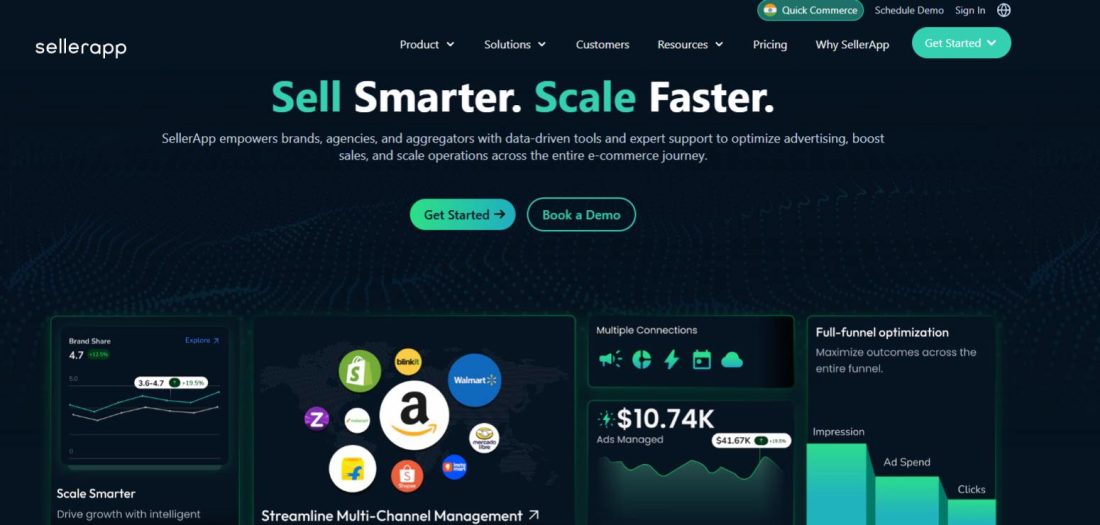
SellerApp is different for one single reason. It understands Amazon and Walmart at a higher level. While Pacvue serves a wide network of retailers, SellerApp specializes in optimizing these two ecosystems for efficiency.
The platform combines PPC automation with keyword intelligence, analytics, and performance tracking all in one dashboard.
What makes it so appealing is the balance it strikes between automation and management. With SellerApp, you’re not just handing over your campaigns to an algorithm and hoping for the best. As a seller, you can set clear performance goals, define rule-based automation that fits your strategy, and monitor in real time how each keyword, bid, or budget adjustment impacts your bottom line.
Consider a kitchen appliance brand that runs Sponsored Products on Amazon. They set a goal to keep ACoS below 25%. SellerApp’s rule-based automation takes over from there, automatically pausing underperforming keywords and increasing bids on those converting efficiently. The best part is that every move is apparent, as you can see the exact data trigger that made the system act.
Another example: a Walmart beauty brand noticed that its ROAS was dipping during peak traffic hours. By using SellerApp’s real-time performance dashboard, they discovered that most of their spend was hitting low-performing placements in the afternoon.
A time-based rule was quickly implemented, reallocating more of the budget toward the high-converting evening slots between 8 and 11 p.m., resulting in a nearly 30% improvement in ROAS within a week.
These examples demonstrate how SellerApp provides sellers with both automation and control, two things that rarely go hand in hand. While Pacvue deserves credit for its wide coverage across platforms like Target, Kroger, and Instacart, that scale can sometimes make it less aware to the nuances of specific marketplaces.
SellerApp takes the opposite approach. It’s focused on Amazon and Walmart, offering depth where most tools offer breadth. Features such as keyword intent scoring, real-time ASIN-level tracking, and automated budget redistribution are designed to match how these marketplaces actually operate.
Instead of spreading thin across each shop, it allows sellers to extract greater precision, performance, and profit from the technologies that run their businesses on a daily basis.

Perpetua was created for sellers who wish to automate without overcomplicating their workflow. It can manage campaign optimization, keyword harvesting, and bid modifications with minimum setup. The dashboard is visually organized, indicating that you are aware of what they are providing, and the learning curve is short.h indicates that you are aware of what they are offering, and the learning curve is light.
While Perpetua does not provide the same level of customisation or rule logic as Pacvue, it excels in usability. It’s an excellent choice for developing sellers who want automated processes that work without the need for a full-time analyst to manage them.
Perpetua’s hourly data enabled brands to pinpoint their highest-converting windows and automatically increase bids during evening increases. The system’s experiment-friendly process enables teams to A/B test time blocks, budget flows, and bid processes without extensive setup.
This style of experimentation is similar to SellerApp’s real-time performance dashboard, with the exception that Perpetua focuses on automation-first testing, whereas SellerApp offers sellers with more information about why a rule or trigger was called.
Read More: 10 Perpetua Alternatives Worth Trying if You’re Serious About Amazon PPC

Teikametrics uses artificial intelligence and retail signals to improve bids, budgets, and product visibility. It works across Amazon and Walmart, allowing businesses to directly link ad spend to inventory movement and profit margins.
The platform is notable for combining automation with strategic control. You can set goals, track ACoS, and make adjustments based on seasonality or restocking. Teikametrics strikes the ideal balance between performance and flexibility for businesses who are expanding across various stores but are not yet ready for an enterprise contract.
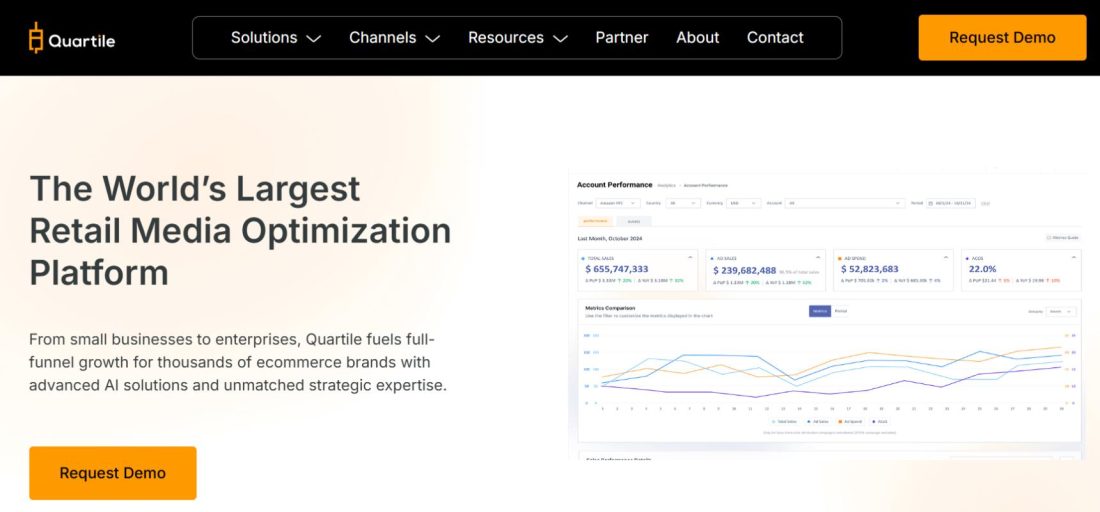
Quartile is one of the most refined AI-powered advertising solutions available to large retailers. It uses machine learning to automatically manage and optimize ads across Amazon, Walmart, and other marketplaces.
Quartile’s data engine is what sets it apart. It continuously optimizes in the background to ensure that every keyword and product ad functions optimally. It is not a low-cost alternative, but for brands managing massive ad portfolios, it provides enterprise-level outcomes with minimal manual effort.
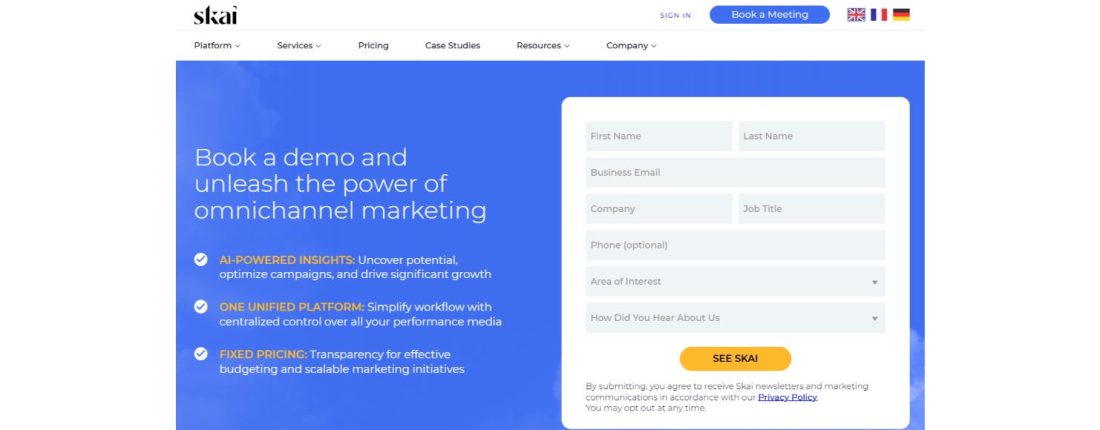
Skai is a veteran in performance marketing. It helps enterprise advertisers manage campaigns across Amazon, Google, Meta, Walmart, and more. Its biggest strength is its cross-channel intelligence, allowing brands to see how retail media interacts with paid search and social campaigns.
However, Skai is best suited for larger teams with the resources to use its advanced analytics and automation tools. For brands that operate across multiple platforms, it can serve as the central hub for all retail media strategy.
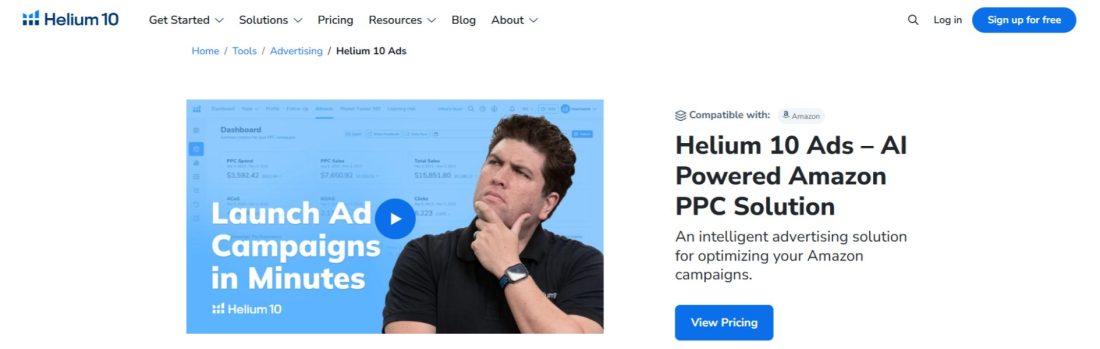
Adtomic is part of the Helium 10 ecosystem, which provides a significant benefit to Amazon sellers. In addition to PPC automation, users may perform keyword research, product tracking, and listing optimization inside the same suite.
It’s intended for vendors that wish to expand efficiently without having to manage different tools. While it lacks Pacvue’s enterprise analytics and marketplace diversity, it’s an excellent all-in-one option for Amazon-focused advertisers seeking both data and simplicity.
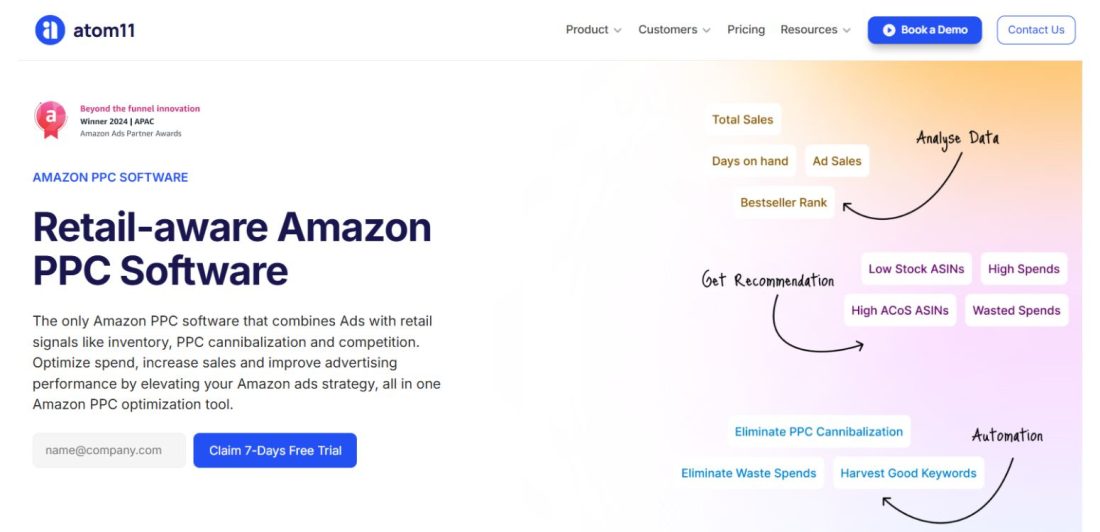
With its retail signal-based automation, Atom11, one of the more recent entrants, is already making headlines. By linking ad performance to pricing, inventory levels, and buy box data, it enables sellers to dynamically modify bids in response to actual circumstances.
Atom11 makes this type of contextual automation more widely available. Pacvue invented it at the corporate level. Atom11 is worth investigating for companies looking for more intelligent, data-driven advertising choices without complicated setup.
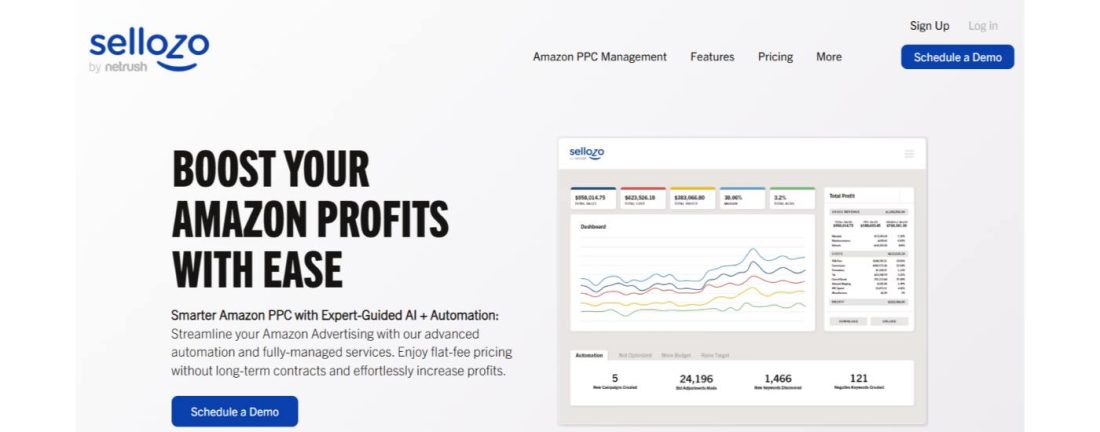
Sellozo focuses on making Amazon PPC automation simple and affordable. It helps sellers create campaigns, optimize bids, and manage budgets automatically. Its keyword discovery and dayparting features give smaller teams access to enterprise-style optimization without the complexity.
While it doesn’t offer multi-retailer coverage, it’s a dependable choice for mid-sized Amazon sellers who want to automate, learn, and scale quickly.
PPC Entourage is popular among sellers looking for workflow ease. It provides easy campaign setup, optimization tools, and detailed reporting without overwhelming customers with data. It also includes keyword tracking and negative keyword automation to help keep campaigns running smoothly.
It may lack the advanced AI and cross-retailer flexibility of larger platforms, but it’s ideal for sellers who want to streamline their ad management and maximize revenue with less manual intervention.
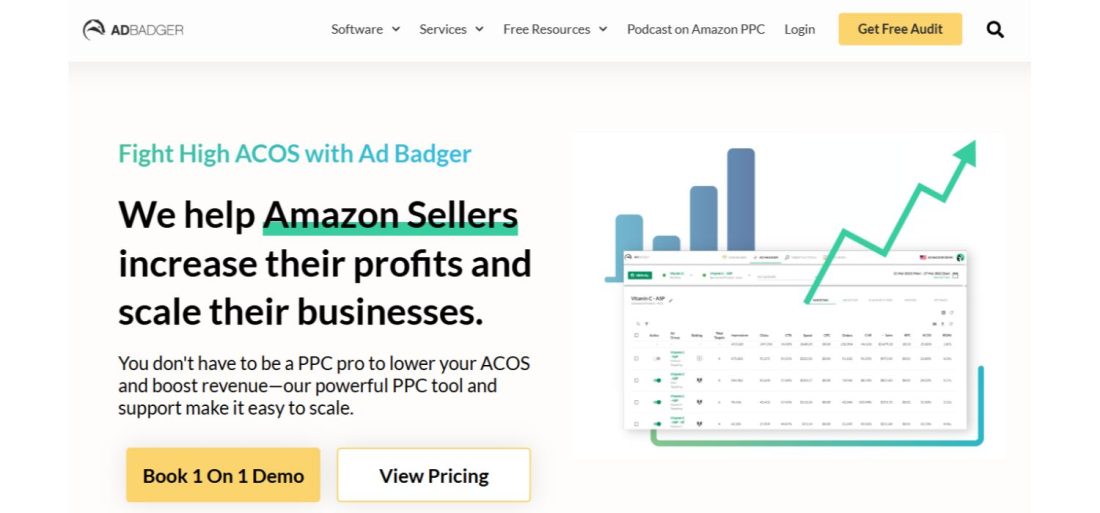
Ad Badger employs a tactical approach to PPC automation. It focuses on bid optimization, negative keyword management, and continual budget refining. It’s especially beneficial for brands that prefer a hands-on but guided approach to campaign management.
Although it lacks Pacvue’s broad retail coverage and Quartile’s AI depth, it is a great and cost-effective solution for Amazon-focused advertisers looking for tighter control and consistent improvements over time.
Understand that choosing the right Pacvue alternatives can be tricky. Every tool comes with its own philosophy, its own level of automation, and its own idea of what “performance” actually means.
What works for a multi-retailer enterprise brand might be completely unnecessary or even counterproductive for a seller focused on Amazon or Walmart. It is important to know what actually matters for your business so you can pick a platform that fits your budget, your workflow, and the way you want to manage your ads.
The sections below break down the decision criteria the way experienced operators actually approach them, not at the surface level, but at the level that determines whether your ad engine makes or loses money.
If you are a seller thinking that it is “AI vs. rules,” well then, that is the beginner’s viewpoint. The deeper question is: what does the platform optimize toward, how does it interpret signals, and how much control do you lose in the process?
Platforms like Perpetua and Quartile ingest signals continuously (Amazon Marketing Stream, hourly performance, bid landscape, and conversion lag). Tools like Ad Badger rely on daily snapshots. That difference determines whether your bids move in real-time or react 24 hours later, a critical gap during promotions, restocks, or flips in a competitive environment.
Some platforms (Perpetua, Quartile) use ML-driven bid curves trained on large cross-account datasets. Their behavior is generalized: your product benefits from patterns seen across thousands of SKUs.
Other platforms, such as SellerApp and Sellozo, allow seller-defined logic to be layered on top of AI, which means your campaign can follow your business rules, stock thresholds, pricing windows, and product seasons instead of relying on a universal ML assumption. ML-driven platforms sometimes overemphasize volume and underemphasize profitability unless you impose constraints. Rule-based platforms never overextend budget.
If your ad strategy needs rapid, high-frequency bidding with minimal human input, you choose a Perpetua-style engine. If you need auditable and predictable logic, SellerApp or Sellozo-level rule clarity is more important.
Pacvue covers almost every major retailer: Amazon, Walmart, Target, Instacart, Kroger, Criteo partnerships, and dozens more. Most alternatives don’t. And that is not a weakness. It’s a positioning decision.
Pacvue serves practically every major retailer, including Amazon, Walmart, Target, Instacart, Kroger, Criteo, and dozens more. The majority of options do not. That is not a weakness. It’s all about location.
Multi-retailer systems require a common data model. This forces businesses to simplify metrics, reporting, and optimization logic so that it works everywhere, but it also dilutes some market-specific insights.
For example, Amazon has Buy Box dependencies, TACoS views, detailed placement visibility, keyword-to-ASIN routes, and historical competition rank data. Walmart has fewer ad kinds, but higher price sensitivity and different conversion attribution windows. Instacart operates similarly to a grocery shelf, with near-instant intent. A platform that tries to service all three will reduce differences to a “lowest common denominator,” which is efficient but not always precise.
If you solely sell on Amazon or Walmart, expanding to multiple retailers adds expense but not value. Pacvue’s footprint is irreplaceable for brands in grocery retail, CPG, and omnichannel distribution.
Ad performance is not independent. Inventory, price volatility, Buy Box stability, shipment speed, and margin windows all influence its development. The best Pacvue alternatives regard advertisements as an integral element of the retail system, rather than as a distinct entity.
If inventory is under 14 days or a restock is delayed, the platform should automatically scale back bids. Only a few tools implement this cleanly. Amazon ads convert poorly when:
• price drops from competitors
• coupon status changes
• Buy Box is unstable
If your platform doesn’t ingest these signals, you’re paying for impressions during conditions that mathematically depress conversion rate. Advanced tools map which keywords burn inventory vs. which keywords accumulate profitable sessions and adjust budgets accordingly. This avoids the classic mistake where branded keywords hog spending while generic acquisition keywords get choked off.
If you operate with slim margins, volatile pricing, or inconsistent stock, you need deep integration. If you run evergreen SKUs with stable stock, a simpler DSP-style bidding logic may be enough.
Tools that charge a percentage of ad spend, such as Perpetua, Quartile, and Teikametrics, are designed for rapid growth, but they have an impact on your profitability when ACoS changes. Every increase in competitiveness, seasonal surge, and bid strategy change affects your software bill in real time.
Subscription-based platforms such as SellerApp, Sellozo, Adtomic, and Ad Badger keep your software costs predictable, which is why SMBs and mid-market brands tend to gravitate toward them. You know exactly what you’re paying each month, regardless of how aggressively you scale your campaigns. The tradeoff is involvement: these tools give you automation, but you’re still expected to guide the strategy rather than rely on a “set-and-forget” model.
Enterprise platforms like Pacvue and Skai, operate on a fundamentally different scale. They have hefty minimums, a complex onboarding process, and dedicated success teams. You are not only paying for software but also for cross-channel infrastructure and enterprise analytics. This is only reasonable if your team operates on that scale; otherwise, justifying the cost-to-value ratio becomes challenging.
The practical takeaway for sellers is simple: if your ACoS tends to swing, whether due to seasonal SKUs, fluctuating CPCs, or aggressive competitors, then spend-based pricing can become a hidden liability.
If your catalog is consistent and evergreen, percentage-of-spend charging can be advantageous because it directly correlates cost and revenue. In any case, the most straightforward way to evaluate platforms is to determine your overall annual cost as a single metric: take the platform charge, add the percentage of spend multiplied by your planned ad expenditure, and divide by your projected revenue. The platform that reduces your blended TACoS the most is the one that propels your company forward.
5. Contract Flexibility
The contract structure provides you with more information about a platform than most sellers are aware of. Ideally, Annual contracts are commonly employed in corporate systems because their benefits accrue over longer adoption cycles. It takes time to integrate the technology into your organization, establish automation, and demonstrate the depth of the analytics.
Long-term contracts work best for brands with settled product lines and predictable advertising cycles, but they can be crippling for sellers who are still testing different ad approaches or expanding into new marketplaces.
Also, monthly and quarterly plans behave differently. Sellers that offer shorter commitments are effectively saying they don’t need a lock-in because their performance will keep you around. This flexibility is especially important for younger brands, sellers experimenting with new SKUs, and teams that rapidly cycle through strategies.
You can test the platform in real-world scenarios, pivot as needed, and avoid being stuck with technology that no longer meets your requirements.
Some systems go a step further, offering pilot access or sandbox environments. These controlled settings allow you to experiment with the UI, test workflows, and learn about how automation works without jeopardizing actual expenditure or impacting active campaigns.
The essential point is that the length of the contract should correlate to the volatility of your business. If your catalogue, pricing, and demand patterns vary frequently, flexibility is more vital than a small annual savings.
Long-term commitments can give enterprise-level solutions at a lower effective cost if your portfolio and cycle times are predictable. The trick is not to choose the most advanced platform, but to choose one that understands how quickly your strategy may need to adapt.
Pacvue vs. Top 10 Alternatives (Quick Comparison Table)
When brands start looking for Pacvue alternatives, they’re usually trying to answer one question and that is which platform actually fits the way we advertise today? Some tools are built for enterprise teams managing multiple retailers.
Others focus solely on Amazon or Walmart and delve much further into their ecosystems. Pricing, automation style, contract flexibility, and even the amount of data a platform collects might vary greatly amongst providers.
To make the decision easier, here’s a side-by-side snapshot of Pacvue and Pacvue alternatives so you can instantly see what each platform supports, who it’s designed for, and where it genuinely stands out.
This table does not sugarcoat anything; it reveals the true differences so you may choose the best tool for your needs, not just the most popular one.
| Platform | Channels | Automation | Pricing | Best For | Key Differentiator |
|---|---|---|---|---|---|
| Pacvue | Amazon, Walmart, Target, Instacart, Kroger, Criteo | AI + rules | Enterprise contracts | Mid-market to enterprise | Most extensive multi-retailer coverage in retail media |
| SellerApp | Amazon, Walmart | AI + rules | Flexible, SMB-friendly | SMB to mid-market | Deepest Amazon/Walmart specialization with transparent automation |
| Perpetua | Amazon, Walmart, Instacart, Target (limited) | AI-driven | % of ad spend | Mid-market to enterprise | Fast ML-powered optimization with clean, modern workflows |
| Teikametrics | Amazon, Walmart | AI optimization | % of ad spend | SMB to mid-market | Easiest entry into AI automation without complexity |
| Quartile | Amazon, Walmart, Instacart | Heavy AI automation | % of ad spend | Mid-market to enterprise | Largest keyword + campaign expansion engine |
| Skai (Kenshoo) | Amazon, Walmart, Target, Instacart, DSPs | AI + predictive modeling | Enterprise pricing | Large brands + agencies | Strongest cross-channel forecasting + attribution |
| Helium 10 Adtomic | Amazon only | Rules + limited AI | Subscription | SMB to mid-market | Only platform merging PPC + SEO tools in one suite |
| Atom11 | Amazon | AI + automation | Subscription | SMB | Deep data modeling + forecasting insights |
| Sellozo | Amazon | AI + rules | Subscription | SMB to mid-market | Automation blended with robust profit analytics |
| PPC Entourage | Amazon | Rules-based | Subscription | SMB | Lightweight PPC automation built for small sellers |
| Ad Badger | Amazon | Rules-based | Subscription | Freelancers + SMB | Ideal for manual optimizers wanting lighter support |
Pacvue has established itself as one of the most powerful retail media platforms, especially for firms who need to advertise in numerous marketplaces. However, this does not guarantee that it is the ideal fit for everyone. The truth is that today’s ecommerce industry is not one-size-fits-all. Some brands, like Amazon or Walmart, necessitate extensive specialized knowledge. Others like easier automation, more transparent rule logic, and price that is appropriate for a growing firm.
What matters most is that you select a platform that is compatible with your budgeting method, staff size, retail footprint, and desired amount of control over your campaigns. Whether you opt for a comprehensive enterprise suite like Pacvue or a specialized platform designed for precision, the right tool should make your advertising easier, smarter, and more profitable.
But now the good news is that you’re not short on options. And when you match the right tool to the right strategy, the results tend to speak for themselves.
Additional Readings:
Exploring Top 11 Alternatives to Amazon FBA
Top Amazon Black Friday Tips for Boosting Holiday Season Sales
Amazon Brand Tailored Promotions Guide 2026 ( Personalized Deals That Drive Loyalty)








Lennard Pike
January 14, 2026Overall, this comparison feels balanced and actionable, helping sellers weigh trade-offs before committing to a PPC platform.
Selah Brookner
January 14, 2026Seeing alternatives compared in terms of scalability makes it easier for sellers to pick a tool that grows with their business.
Fulton Arkwright
January 14, 2026Your point about pricing transparency is important—hidden fees can quickly eat into ad ROI if you’re not careful.
Niamh Lockley
January 15, 2026The emphasis on usability and learning curve helps clarify why some sellers might prefer simpler platforms over Pacvue.
Prescott Vale
January 15, 2026I like how you address integration with Amazon DSP and Sponsored Ads—knowing which tools support each is key for strategy planning.
Cedric Moorfield
January 15, 2026The discussion around analytics depth and reporting flexibility feels very practical for data-driven advertisers.
Blythe Camden
January 15, 2026It’s great that you highlight both strengths and limitations of different alternatives rather than just listing names.
Lawson Heatherton
January 15, 2026The focus on real use-case fit (small vs enterprise sellers) is very helpful for anyone trying to choose the right PPC tool.
Carlisle Dunham
January 16, 2026I appreciate how you break down different platforms by categories like automation, analytics, and ease of use—it makes comparison much clearer.
Sylvie Thornhill
January 16, 2026This article gives a solid overview of why some sellers might look for Pacvue alternatives, especially around pricing and feature needs.