


Usually, sellers start looking for Jungle Scout alternative when they launch their second or third product. Was Jungle Scout the first-ever tool that you stumbled upon while selling on Amazon for the first time? If that is true, then welcome to the group.
For many sellers, it’s the first stop for a real look behind the curtain at demand, competition, and whether a product idea makes sense before you invest money in a supplier. It simplifies the chaos behind Amazon and gives you the confidence to move forward. That’s why it’s still widely used.
But did you know that Jungle Scout works best when your business is simple?
Once you’re past your first couple of products, things change. You’re no longer just asking, “Is there demand?” You’re asking why one ASIN converts better than another, which keywords are actually driving profitable sales, where your ad spend is dropping, and how performance differs across marketplaces.
That’s when sellers begin looking for a Jungle Scout alternative.
Sometimes it’s the cost. Sometimes it’s because the data feels surface-level when you’re managing multiple SKUs. Other times it’s because you’ve expanded beyond the U.S. marketplace and need tools that understand how Amazon actually behaves in Europe, India, or emerging regions.
In this guide, we break down the most practical Jungle Scout alternative Amazon sellers are using today. Some are better for deeper keyword intelligence. Some shine in PPC and profitability analysis. Others make more sense if you’re operating globally or running lean. The goal isn’t to crown a single “best” tool but to help you pick one that actually fits how you sell, not just how most beginners are told to sell.
Quick Guide:
Jungle Scout helps sellers answer one early question: Is a product idea worth testing? For first launches, that’s useful. It gives you a quick way to assess demand and competition before you spend money on inventory.
The problem starts after the product is live.
Once ads are running and inventory is at risk, sellers aren’t trying to validate ideas anymore. They’re trying to understand performance. Why does one ASIN convert better than another? Which keywords actually bring profitable sales? Where ad spend is leaking.
This is where Jungle Scout begins to fall short. It shows what is selling, but not why. Sellers see numbers move without clear reasons, leading to slow reactions and wasted spending.
That’s why many sellers look for a Jungle Scout alternative. Not because Jungle Scout stopped working, but because it was built for an earlier stage. Alternatives focus on execution, keyword intent, profitability, PPC efficiency, and managing growth without guessing.
Jungle Scout was designed first and foremost as a product discovery tool. Its strengths show when you’re scanning niches, comparing estimated demand, and filtering out obvious dead ends. That’s valuable early on.
But once you’ve launched, your problems shift to
These are real questions, not discovery questions. Jungle Scout gives overviews and not explanations. Sellers often realize this when they’re reacting to problems after performance dips instead of seeing them form.
At low volume, rough estimates are fine. But once you start scaling, they become risky.
When you’re managing:
At a scaling level, you need directional certainty, not just estimates. Many sellers find Jungle Scout’s data useful for broad validation but insufficient when decisions involve real downsides, like over-ordering inventory, scaling ads too fast, or entering crowded sub-niches where small misreads get expensive.
This is often the moment sellers start cross-checking Jungle Scout data with Jungle Scout alternative and eventually ask why they’re paying twice.
Early on, keyword volume alone feels powerful. Later, it’s misleading.
As niches develop, success depends less on “high-volume keywords” and more on:
Jungle Scout surfaces keyword ideas, but many sellers find it lacks granular intent-level insights or strong visibility into how keywords perform across organic and paid channels together. That’s fine for ideation. It’s limiting for optimization.
This is why many experienced sellers eventually prioritize tools that connect keyword research with listing performance and advertising behavior, not just search volume.
This is where Jungle Scout usually stops being enough, and sellers start looking for a Jungle Scout alternative.
Once ads represent a meaningful percentage of revenue, sellers need:
Jungle Scout was never built as a PPC-first platform. For example, Jungle Scout’s help documentation describes Advertising Analytics as a way to view PPC metrics by syncing Amazon Seller Central data, but it doesn’t provide the deeper automation or creation tools that specialist PPC platforms provide.
Sellers running aggressive Sponsored Products, Sponsored Brands, or video campaigns often realize they’re blind to why certain keywords drain spending while others quietly outperform.
At that stage, relying on a discovery tool for advertising decisions becomes a liability.
Many sellers don’t plan to expand globally. It just happens.
Once you start selling in:
You start seeing how different each marketplace really is. Keyword behavior changes. Competition density changes. Even category dynamics shift.
Jungle Scout’s coverage is often U.S.-centric, which is fine if you stay there. But global sellers frequently look elsewhere because they need tools that treat international marketplaces as first-class citizens, not add-ons.
Most sellers don’t start to look for a Jungle Scout alternative immediately. They stack tools.
Eventually, this creates:
Sellers who explore Jungle Scout alternative are rarely beginners.
They’re usually:
So in other words, they’ve outgrown the phase Jungle Scout was built for.
That’s why Jungle Scout alternative exist and why different sellers swear by different platforms. Some sellers prioritize keyword depth. Others care about ad intelligence. Some need global data. Some want tighter feedback loops.
The tools below aren’t “better” by default. They’re better for specific stages, strategies, and operating styles.
And that’s the lens you should use when choosing one.
Check out these top ten Jungle Scout alternatives we have listed for your business to scale better.

SellerApp is not built to help you find Amazon opportunities faster; it’s built to help you stop making expensive mistakes once you already have them.
We have noticed a pattern that most sellers don’t leave Jungle Scout because the data is wrong. They leave because the data is insufficient for decision-making when they are building to scale their business. SellerApp positions itself precisely at that turning point when estimated demand and surface-level competition scores stop being enough, and every decision starts affecting cash flow, ad efficiency, and inventory risk.
One of SellerApp’s biggest strengths is treating keywords as intent signals and connecting how high-ranking or low-ranking keywords behave to listing quality, organic ranking stability, and paid visibility.
For sellers who are looking for the best alternative to Jungle Scout, they might think, “How does this make a difference?” This matters because high-volume keywords that don’t convert can negatively affect your margins. SellerApp helps sellers identify which keywords are actually driving profitable demand versus which ones simply look attractive in research tools.
Where this becomes especially valuable is in PPC-driven categories. Sellers can see when sales growth is being propped up by aggressive ad spend, when organic rankings are working, and when competitors are affecting your brand visibility. This level of context is difficult to get from Jungle Scout without combining multiple tools and manual analysis.
SellerApp also resonates with sellers managing multiple ASINs or established catalogs. At that stage, the real challenge isn’t identifying what to launch next; it’s knowing where to focus attention today.
We answer your hidden thoughts, like, “Which listing is leaking conversions?” Which product is quietly losing rank before revenue drops? Which competitor is gaining ground due to pricing pressure rather than keyword dominance? SellerApp’s dashboards are designed to surface these early signals.
Another important distinction is how SellerApp handles listing optimization. Instead of generic keyword density advice, it evaluates listings in the context of ranking competitors and category behavior. This shifts optimization from “add more keywords” to “align with how the category actually converts.” Sellers who’ve hit a dead end with Jungle Scout often realize that more data isn’t always the answer; rather, the data should be accurately prioritized.
SellerApp is also better aligned with sellers who think in terms of profit rather than just revenue. By tying together keyword intent, ad spend efficiency, and competitive positioning, it helps sellers understand where the growth of their business lies. That’s a critical difference for brands preparing to scale, raise capital, or expand internationally.
Importantly, SellerApp provides sellers with a dashboard they can use to manage their business. Consider you want to check the listing quality of your product or whether it is indexed and for which specific keyword it is ranking for your product; you have a self-serve dashboard where you can check your requirements whenever you want without any intervention.
That’s why SellerApp is often chosen not as a Jungle Scout replacement for beginners, but as a next-stage platform for sellers who’ve outgrown simplified metrics and need sharper signals to protect margins and sustain growth.

Helium 10 isn’t designed to replace Jungle Scout’s product discovery flow. It’s designed to sit on top of it and extend what happens before your product launch. Where Jungle Scout helps you decide whether to enter a market, Helium 10 focuses on how you operate once you’re in it.
Sellers usually turn to Helium 10 when their business becomes tool-heavy. Keyword research, listing optimization, index checks, alerts, refunds, and compliance all start to matter at the same time. Managing those pieces manually or across different platforms creates friction. Helium 10’s value comes from consolidating those operational tasks into a single platform.
Its keyword tools go deeper than surface-level search volume. Magnet and Cerebro are premium Amazon keyword research tools commonly used not just to find keywords but to reverse-engineer competitor listings and identify where rankings are fragile.
Sellers can see which keywords competitors rely on heavily, where they’re over-indexed, and where gaps exist. This makes Helium 10 particularly useful in competitive categories where ranking movement happens quickly and opportunities don’t last long.
Where Helium 10 stands out is listing control. Tools like Scribbles, Index Checker, and Listing Analyzer are built around the idea that rankings are earned through structure and consistency, not just keyword insertion.
Sellers can verify whether a listing is actually indexed for target terms and adjust copy based on how Amazon is reading the listing, not just how it looks on the frontend. This helps explain why many sellers move to Helium 10 after hitting a ranking ceiling using Jungle Scout data alone.
That said, Helium 10 treats advertising as a supporting function rather than a core intelligence layer. While it offers PPC tools and keyword tracking, sellers running aggressive ad strategies often find themselves exporting data or relying on Amazon’s console for deeper spend analysis. Helium 10 helps you protect listings and rankings, but it’s not built to deeply analyze whether growth is coming from efficient ads or sustained organic strength.
Helium 10 works best for sellers who want structure, repeatability, and control. It’s especially useful for teams managing multiple listings who need clear workflows rather than interpretation-heavy insights. Compared to Jungle Scout, it offers more operational depth. Compared to platforms like SellerApp, it prioritizes coverage and tooling breadth over profitability-first analysis.
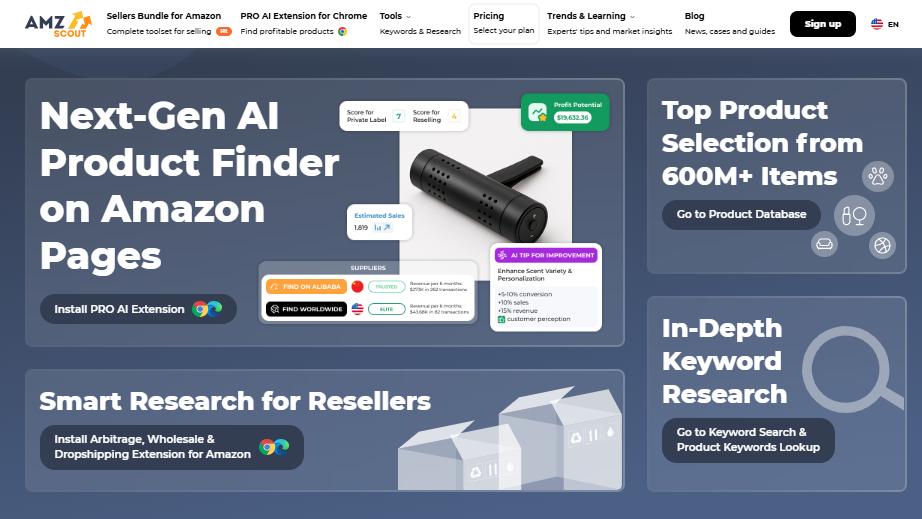
AMZScout is usually picked by sellers who understood Jungle Scout quickly but don’t want to keep paying for features they aren’t actively using. It strips product research down to the basics: demand estimation, competition checks, and rough profit math. Nothing more, nothing less.
That simplicity is the point. AMZScout doesn’t try to guide strategy or influence how you think about Amazon. It gives you numbers, lets you sanity-check an idea, and gets out of the way. For newer sellers, part-time operators, or anyone validating ideas before speaking to suppliers, that restraint can actually be a strength.
Where AMZScout falls short is once decisions stop being binary. When you’re no longer just asking “Should I launch this?” and start asking “Why is this ASIN slowing down?” or “Which keyword is quietly hurting margins?”, the platform runs out of runway. There’s little support for deeper keyword intent analysis, competitive behavior tracking, or post-launch optimization.
That’s why AMZScout tends to be a stepping-stone rather than a destination. Sellers don’t usually leave it because it’s wrong; they leave because it stays surface-level by design. As soon as Amazon becomes a primary revenue channel instead of an experiment, most sellers need tools that connect research to performance, not just ideas to estimates.

ZonGuru is built for sellers who think beyond product discovery and care about how a listing performs after it goes live. Instead of treating research as a standalone activity, it tries to connect product selection, listing quality, and customer engagement into one workflow.
Where ZonGuru stands apart from Jungle Scout is its attention to what happens after the sale. Tools for email automation, review follow-ups, and listing optimization are central to the platform. For sellers who prioritize brand perception, review velocity, and conversion quality, this framing can feel more practical than pure opportunity scoring.
ZonGuru also appeals to sellers who prefer guided decision-making. Its tools often surface recommendations rather than forcing sellers to interpret dense datasets. That makes it easier to act quickly, especially for small teams or solo operators managing everything themselves.
The limitation shows up as the scale increases. ZonGuru isn’t designed for deep competitive analysis or advanced PPC diagnosis. Keyword data and market intelligence are serviceable, but they don’t offer the level of historical depth or cross-signal analysis that larger operations rely on when margins tighten and categories get aggressive.
In practice, ZonGuru works best for sellers focused on steady brand growth rather than tactical category domination. It’s less about squeezing every efficiency point out of ads or rankings and more about keeping listings healthy, customers engaged, and operations manageable. Sellers who outgrow Jungle Scout because they want stronger post-launch execution may find ZonGuru useful until they need sharper analytical control.
SmartScout usually enters the picture later in a seller’s journey. It’s not the tool you open when you’re brainstorming your next product idea. It’s the one you reach for when you’re trying to understand who you’re really up against.
Instead of focusing on individual products, SmartScout looks at Amazon the way operators and investors do. Which brands consistently show up in this category? Are a few players controlling most of the sales, or is the market still fragmented? Are certain sellers quietly expanding across adjacent niches while others are standing still? These are the kinds of questions SmartScout is good at answering.
That’s why it resonates with wholesale sellers and brand builders more than first-time private-label launches. If you’re evaluating a wholesale account, considering a brand acquisition, or trying to decide whether entering a category even makes strategic sense, SmartScout gives you a clearer picture of the landscape before you commit time or capital.
It’s also not a daily-use tool for most sellers. You don’t log into SmartScout to fix a listing or tweak bids. You use it when you’re planning a move, entering a new category, expanding a catalog, or pressure-testing whether growth is coming from real demand or just aggressive competitors.
Most sellers don’t replace Jungle Scout with SmartScout. They add it. Jungle Scout helps you validate ideas. SmartScout helps you avoid walking into categories where the odds are already stacked against you. Used together, it fills a gap that only becomes obvious once you’ve made a few expensive mistakes on Amazon.
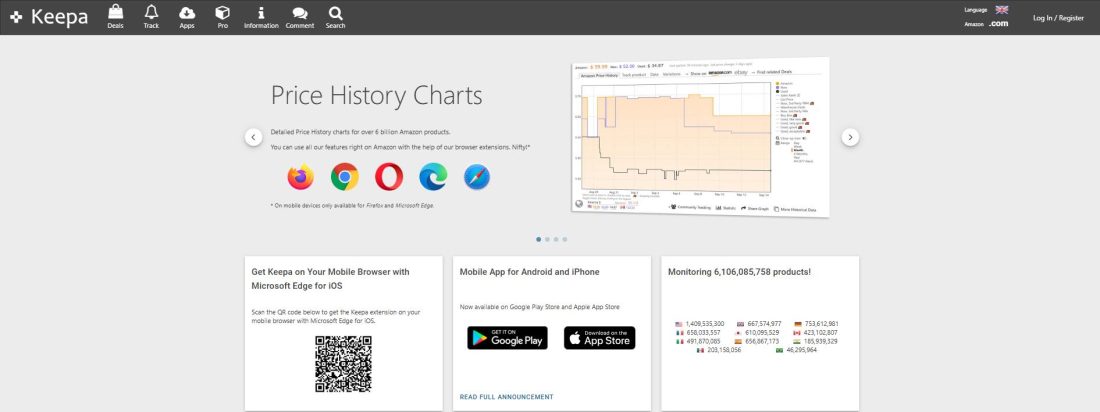
Keepa is the tool sellers grow into, usually after they’ve been burned once or twice. It’s not exciting. It doesn’t promise opportunities. What it does is tell the truth.
Where Jungle Scout gives you a number and asks you to trust it, Keepa shows you the full story and lets you decide. Price changes, sales rank swings, stock-outs, Buy Box chaos it’s all visible, going back months or even years. Once you’ve stared at enough Keepa charts you start seeing patterns that no opportunity score will ever catch.
For arbitrage and wholesale sellers, Keepa is often the first thing they open and the last thing they check. Before committing cash, they want to know if demand is steady or if the product just had a lucky week. They want to see whether price drops are seasonal, competitive, or a sign that margins are about to disappear. Keepa answers those questions without guessing.
It’s also the tool sellers lean on when something feels off. A product looks amazing in a research tool, but the Keepa chart tells a different story: erratic rank, constant price erosion, or sudden stock spikes that explain why sales looked good on paper. That’s usually the moment a seller closes the tab and moves on.
Keepa won’t help you discover products faster. It won’t help you write better listings or run ads. But when real money is on the line, it’s the tool sellers they trust the most. Not because it’s clever but because it’s honest.

AmazeOwl is built for people who are still trying to make sense of Amazon, not for those already deep into it. It’s the kind of tool you use when you’re learning how product research works and don’t want to drown in charts, filters, and metrics you don’t fully understand yet.
Everything about AmazeOwl is designed to lower the barrier to entry. The interface is clean, the data is simplified, and the guidance is straightforward. For beginners validating a few ideas or students following along with a course, that simplicity can be reassuring. You can sanity-check demand, get a feel for competition, and move forward without committing to a high monthly spend.
Where sellers tend to outgrow AmazeOwl is once decisions carry real financial weight. As soon as you’re placing larger inventory orders, managing multiple SKUs, or competing in tighter categories, the lack of depth becomes noticeable. There’s limited historical context, minimal competitive insight, and very little support beyond basic validation.
As a Jungle Scout alternative, AmazeOwl works when the goal is learning, not scaling. Most serious sellers don’t build long-term workflows around it. They use it briefly, understand the fundamentals, and then move on to tools that offer sharper signals and more control once Amazon stops being theoretical and starts being expensive.
SellerLabs usually enters the picture when sellers stop asking, “What should I sell next?” and start asking, “Why are my ads eating my profits?” That shift matters, because SellerLabs isn’t a research tool at heart; it’s an operations tool.
Sellers don’t come to SellerLabs to find ideas. They come because their ad account has grown messy. Campaigns overlap, search terms slip through the cracks, and spending creeps up in ways that are hard to catch manually. SellerLabs focuses on cleaning that up. It gives sellers rules, alerts, and automation so they’re not babysitting bids all day.
What experienced sellers appreciate is control. Instead of guessing which keywords to pause or raise bids on, SellerLabs helps surface patterns in performance. You can see where spending is leaking, which terms consistently convert, and where automation can save time without giving up oversight.
It’s not a tool you live in all day, but it’s one you rely on to keep things from drifting. Most sellers using SellerLabs still depend on other tools for research or strategy. SellerLabs’ job is simpler and harder at the same time. It’s there to protect margins while the business keeps moving.
That’s why SellerLabs replaces Jungle Scout only in a very specific way. Not as a discovery tool, but as a safeguard once growth starts to create complexity. When ads become too big to manage on instinct alone, SellerLabs is often the tool sellers reach for.

Zoof feels like it was built for sellers who don’t want to wrestle with tools all day. It’s lighter, faster, and clearly aimed at people who want answers without opening five tabs or decoding complicated dashboards.
Its focus is narrow by design. Keyword research and basic competitor tracking are the core, and Zoof tries to surface what matters quickly rather than giving you everything. For solo sellers or small teams juggling sourcing, listings, and ads themselves, that speed can be a real advantage.
As a Jungle Scout alternative, Zoof works when clarity matters more than coverage. You’re not going to get deep historical data, advanced market modeling, or multi-layered PPC analysis. But you will get direction on what keywords to pay attention to, which competitors are worth watching, and where your effort is likely better spent.
Zoof isn’t built for large catalogs or complex strategies, and it doesn’t pretend to be. It’s a practical option for sellers who want momentum without friction. When time is tight and decisions need to be made quickly, a lighter tool like Zoof can sometimes be more useful than a heavier one that demands constant interpretation.

Viral Launch is positioned differently from Jungle Scout because it places market intelligence and competitive analysis front and center, especially for sellers focused on launch planning and deeper trend insight.
Its Market Intelligence tool isn’t just a basic product finder; it pulls historical sales, trend, and competitive data and lets the seller analyze performance and niche behavior over time, including multi-year data in some plans.
This long-term view helps sellers gauge not just whether a product idea could sell, but whether it has historically held momentum, a layer beyond snapshot demand that new sellers don’t always consider.
Although it was a strong competitor to Jungle Scout and a trusted Jungle Scout alternative for many sellers, the platform officially shut down on December 31, 2025.
Most Jungle Scout workflows stop at validation. You as a seller confirm the demand of your product, check the competition, and based on that, estimate sales and move forward.
That is definitely useful, but this is the exact point where sellers start flying blind. At this point, SellerApp becomes more effective when how you execute your data determines the outcome of your business.
In Jungle Scout, a sales dip usually looks like a number going down. You see it after it happens. What’s missing is context for why the dip occurred and whether it’s temporary, structural, or self-inflicted.
When you choose SellerApp, you will notice that it approaches this situation differently. Sales is not treated as a single metric here; it breaks performance into contributing forces like keyword visibility, listing relevance, conversion efficiency, and paid support.
This allows sellers to spot whether a decline is coming from keyword erosion, ad dependency, competitor aggression, or listing misalignment before revenue fully collapses.
Jungle Scout can show which products sell well. It doesn’t explain whether ads are doing productive work or simply masking weak organic performance.
SellerApp makes this distinction visible. Sellers can see when keywords are converting organically versus when they are artificially sustained by bids. That changes behavior. Instead of increasing budgets reactively, sellers reallocate spending toward keywords that build rank and pull back on those that only generate short-term revenue. The impact is not higher sales volume; it’s improved margin stability, which is what scaling sellers actually need.
At some point, adding more keywords stops improving performance. Jungle Scout still shows volume and competition, but it doesn’t explain diminishing returns.
SellerApp reframes keyword research around buyer intent and outcome. Sellers see which keywords attract browsers versus buyers, which terms inflate impressions without conversions, and which ones punch above their weight. This leads to fewer targeted keywords but better targeting. The result is cleaner listings, more focused ads, and higher conversion efficiency rather than bloated keyword strategies.
Jungle Scout works well when evaluating individual products. It struggles to help sellers decide where to focus attention today across a catalog.
SellerApp is built for prioritization, and we can say this because it surfaces which ASINs are quietly losing traction, which ones are propped up by ads, and which have momentum worth protecting.
Sellers don’t need to audit everything; they’re guided toward the few decisions that actually move the needle. This is where SellerApp feels less like a research tool and more like an operational control layer.
Jungle Scout can tell you who the competitors are. It doesn’t explain how they’re ahead of you.
SellerApp reveals whether competitors are gaining ground through pricing tactics, keyword dominance, ad aggressiveness, or improvements in listing quality. That distinction matters because each scenario requires a different response. Sellers, stop blindly copying competitors and start responding strategically.
High revenue looks good in Jungle Scout, but it doesn’t always tell you if that revenue is fragile.
With SellerApp you can understand whether the growth of your brand is supported by organic strength or dependent on constant paid search pressure. This insight becomes critical for brands preparing to scale, optimize cash flow, or present performance to stakeholders.
We have listed some common concerns regarding certain limitations with Jungle Scout:
No. And doing that is usually a mistake.
Most sellers don’t switch tools in one clean move. What actually happens is Jungle Scout slowly stops being part of real decisions. You open it less. You stop trusting the numbers enough to act on them. Eventually, it becomes something you check “just in case.”
That’s when you cancel.
Till then, it is fine to keep Jungle Scout around for quick demand checks or rough idea validation. Just don’t let it influence expensive calls like inventory sizing, ad budgets, or category bets once your business has real growth.
Yes, but only if they’re doing different jobs.
Where sellers mess this up is running the same product or keyword through two tools, hoping one confirms the other. That doesn’t reduce risk; it just creates confusion when the numbers don’t match.
If you’re using one tool to answer “Is this worth entering?” and another to answer “Why is this winning or losing right now?” that’s a healthy setup. If both tools are answering the same question, you’re paying twice for the same uncertainty.
As soon as it starts affecting your brand.
Factors like new SKUs, higher ad spend, thinner margins, and expansion outside the U.S. for those moments change what you need from data. A tool that worked when you were testing products can quickly become useless once mistakes start costing real money.
Most sellers mistakenly wait too long because the tool still “works” for them. That’s where things start taking a toll; the right question isn’t whether the tool works enough but whether it is still shaping decisions for your brand. If it hasn’t influenced what you actually did in months, then you are overdue for a re-evaluation.
Don’t look at features. Look at how the features behave for your business.
Go back to your last five meaningful decisions: launches, inventory orders, ad reallocations, and listing changes. Ask one simple question: Did Jungle Scout change what I decided to do?
If the answer is no, or if you checked it out of habit, then you have already outgrown it. And that does not mean that Jungle Scout failed. It indicates that your business has grown above the surface-level signals, and you need more precise data to scale your brand.
At this point, switching to a Jungle Scout alternative isn’t about finding better tools, but it is about using the right one and how it operates your business.
Most sellers start looking for a Jungle Scout alternative because their business stops being simple.
At first, Jungle Scout helps you answer basic questions. Is there demand? Is competition reasonable? Does the product even make sense? That’s enough when you’re just trying to get something live without making obvious mistakes.
But once you’re running ads, holding inventory, and dealing with competitors who are watching the same keywords you are, those early answers stop carrying much weight. The harder part becomes understanding why something is working or slipping, not just seeing that it is.
That’s usually when sellers start looking for a Jungle Scout alternative. And the mistake is thinking of this as an upgrade. It’s not about better or worse tools. It’s about using something that fits how your business operates now. A tool that’s great for early research won’t automatically grow into something that guides day-to-day decisions.
If you are using Jungle Scout and it is still influencing what you launch and how you plan, it’s doing its job. If you’re mostly checking it out of habit or to confirm what you already suspect, that’s usually your signal. Not that it failed, just that your needs changed.
At this point, the right tool, such as SellerApp, can help you make decisions earlier and with more confidence, when the cost of getting it wrong is higher.