


If there is one aspect of selling on Amazon that may make or ruin your business, it is Amazon FBA sourcing mistakes. It isn’t as glamorous as running advertisements or designing attractive packaging, but it serves as the foundation for everything.
If you get it wrong, the consequences will be negative for your profit margins, product reviews, brand reputation, and even Amazon compliance status.
Consider a product that appears wonderful on paper but comes from the wrong supplier, resulting in a nightmare.
When unanticipated shipping, customs, or storage fees come into play, your profit predictions shrink. Poor quality control leads to an accumulation of negative reviews. What happens if you skip regulatory checks? Amazon will not hesitate to suspend your listing or, worse, your entire account.
The idea here is that sourcing is more than just finding the cheapest source or detecting a popular trend. It is about creating a system that protects your brand, preserves your margins, and positions you for long-term growth.
And, in 2026, where competition is fiercer, consumer expectations are higher, and compliance standards are tighter than ever, avoiding sourcing errors is not an option. The goal is survival.
Quick Guide
What are Amazon FBA sourcing mistakes?
When people hear the term “Amazon FBA sourcing mistakes,” they usually think it just means choosing the wrong product. In reality, it goes a lot deeper than that.
Imagine the situation of a mid-sized home decor retailer last year. For instance, let’s assume the seller capitalized on the minimalist LED lamp trend, ordered a large supply from a low-cost supplier, and raced to market without third-party approval. There was a surge in sales at the launch, but within two weeks the return rates jumped owing to defective wiring and delicate materials.
Negative reviews lowered their bestseller rating, Amazon warned their account for safety compliance issues, and they ended up liquidating half of the stock at a loss. In less than 60 days, what appeared to be a successful product turned into a six-figure loss.
Sourcing is the foundation of every Amazon FBA business, and it touches everything: your profit margins, your reviews, your reputation with customers, and even whether Amazon lets you keep selling.
Amazon FBA sourcing mistakes happen when you miscalculate any part of that process. Maybe you locate what appears to be a good product, but when you throw in shipping delays, customs fees, or increased storage expenses, your profits collapse.
Or perhaps your supplier claimed “premium quality,” but when the first batch arrived, clients returned it within days. These are the kinds of Amazon FBA product sourcing errors that can quietly deplete businesses before sellers understand what’s wrong.
The mistakes vary depending on how you sell. Private label sellers often run into supplier problems by putting too much trust in one manufacturer, skipping contracts, or failing to do inspections.
Wholesale sellers sometimes underestimate demand or commit to massive minimum order quantities, only to watch their capital get stuck in unsold stock.
And in the world of Amazon online arbitrage, it’s common to see sellers buying restricted or counterfeit-prone products without double-checking category rules. That one oversight can trigger account warnings, refunds, and sometimes suspensions.
Then there’s what we call the bigger-picture issue of Amazon marketplace management mistakes. A product may appear profitable in theory, but if it does not comply with Amazon’s changing policies, storage fees, or consumer expectations, it quickly becomes a liability.
Sellers frequently split source and marketplace strategy, and here is where many fail.
If you break it down, sourcing really comes down to one thing. Are you securing the right product?
Moreover, that too comes with a caveat. You need to secure the right product at the right quality, at the right price, and at the right time.
Anything that throws off that balance is an Amazon FBA sourcing mistake.
And in 2026, those mistakes are more expensive than ever. Compliance checks are stricter, shipping costs swing wildly, and customers are far less forgiving of poor quality. Sellers who cut corners by skipping inspections or ignoring certifications aren’t just risking bad reviews anymore. They’re risking their entire account.
That’s why the Amazon FBA sourcing mistakes sellers need to avoid aren’t just beginner blunders. They are important points at which a company either sets itself up to succeed or fail. Sourcing in FBA isn’t only a task that you complete behind the scenes. It’s the strategy that not only maintains your business but also lays the foundation of growth.
Amazon FBA Product Sourcing Mistakes
As mentioned earlier, sourcing is the backbone of every Amazon FBA operation. If you get it right, you will have steady profitability, loyal customers, and a scalable brand. If you get it wrong, you will be left with unsold inventory, razor-thin margins, or even compliance headaches.
Many sellers, especially experienced ones, repeat the same mistakes because they are too focused on instant successes rather than developing a long-term sourcing strategy.
Let’s look at the most typical Amazon FBA sourcing mistakes, why they happen, and how to avoid them.

Mistake 1: Not Validating Product Demand
One of the easiest mistakes to make is chasing products just because they’re trending. It’s tempting to see something blow up on TikTok or Instagram and assume that same wave of popularity will carry over to Amazon and that you’d become a multimillionaire. However, the reality is different.
Amazon runs on its own engine of search demand and competition. If you jump in without checking that, you risk getting stuck with a fad that burns hot for a month and then disappears.
The result is painful. Unsold inventory piling up in FBA, storage fees eating away at your margins, cash tied up in dead stock, and no room to move into categories that could actually make you money.
The smarter play is to let the numbers guide you. Look at search volumes and seasonality, study how competitors are performing, and pull up historical sales data to see if a product is evergreen or just another short-term craze.
So, sometimes, even a small test run of a few hundred units is enough to tell you whether a product needs a little extra effort. Along with this, patience and data work can save you from investing thousands of dollars into inventory that ends up collecting sand instead of shells.
Mistake 2: Ignoring Product Quality and Inspection
Another critical mistake lies in treating product quality as secondary to price. It’s appealing to source the cheapest option in order to maximize margins, but low-cost goods often come with hidden risks.
If you are not using proper sampling and inspection, sellers unknowingly ship flawed items to customers. Once those negative reviews start rolling in, it is nearly impossible to recover the listing’s ranking.
What makes this mistake particularly dangerous is the domino effect it creates. Defective products lead to returns, which can push your account health metrics into the red. In severe cases, Amazon will suspend the listing or even your entire seller account.
The solution is to always request samples, test them thoroughly, and work with third-party inspection agencies before shipping full orders. For certain categories, verifying certifications like FDA approval, CE marks, or RoHS compliance isn’t optional, it’s essential for both legality and consumer trust.
Mistake 3: Relying on a Single Supplier
It may seem convenient to build your sourcing pipeline around a single trusted supplier. However, this convenience can quickly turn into dependency. If that supplier experiences a delay, changes terms, or even goes out of business, your Amazon store is left exposed. Worse, suppliers sometimes exploit dependence by raising prices, knowing you have limited alternatives.
Diversification is essential if you want a successful sourcing strategy. By building connections with multiple suppliers, you develop negotiating power and lower the chance of delays. Supplier audits and performance reviews assist you in identifying trustworthy partners, while long-term contracts with flexible departure terms protect your company.
When the product quality is split between suppliers, it means that the exact product can differ in materials, craftsmanship, and overall standards depending on the supplier. Maybe, one batch will meet your expectations perfectly, while another might arrive with defects, inconsistencies, or packaging issues.
This kind of inconsistency can create serious problems for an Amazon FBA business, including negative reviews, increased returns, lost Buy Box eligibility, and even account suspension if customers repeatedly complain.
To manage fluctuating quality, sellers need to set standardized product requirements and share detailed specifications with every supplier. You should try sampling and batch testing before full production to help catch issues early, while regular audits and performance reviews ensure that only trustworthy suppliers continue to fulfill orders.
Contracts should clearly define quality expectations and describe procedures for handling defects, replacements, or refunds. Even when diversifying suppliers to reduce disruption risks, consistent oversight is essential to maintain uniform quality and protect your brand reputation while scaling
The best sellers don’t merely buy from suppliers; they form alliances that enable both parties to scale sustainably.
Mistake 4: Underestimating Shipping and Import Costs
Many sellers obsess over product cost while overlooking how much it actually takes to move goods from the factory floor to an Amazon fulfillment center. Freight charges, customs duties, tariffs, insurance, and port delays are rarely factored in until it’s too late. By the time products land in the U.S. or Europe, profit margins have evaporated.
Global trade does not stop, and this is where things get complicated. Tariffs can increase overnight, shipping lanes might become congested, and new regulations can wipe out any savings you thought you had. If you solely consider the factory pricing, you’re in for a bad surprise. What actually matters is your landed cost, which is the total cost of getting each unit from the factory floor to Amazon’s warehouse.
That’s why it pays to understand terms like FOB, EXW, and DDP. They spell out who is on the hook at every step of the journey, whether it’s the factory, the freight forwarder, or you. Getting this wrong can leave you holding unexpected bills.
On top of that, building in extra time and negotiating freight terms can save your wallet and keep your inventory flowing. Sellers who plan for these bumps tend to avoid stockouts and keep their listings ranking while competitors scramble.
Mistake 5: Overlooking Compliance and Certifications
Amazon is stricter than ever when it comes to compliance, and for good reason. Customers trust that products listed on the platform meet all legal and safety requirements. Sellers who skip compliance checks risk severe consequences. Imagine importing electronic devices without CE certification in Europe or dietary supplements without FDA clearance in the U.S. Amazon will not hesitate to suspend those listings.
This mistake often comes from ignorance rather than negligence. New sellers don’t realize that every category comes with its own set of requirements, from children’s toys needing CPSIA compliance to electronics requiring RoHS documentation. The fallout can be devastating: product recalls, financial penalties, and permanent loss of selling privileges. To avoid this, research your category thoroughly before placing an order. Consulting compliance experts or working with freight forwarders who specialize in Amazon imports ensures that your paperwork is in order. Keep all certifications documented and ready to provide to Amazon if they request proof.
Mistake 6: Weak Negotiation and Pricing Strategy
Many sellers assume that whatever quote a supplier gives is final. This lack of negotiation is one of the silent killers of profitability. Without exploring bulk discounts, favorable payment terms, or long-term pricing agreements, you leave money on the table.
Poor negotiation isn’t just about paying more than you should; it also creates cash flow challenges. Large deposits, unfavorable terms, and rigid contracts can restrict your ability to scale. Negotiation should always be strategic.
Gather multiple quotes, compare them, and use that data to secure better terms. You should be asking for payment splits like 30% upfront and 70% after inspection. Moreover, explore price breaks at higher order volumes, but avoid committing to quantities you cannot realistically sell. Experienced sellers treat supplier contracts as ongoing relationships, not one-time transactions.
Mistake 7: Neglecting Packaging and Branding
In the crowded Amazon marketplace, packaging and branding can be the deciding factor between a customer choosing you or your competitor. Yet, many sellers ignore this part entirely. They will ship generic-looking products in dull boxes, missing an opportunity to establish brand identity.
Few sellers fail to realize that packaging is part of the customer experience. Well-designed packaging not only protects the product but also creates an impression and unboxing excitement in customers that drives repeat purchases.
You can’t ignore strong branding, as this will be with you till the end; it builds recognition and customer loyalty, which is essential for the long run. Be mindful of investing in eco-friendly packaging, as sustainability influences buying decisions. Beyond the box itself, inserts that tell your brand story or offer helpful tips can create a stronger emotional connection with customers. Over time, this reduces your reliance on price competition alone.
Mistake 8: Poor Inventory Management
Even with the perfect product and reliable suppliers, sellers often stumble when it comes to inventory management. Ordering too much stock ties up capital and leads to expensive storage fees, while ordering too little results in stockouts that hand your competitors the Buy Box. Both scenarios harm your sales momentum and profitability.
Moreover, it depends on accurate forecasting. Sellers must track sales velocity, seasonality, and lead times to predict demand with precision. Modern inventory tools can help automate this process, but the discipline comes from consistently monitoring and adjusting orders. Setting reorder alerts and maintaining a buffer stock ensures you are prepared for sudden spikes in demand. Keeping an eye on your Inventory Performance Index (IPI) score is also critical, as Amazon penalizes poor inventory management with restrictions and higher storage fees.
Amazon FBA sourcing mistakes that sellers make
Every Amazon seller faces sourcing challenges, but the nature of those mistakes changes dramatically depending on where you are in your journey. A seller doing $1,000 a month doesn’t face the same risks as a brand managing a multi-million-dollar supply chain. By breaking it down into revenue tiers, you’ll see how Amazon FBA sourcing mistakes evolve with scale and, more importantly, how to avoid repeating them as you grow.

Beginner Sellers ($1,000–$100,000 in revenue)
At the starting level, the joy of discovering things frequently outweighs the discipline required to correctly analyze them. New sellers frequently follow trends they see on TikTok or YouTube without first determining true product-market fit. This leads to investing in things that sell quickly for a week but then die, leaving thousands of dollars in idle inventory.
Another recurring issue for beginners is the fixation on low-cost suppliers. It’s tempting to go with the cheapest option on Alibaba or other sourcing platforms, but what you save upfront often costs you tenfold later in negative reviews, returns, or account suspensions. Skipping inspections and neglecting to order samples is also common, either because sellers want to save a few dollars or because they underestimate the damage poor quality can do to a new account.
At this stage, beginners also underestimate logistics. They forget to factor in duties, tariffs, and FBA storage fees, and by the time the product lands in Amazon’s fulfillment center, profit margins are gone. The best way to survive the early stage is to slow down, validate demand with real data, and always budget for inspections and compliance checks.
Mid-Market Sellers ($100,000–$1,000,000 in revenue)
Once sellers cross into six figures, the mistakes shift from basic oversight to structural weaknesses. Mid-market sellers often push aggressively to scale but do so without building the right infrastructure. It’s common to see sellers managing multiple SKUs and higher volumes with the same ad hoc systems they used at the beginner stage. This results in chaos, missed purchase orders, delayed shipments, and inconsistent quality checks.
Contract management becomes a serious pain point here. Without clear agreements, suppliers might suddenly raise prices, extend lead times, or fail to meet quality standards. Because mid-market sellers are often growing fast, they sometimes ignore these red flags until they cascade into bigger issues like canceled customer orders, missed sales windows, or listing suspensions.
Quality control also becomes harder to manage as order volumes increase. What worked for 500 units no longer works for 5,000. Relying on trust instead of audits or inspections leads to product variations and defects slipping through, damaging customer trust and brand reputation. Mid-market sellers who don’t reinvest profits into stronger operations, such as standardized processes, forecasting tools, and professional logistics support, often hit a ceiling in their growth.
Enterprise Sellers ($1,000,000+ in revenue)
It is comparatively very different for enterprise-level sellers. At this level, Amazon FBA sourcing issues aren’t about ignoring samples; rather, they’re about systemic flaws in complex supply chains. Multi-million dollar sellers frequently manage dozens of suppliers, various manufacturing countries, and a wide range of product categories. The risk here is fragmentation. Different teams may be handling purchasing, compliance, and logistics separately, creating gaps where mistakes go unnoticed until they become critical.
Compliance is one of the biggest blind spots at this level. Enterprise sellers often assume their suppliers are staying compliant with international regulations, but that’s not always the case. A single missed certification or a shipment flagged at customs can cost millions in delays and penalties. Procurement processes also tend to become isolated, where different teams negotiate separately, leading to inefficiencies and higher costs.
Another recurring challenge is managing geopolitical risks. Tariff changes, factory shutdowns, or raw material shortages can have a domino effect on large-scale operations. Unlike beginners, enterprise sellers can’t simply pivot to a new product or supplier overnight. The scale of their business demands foresight, risk-mitigation strategies, and a global sourcing framework that integrates compliance, quality, and logistics seamlessly.
What ties all of this together is that Amazon FBA sourcing mistakes evolve with scale, but they never really go away. Beginners struggle with validation and quality, mid-market sellers wrestle with infrastructure and contracts, and enterprise sellers battle complexity and compliance. Each stage comes with its own traps, and the sellers who succeed long-term are the ones who learn to anticipate the next set of challenges before they arrive.
What happened to Nike’s supply chain?
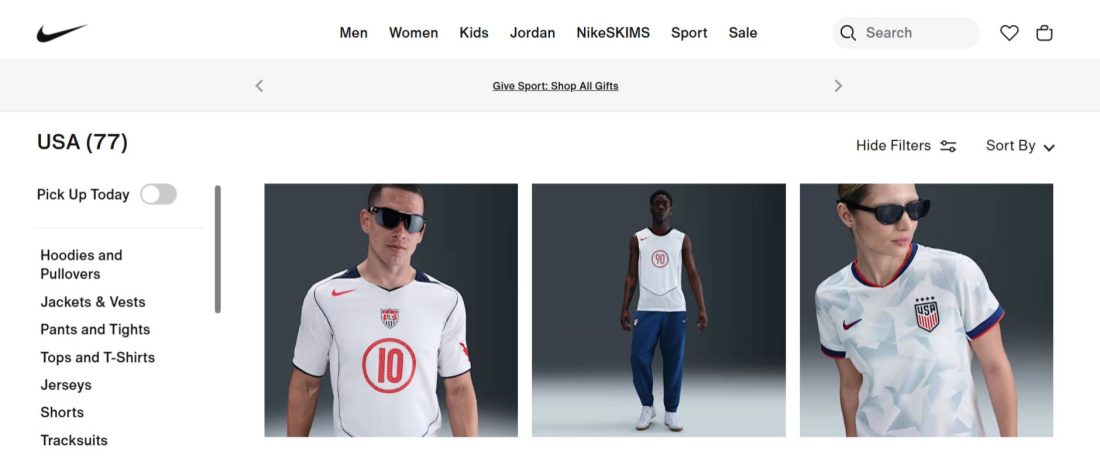
A couple of years ago, Nike found itself in a spot that sellers want to avoid. Their inventory levels had ballooned by 44%, totaling nearly $9.7 billion. The perpetrator is a mix of pandemic-related supply chain chaos, factory shutdowns in China and Vietnam, and a sudden mismatch between product availability and consumer demand. By the time shipments arrived, many of the items were out of season. Shelves were filled, but not with what customers wanted at that moment. This can be a nightmare scenario for any global brand.
Nike’s biggest challenge was overreliance. For years, the company’s sourcing strategy leaned heavily on a few key manufacturing hubs, especially in Vietnam. That made sense for efficiency and scale until a single disruption rippled across the entire operation. Their just-in-time inventory model, which worked correctly in stable times, suddenly became their Achilles’ heel during global changes. The result was both overstocked warehouses and frustrated customers waiting for delayed products.
How Nike Could Have Turned the Table
This could have happened to any brand. If Nike had diversified their sourcing network and spread production over various areas, the repercussions could have been far smaller. More crucially, flexibility in inventory planning, rather than inflexible just-in-time processes, may have aided the brand’s swift turnaround when borders closed or freight costs rose. Integrating real-time forecasting technologies to track demand trends could also have kept production in sync with shifting customer behavior.
Whether you’re running a billion-dollar brand or building your first Amazon FBA business, the takeaway is the same: your sourcing strategy needs resilience built in. The right mix of diversified suppliers, transparent communication, and adaptive planning can turn disruptions into opportunities.
Whether you are on the same page or not, be mindful to always diversify your supplier base, maintain open visibility into your inventory flow, and invest in forecasting tools that can adapt to market shifts.
Tools, Platforms, and Resources
Today, the sourcing landscape is too complex to manage on gut instinct alone.
From validating demand to staying compliant with international regulations, the right resources can mean the difference between scaling profitably and burning capital. Here are the tools and platforms that sellers at every stage should be using.
1. Product Research and Validation
Before making an order, sellers require statistics to determine whether a product is genuinely in demand. SellerApp is a tool that allows you to track keyword trends, measure competition levels, and analyze historical sales data across categories. Instead of guessing whether a product will move, you can see exactly how often customers are searching for it, how saturated the niche is, and whether the demand is seasonal or consistent. This kind of validation helps prevent the all-too-common Amazon FBA sourcing mistakes where sellers get stuck with dead inventory.
2. Supplier Directories and Marketplaces
Most sellers begin with Alibaba or Global Sources, but directories have progressed well beyond being mere contact lists. Platforms in 2026 will contain supplier verification badges, transaction histories, and even integrated video factory tours. These traits make it more difficult for low-quality vendors to portray themselves as respectable.
Sourcing on Amazon FBA, whether private label, wholesale, or online arbitrage, is safer when vendors can be filtered by geography, capacity, and compliance criteria. Sellers who wish to improve their Amazon marketplace management can start with supplier screening.
3. Product Quality and Inspection Services
Inspections are still required, even for verified vendors. Third-party services include SGS, Bureau Veritas, and Asia. Inspection allows you to send an independent agent to the manufacturer before shipping your products. They oversee quality consistency, regulatory compliance, and packing accuracy.
This is especially critical in categories like electronics, toys, and supplements, where flaws or non-compliance can result in not only negative reviews but also listing deletions. Inspections are low-key and one of the most cost-effective kinds of insurance in an environment where Amazon FBA seller faults may swiftly lead to suspension.
4. Freight, Customs, and Landed Cost Calculators
If you are underestimating shipping and import costs, let us remind you that it is one of the biggest sourcing mistakes. With tariffs, duties, and fluctuating freight rates, relying on speculation is a way to shrink margins. Tools like Freightos or built-in landed cost calculators offered by major freight forwarders help sellers get clarity on total costs before they commit.
Knowing the exact landed cost per unit allows you to calculate profitability with precision and adjust pricing strategies accordingly. This is where many Amazon online arbitrage seller mistakes happen: failing to factor in the hidden costs until the shipment is already on route.
5. Compliance and Certification Databases
Today, compliance is more than just a requirement. It is now a competitive advantage. Amazon has streamlined its product verification process, and sellers who fail to provide the necessary documentation often see their listings removed or face penalties.
On the other hand, when you arrive with the accurate papers, you stand out immediately. You are no longer burdened with account troubles or suspensions, which allows you to focus your efforts on improving your ranking, gaining more reviews, and expanding your brand.
Accessing compliance tools such as the United States FDA’s searchable directory, the European CE marking database, or even commercial platforms that consolidate global standards will save you from being caught off guard later. For Amazon FBA sellers juggling supplier connections and sourcing, keeping a digital folder with the relevant certifications makes responding to Amazon’s compliance checks much easier.
6. Inventory and Forecasting Tools
Finally, even the strongest sourcing strategy can witness downfall without effective inventory management. Sellers can use tools like SoStocked, SellerApp Inventory Dashboard, or Amazon’s own IPI monitoring to estimate demand, create reorder notifications, and keep stock levels healthy.
Predictive analytics now allows you to imitate scenarios like lead time delays or seasonal surges to avoid being caught off guard. This amount of foresight reduces the possibility of overstocking, stockouts, and expensive storage fees for both mid-market and business vendors. In other words, it eliminates the long-term effects of a poor sourcing approach.
Amazon Sourcing Simplified
Sourcing is more than just a single-shot deal, in other words, you are building a foundation for a long-term growth firm. Treating it as a series of short-term transactions may result in a temporary glow-up, but it rarely leads to long-term success. The sellers that succeed on Amazon in 2026 are the ones who see sourcing as a long-term investment requiring strategy, foresight, and solid relationships.
At the core, think of scalable sourcing as a strategy that will help you build connections. Suppliers aren’t just vendors, they are partners in your company’s expansion. Understanding their processes, capacity, and constraints can allow you to negotiate better pricing, get priority during peak seasons, and reduce the danger of supply disruptions. Sellers with keen talents will not simply seek the cheapest price; instead, they will form alliances that reward dependability, quality, and mutual trust.
Diversification is another foundation. Relying on a single supplier and feeling like you are missing out on something? But that might work when you’re starting out, but it becomes a liability as your business grows. As you diversify your supply chain across multiple reliable sources, it reduces risks related to production delays, geopolitical issues, and price fluctuations. Experienced sellers also stagger orders and maintain backup suppliers so they can pivot quickly if a shipment falls behind schedule.
When you invest in supplier connections and market knowledge, your negotiation strength rises naturally. Sellers who effectively scale in 2026 use prior purchase data, order numbers, and payment track records to negotiate better terms. This includes negotiating bulk discounts, flexible payment terms, and even co-investing in packaging or quality upgrades. The outcome is higher profits and a supplier network that prioritizes your requests.
Lowkey, documentation and process discipline are equally important. Every batch, every shipment, and every contract should be logged and tracked. This will create transparency, which simultaneously also ensures accountability and provides a record you can analyze for continuous improvement. Learning from each batch, whether it was a big win or a close call, helps you refine forecasts, adjust quality checks, and optimize your logistics strategy.
To conclude, you will require much patience and vision for a scalable sourcing strategy. We understand how tempting it is to pursue every trend or take costs to get ahead, but long-term growth comes from doing the basics incredibly well, which includes acquiring the appropriate items, maintaining quality, being compliant, and developing partnerships that can withstand unknown hurdles. When you start treating sourcing as a long-term investment rather than a short-term laborious task, you will understand that it is not just about purchasing things. You’re setting the basis for a profitable business that will flourish for years to come.
Final Thoughts
To build a successful business, it is essential to avoid common Amazon FBA sourcing mistakes. From beginners just testing the waters to enterprise sellers managing multi-million-dollar supply chains, the mistakes are different, but the consequences are always real: lost profits, unhappy customers, and missed opportunities.
In 2026, the margin for error is less than ever. Trends move fast, tariffs fluctuate, compliance standards tighten, and customer expectations are higher.
But that also means the sellers who approach sourcing strategically by validating demand, prioritizing quality, diversifying suppliers, and building strong relationships gain a significant advantage.
Every decision you make in sourcing impacts your business, affecting profitability, brand reputation, and long-term growth.
A sustainable sourcing strategy is not about quick fixes or achieving immediate gains. It is about planning for the long term, documenting processes, learning from each shipment, and treating suppliers as partners rather than vendors. It is about using the correct tools, from research platforms and inspection services to inventory and compliance systems, to make better judgments at every stage.
Read More
Strategies to Minimize Amazon FBA Inbound Placement Fees
Amazon Seller Calendar 2026: Key Dates for Amazon FBA Sellers
Shipping to Amazon FBA Rapid Express Freight: Everything You Need to Know
Exploring Top 11 Alternatives to Amazon FBA: Finding Your Perfect E-commerce Platform